 November 2025 in “Communications Materials”
 Pomelo peel can be turned into materials that help stop bleeding and heal wounds better than commercial dressings.

New-onset fibromyalgia after COVID-19 is poorly understood, needing better definitions and studies.
 May 2025 in “Journal of Diverse Medical Research Medicosphere”
 More research is needed to understand and manage angioedema in pregnant women with lupus.
 November 2024 in “International Journal of Plant and Environment”
 Sphenodesme involucrata var. paniculata is a safe and healthy medicinal plant with beneficial nutrients.

Ingesting minoxidil can cause serious heart problems and requires urgent medical treatment.
 March 2024 in “Intisari Sains Medis”
 Low free thyroxine (FT4) is common in young lupus patients and needs quick diagnosis and treatment.
 January 2024 in “International Research Journal of Modernization in Engineering Technology and Science”
 Fasting may reduce chemotherapy side effects.
 January 2024 in “Journal of surgical case reports”
 Removing an adrenal tumor can significantly reduce high androgen levels in postmenopausal women.
 August 2023 in “International journal of medical science and clinical research studies”
 PRP therapy helps heal pediatric surgical wounds faster and with fewer scars but needs more research for safety and cost.
 January 2023 in “Pakistan Armed Forces Medical Journal”
  January 2023 in “Austin Journal of Obstetrics and Gynecology”
 PCOS affects many young women in KSA, with mild cases being most common.
 October 2022 in “Journal of advanced research in medicine”
 A woman with Sheehan syndrome improved with hormone treatment.
 October 2022 in “Rheumatology (Bulgaria)”
 Accurate diagnosis of progressive supranuclear palsy requires thorough neurological assessments and MRI.
 July 2022 in “International journal of medical science and clinical invention”
 Women with irregular periods should be checked for PCOS and treated early to prevent complications, with birth control pills helping to manage symptoms.
 June 2022 in “Journal of the turkish academy of dermatology”
 People with plantar corns and calluses may have a higher chance of having metabolic syndrome.
 April 2021 in “Research Square (Research Square)”
 N-acetylcysteine improved symptoms of trichotillomania and bulimia.
 January 2021 in “Journal of Scientific Research of the Banaras Hindu University”
 Lifestyle changes and medical treatment can help manage PCOS symptoms in young adults.
A high-fat diet caused severe health problems in female macaques but was reversible with a normal diet, while male macaques reacted differently.
 January 2019 in “Springer eBooks”
 Acne is linked to inflammation and insulin resistance, and is associated with various syndromes that require different treatments.
 August 2014 in “Plastic Surgery”
 Dr. WP Unger suggested that traditional strip harvesting might be better for hair transplants than Follicular Unit Extraction due to higher hair survival rates and less risk of a patchy look at the donor site.
 September 2012 in “The Egyptian Journal of Histology”
 Flutamide caused damage to male rat reproductive organs and may affect fertility.
 January 2005 in “Nihon Yasei Doubutsu Igakkaishi/Japanese journal of zoo and wildlife medicine”
 Aloe vera gel effectively treated mange in camels.
 September 2004 in “Experimental dermatology”
 Melatonin directly affects mouse hair follicles and may influence hair growth.
 August 2001 in “Veterinary Dermatology”
 The meeting presented findings on effective treatments for various pet skin conditions and insights into the immune responses of dogs with atopic dermatitis.
 February 1960 in “Journal of the American Medical Association”
 Treatments for hair loss include estrogen therapy and special shampoos.
 January 2026 in “Al-Kunooze Scientific Journal”
 Dermatophytosis is common in young, male Shirazi Persian cats, affecting ears, face, and abdomen.
Lower LDL-c levels predict higher COVID-19 mortality.
 January 2017 in “IMC Journal of Medical Science”
 A rare endocrine disorder, APS 1, was diagnosed in a 26-year-old man in Bangladesh.
 April 2008 in “Companion Animal”
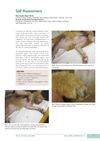
 The cat's skin condition was linked to cancer and did not improve with treatment, leading to a poor outcome.
 June 2006 in “British Journal of Dermatology”
 The document reports unique growth lines in a child after Stevens-Johnson syndrome, skin reaction from parsnips and sun in a girl, and itchy skin with xanthomas in a boy with Alagille syndrome.