 13 citations
,
September 2019 in “EBioMedicine”
13 citations
,
September 2019 in “EBioMedicine” sPLA2-IIA increases growth in hair follicle stem cells and cancer cells, suggesting it could be targeted for hair growth and cancer treatment.
13 citations
,
April 2019 in “iScience” EGFR helps control how hair grows and forms without needing p53 protein.
 13 citations
,
February 2015 in “Actas Dermo-Sifiliográficas”
13 citations
,
February 2015 in “Actas Dermo-Sifiliográficas” The document concludes that recognizing specific histological features of different nonscarring alopecias is crucial for accurate diagnosis and understanding hair loss progression.
 10 citations
,
February 2020 in “Endocrine”
10 citations
,
February 2020 in “Endocrine” Finasteride safely treats hair loss without harming hormones or reproduction, but may slightly reduce sexual function.
 8 citations
,
April 2020 in “Journal of Ethnopharmacology”
8 citations
,
April 2020 in “Journal of Ethnopharmacology” Herbs might help with hair loss, but more research is needed to confirm their safety and effectiveness.
 7 citations
,
November 2000 in “Clinics in Dermatology”
7 citations
,
November 2000 in “Clinics in Dermatology” Most hair loss in children is caused by a few common conditions and is easy to diagnose, but rare types require careful evaluation.
 6 citations
,
October 2020 in “Journal of Cellular and Molecular Medicine”
6 citations
,
October 2020 in “Journal of Cellular and Molecular Medicine” 3D culture helps maintain hair growth cells better than 2D culture and identifies key genes for potential hair loss treatments.
 6 citations
,
January 2017 in “Advances in Experimental Medicine and Biology”
6 citations
,
January 2017 in “Advances in Experimental Medicine and Biology” Runx genes are important for stem cell regulation and their roles in aging and disease need more research.
 6 citations
,
May 2012 in “Clinical and experimental dermatology”
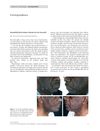
6 citations
,
May 2012 in “Clinical and experimental dermatology” Oral minoxidil can cause inflamed, ingrown hairs in the beard area.
6 citations
,
April 1993 in “Journal of Dermatological Science” Certain substances can strongly inhibit DNA synthesis in hair cells.
 5 citations
,
January 2023 in “International Journal of Molecular Sciences”
5 citations
,
January 2023 in “International Journal of Molecular Sciences” Hair follicles could be used to noninvasively monitor our body's internal clock and help identify risks for related diseases.
 5 citations
,
July 2003 in “Drug Development Research”
5 citations
,
July 2003 in “Drug Development Research” Fluridil promotes hair growth safely and effectively for androgenetic alopecia.
 4 citations
,
January 2019 in “International journal of molecular sciences”
4 citations
,
January 2019 in “International journal of molecular sciences” Genetically modified sheep with more β-catenin grew more wool without changing the wool's length or thickness.
 4 citations
,
January 2007 in “Australian Veterinary Journal”
4 citations
,
January 2007 in “Australian Veterinary Journal” A horse's sudden hair loss was caused by an allergic reaction to a coat conditioning powder.
 2 citations
,
February 2025 in “International Journal of Molecular Sciences”
2 citations
,
February 2025 in “International Journal of Molecular Sciences” Key proteins and pathways regulate yak hair growth, with lipid metabolism aiding adaptation to high altitudes.
 2 citations
,
May 2023 in “Plants”
2 citations
,
May 2023 in “Plants” Allium hookeri extract may help promote hair growth and protect cells from damage.
 2 citations
,
October 2015 in “The New England Journal of Medicine”
2 citations
,
October 2015 in “The New England Journal of Medicine” The woman's surgery lowered her testosterone and improved scalp hair loss but did not change her excessive body hair.
 2 citations
,
June 2001 in “American Journal of Pathology”
2 citations
,
June 2001 in “American Journal of Pathology” The document concludes that understanding how hair follicles naturally die and regenerate is important for insights into organ development and could impact health and disease treatment.
1 citations
,
December 2023 in “Biomolecules” Regulating cell death in hair follicles can help prevent hair loss and promote hair growth.
1 citations
,
December 2023 in “International journal of molecular sciences” miR-199a-3p controls hair growth and is linked to alopecia areata.
1 citations
,
January 2018 in “Journal of microscopy and ultrastructure” The method can identify minerals in hair from water, and using coconut oil or conditioner can prevent mineral buildup.
 1 citations
,
January 2016 in “Journal of stem cell research and medicine”
1 citations
,
January 2016 in “Journal of stem cell research and medicine” Fat-derived stem cell therapies can potentially increase hair growth and thickness in people with hair loss.
 1 citations
,
January 2016 in “Journal of stem cell research and medicine”
1 citations
,
January 2016 in “Journal of stem cell research and medicine” Fat-derived stem cell therapies can potentially increase hair growth and thickness in people with hair loss.
November 2025 in “Bioactive Materials” TQC shows promise for better hair regrowth in treating hair loss.
 November 2025 in “Molecular and Cellular Biomedical Sciences”
 Exosome therapy from treated stem cells may help reduce inflammation and promote hair regrowth in alopecia.
 March 2025 in “Aging Cell”
 Reducing IGF-1 can help rejuvenate hair follicles and prevent hair graying and loss.
 January 2024 in “Cosmetics”
 HAIR & SCALP COMPLEX may help treat hair loss by stimulating hair growth and restarting the hair cycle.
 August 2023 in “Journal of Cosmetic Dermatology”
 Exosomes from hair papilla cells and the Chinese medicine Liao Tuo Fang can potentially promote hair growth and could be used to develop hair growth drugs.
 January 2006 in “Advances in developmental biology”
 The Hairless gene is crucial for healthy skin and hair growth.
 January 2022 in “Stem cell biology and regenerative medicine”
 The document concludes that hair follicle regeneration involves various factors like stem cells, noncoding dsRNA, lymphatic vessels, growth factors, minoxidil, exosomes, and induced pluripotent stem cells.