 31 citations
,
April 2016 in “Nature communications”
31 citations
,
April 2016 in “Nature communications” Certain signals are important for reducing specific chemical markers on hair follicle stem cells during rest periods, which is necessary for healthy hair growth.
 3 citations
,
April 2015 in “Cleveland Clinic Journal of Medicine”
3 citations
,
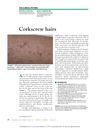
April 2015 in “Cleveland Clinic Journal of Medicine” The woman has scurvy and needs more vitamin C.
 October 2023 in “Regular and Young Investigator Award Abstracts”
 Baricitinib treatment helped reduce hair loss symptoms in mice by decreasing inflammation-related immune cells.
 5 citations
,
February 2019 in “The New England Journal of Medicine”
5 citations
,
February 2019 in “The New England Journal of Medicine” Certain mutations in the PADI3 gene may increase the risk of developing a type of scarring hair loss common in women of African descent.
11 citations
,
April 2012 in “Journal of Investigative Dermatology” A specific mutation in PA-PLA1α causes abnormal hair growth.
 April 2017 in “The journal of investigative dermatology/Journal of investigative dermatology”
 Astrotactin2 affects hair follicle orientation and skin cell polarity.
 November 2022 in “Journal of Investigative Dermatology”
 Butyrate helps hair grow longer, improves hair cell health, increases pigment production, and boosts hair's natural defenses.
December 2019 in “theses.fr (ABES)” Lower TGFß1 levels help stem cells become beige fat cells.
 3 citations
,
March 2022 in “Polymers”
3 citations
,
March 2022 in “Polymers” Substances from Ascidian tunics might help treat hair loss as effectively as Minoxidil.
23 citations
,
March 2017 in “Journal of Investigative Dermatology” An artificial lipid barrier can restore hair growth in cases of SCD1 deficiency.
 September 2023 in “Frontiers in Medicine”
 The scalp fat tissue of men with hair loss shows changes in gene activity that may contribute to their condition.
6 citations
,
December 2015 in “International journal of immunopathology and pharmacology” AE can have varied symptoms and genetic causes, but zinc therapy helps.
14 citations
,
June 2012 in “Stem Cells” TACE/ADAM17 is essential for maintaining healthy hair and hair follicle stem cells.
September 2025 in “Stem Cell Research & Therapy” TAZ boosts fat cell formation in goat stem cells by activating a specific signaling pathway.
 September 2021 in “International Journal of Biomedicine”
 Certain gene variations are linked to a higher risk of severe acne, suggesting a genetic influence on the condition.
48 citations
,
September 2011 in “British Journal of Dermatology” Epigenetic changes in blood cells may contribute to alopecia areata.
53 citations
,
August 2010 in “Molecular Carcinogenesis” Slug is crucial for skin health, hair growth, and healing.
1 citations
,
January 2004 in “Adelaide Research & Scholarship (AR&S) (University of Adelaide)” SPARC likely aids in tissue remodeling during the hair cycle, not in starting new hair growth phases.
193 citations
,
June 2007 in “The Plant Journal” GhDET2 is crucial for cotton fiber growth.
June 2025 in “Korean Journal of Pharmacognosy” Isoalantolactone promotes hair growth by activating specific cell pathways.
 8 citations
,
April 1965 in “Archives of biochemistry and biophysics”
8 citations
,
April 1965 in “Archives of biochemistry and biophysics” Sheep wool follicles can metabolize both glucose and acetate using different pathways important for wool growth.
 8 citations
,
June 2012 in “Australasian Journal of Dermatology”
8 citations
,
June 2012 in “Australasian Journal of Dermatology” A rare form of alopecia causes hair thinning without bald spots and may be more common than thought, responding well to steroid treatment.
 August 2016 in “Journal of Investigative Dermatology”
 Zinc deficiency disrupts hair growth and cycle, but zinc supplements can fix this.
 30 citations
,
July 2019 in “Endocrinology”
30 citations
,
July 2019 in “Endocrinology” Certain HSD3B1 gene types are linked to worse prostate cancer outcomes and affect treatment response and other health conditions.
 December 2023 in “bioRxiv (Cold Spring Harbor Laboratory)”
 AP-2α and AP-2β proteins are essential for healthy adult skin and hair.
January 2009 in “ScholarlyCommons (University of Pennsylvania)” The P133R mutation in AKR1D1 enzyme causes harmful bile acid buildup, explaining related health issues.
5 citations
,
January 1995 in “Journal of Dermatological Treatment” Calcipotriol does not improve the effectiveness of squaric acid dibutylester in treating alopecia areata.
 April 2017 in “Journal of Investigative Dermatology”
 The protein CTCF is essential for skin development, maintaining hair follicles, and preventing inflammation.
2 citations
,
May 2020 in “Journal of the American Academy of Dermatology” Hair shaft changes may be linked to CCCA, but their role is unclear.
 2 citations
,
June 2024 in “Frontiers in Plant Science”
2 citations
,
June 2024 in “Frontiers in Plant Science” LLPS is crucial for RALF signaling, aiding plant growth and stress resilience.