 35 citations
,
May 2022 in “Baillière's best practice and research in clinical endocrinology and metabolism/Baillière's best practice & research. Clinical endocrinology & metabolism”
35 citations
,
May 2022 in “Baillière's best practice and research in clinical endocrinology and metabolism/Baillière's best practice & research. Clinical endocrinology & metabolism” Androgens like testosterone are important hormones for both men and women, made differently in each sex and affecting the body by regulating genes and quick interactions with cell components.
 May 2024 in “Journal of clinical case studies reviews & reports”
 A man's health improved after treating his undiagnosed adrenal insufficiency, which caused fatigue and weight loss.
 5 citations
,
May 2017 in “Journal of the European Academy of Dermatology and Venereology”
5 citations
,
May 2017 in “Journal of the European Academy of Dermatology and Venereology” The study found no significant difference in stress hormone levels between people with alopecia areata and healthy individuals, suggesting that the disease is not caused by an overactive stress response system.
 January 2020 in “Journal of South Asian Federation of Obstetrics and Gynaecology”
 Removing the ovaries can help treat hair loss caused by high androgen levels in postmenopausal women.
 January 2019 in “Current research in diabetes & obesity journal”
 A woman with type 2 diabetes developed alopecia areata, suggesting a link between the two autoimmune conditions.
 145 citations
,
March 2010 in “Fertility and Sterility”
145 citations
,
March 2010 in “Fertility and Sterility” Different types of polycystic ovary syndrome (PCOS) have varying severity, with Type I being the most severe and common.
 991 citations
,
January 2011 in “Nature Reviews Endocrinology”
991 citations
,
January 2011 in “Nature Reviews Endocrinology” The document concludes that PCOS is a complex disorder caused by both genetic and environmental factors, affecting women's health in various ways, and requires personalized treatment.
 42 citations
,
February 1985 in “Journal of the American Academy of Dermatology”
42 citations
,
February 1985 in “Journal of the American Academy of Dermatology” Excessive hair growth can be assessed by history, exam, and blood tests, and treated with medication like dexamethasone, birth control pills, and spironolactone.
 31 citations
,
February 1997 in “The Journal of Clinical Endocrinology and Metabolism”
31 citations
,
February 1997 in “The Journal of Clinical Endocrinology and Metabolism” People who carry the 21-Hydroxylase Deficiency gene are not more likely to have excessive male hormone levels.
 13 citations
,
June 1989 in “Pediatric clinics of North America/The Pediatric clinics of North America”
13 citations
,
June 1989 in “Pediatric clinics of North America/The Pediatric clinics of North America” The conclusion is that young women with excessive hair growth should be quickly tested for hormonal issues and treated to improve their social well-being.
 January 1986 in “Journal of Steroid Biochemistry”
 Women with severe acne, hirsutism, and androgenic alopecia often have higher levels of certain androgens, but the specific pattern can't be predicted just by looking at symptoms.
 January 1986 in “Journal of Steroid Biochemistry”
 Lower testosterone levels in men may be linked to a higher risk of severe coronary artery disease.
 2 citations
,
November 2011 in “InTech eBooks”
2 citations
,
November 2011 in “InTech eBooks” Most adrenal cortex tumors are benign and non-secreting, but proper diagnosis and treatment are important due to the rare possibility of cancer.
 11 citations
,
February 1980 in “BMJ. British medical journal”
11 citations
,
February 1980 in “BMJ. British medical journal” Hirsutism is common body hair growth due to genetics and hormones, and while not a disease, it can be distressing; virilisation includes hirsutism with other male traits and needs medical attention.
 8 citations
,
January 1987 in “Gynecological Endocrinology”
8 citations
,
January 1987 in “Gynecological Endocrinology” Flutamide, an antiandrogen, has minimal impact on female rat endocrine systems and does not significantly change their reproductive cycles.
 100 citations
,
September 2017 in “Molecular and Cellular Endocrinology”
100 citations
,
September 2017 in “Molecular and Cellular Endocrinology” Male hormones and their receptors play a key role in hair loss and skin health, with potential new treatments being explored.
 39 citations
,
January 2013 in “Indian Journal of Dermatology, Venereology and Leprology”
39 citations
,
January 2013 in “Indian Journal of Dermatology, Venereology and Leprology” Eating high glycemic foods and drinking milk may worsen acne by increasing insulin and IGF-1 levels.
 20 citations
,
November 2019 in “Biomolecules”
20 citations
,
November 2019 in “Biomolecules” Finasteride reduces response to stress and rewards, affecting behavior and mental health.
 20 citations
,
October 2017 in “Clinical Endocrinology”
20 citations
,
October 2017 in “Clinical Endocrinology” The conclusion is that removing both ovaries is the best treatment for excess male hormones in postmenopausal women, with medication as another option, and managing insulin resistance is important for diagnosis and treatment.
 5 citations
,
April 2011 in “The Lancet”
5 citations
,
April 2011 in “The Lancet” Untreated congenital adrenal hyperplasia can lead to complications like stroke and needs glucocorticoid treatment.
 1 citations
,
January 2015 in “Journal of Pigmentary Disorders”
1 citations
,
January 2015 in “Journal of Pigmentary Disorders” Melasma is a skin condition linked to female hormones, genetics, UV exposure, and certain medications, but not to pituitary, adrenal, or thyroid diseases.
 January 1953 in “The Lancet”
 Cortisone may help hair regrow by altering the local environment, with regrowth starting 3-4 weeks after treatment, but its use is not widely recommended.
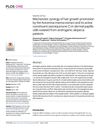
Avicennia marina extract and avicequinone C can potentially promote hair growth and treat hair loss by interfering with hair loss mechanisms and boosting growth factors.
 38 citations
,
October 2006 in “Fertility and Sterility”
38 citations
,
October 2006 in “Fertility and Sterility” The document concludes that identifying the cause of amenorrhea is crucial for proper treatment.
 30 citations
,
July 2004 in “Fertility and Sterility”
30 citations
,
July 2004 in “Fertility and Sterility” Amenorrhea is when a woman doesn't have periods, with primary amenorrhea starting by age 15 or within five years of breast development, and secondary amenorrhea when periods stop for three months. It affects 3-4% of women not pregnant, breastfeeding, or in menopause, mainly due to polycystic ovary syndrome, hypothalamic amenorrhea, hyperprolactinemia, and ovarian failure.
 21 citations
,
September 2004 in “Fertility and Sterility”
21 citations
,
September 2004 in “Fertility and Sterility” Amenorrhea, or the absence of periods, should be evaluated by age 15 or within five years of early breast development, and is most commonly caused by conditions like polycystic ovary syndrome and hypothalamic amenorrhea.
 1 citations
,
November 1953 in “Archives of Dermatology”
1 citations
,
November 1953 in “Archives of Dermatology” The document discusses various challenging skin conditions and their treatments.
The case shows the difficulty in diagnosing certain conditions when standard tests are negative.
 July 2015 in “Cambridge University Press eBooks”
 Androgens like testosterone affect skin health and can lead to conditions such as acne and hair loss, with various treatments available.
 22 citations
,
September 1994 in “The Journal of Clinical Endocrinology and Metabolism”
22 citations
,
September 1994 in “The Journal of Clinical Endocrinology and Metabolism” Finasteride reduces dihydrotestosterone, increases testosterone, and may treat hirsutism in women.