5 citations
,
June 2016 in “JAMA Dermatology” People with hair loss should use strong sun protection to prevent scalp skin cancer.
 15 citations
,
May 2014 in “Journal of dermatology”
15 citations
,
May 2014 in “Journal of dermatology” Zouboulis syndrome is a rare condition that helps diagnose monosomy 18p early.
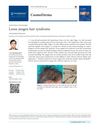 February 2023 in “Cosmoderma”
 Loose anagen hair syndrome causes easily shed hair but usually improves with time.
May 2003 in “Journal of clinical oncology” 62 citations
,
May 2016 in “British journal of dermatology/British journal of dermatology, Supplement”  August 2010 in “Journal of Investigative Dermatology”
 New hair regrowth model introduced, imiquimod kills skin cancer cells, T-cadherin loss makes skin cancer more invasive, no strong link between PTCH1 gene and skin cancer after transplant, and male teens more likely to have hereditary hair loss.
7 citations
,
March 1993 in “International Journal of Oncology” Basal cell carcinoma shows keratin patterns similar to hair follicle structures.
January 2021 in “Dermatology online journal” One twin girl has Loose anagen syndrome with poorly anchored hair, diagnosed with a simple hair pull test, while her identical twin does not have the condition.
24 citations
,
January 1985 in “Dermatology” Higher levels of certain immune cells in hair follicles may contribute to alopecia areata.
78 citations
,
May 2012 in “Journal of Investigative Dermatology” A specific gene mutation causes woolly hair and hair loss.
 14 citations
,
January 2015 in “Acta dermato-venereologica”
14 citations
,
January 2015 in “Acta dermato-venereologica” Acitretin significantly reduced inflammatory attacks in a woman with Naevus Comedonicus Syndrome but caused side effects.
 1 citations
,
January 2021 in “Dermatology online journal”
1 citations
,
January 2021 in “Dermatology online journal” A unique case showed a rare combination of two types of lichen planus on the face.
 29 citations
,
September 2014 in “American Journal of Dermatopathology”
29 citations
,
September 2014 in “American Journal of Dermatopathology” Horizontal sections of scalp biopsies are good for diagnosing Central Centrifugal Cicatricial Alopecia and help customize treatment.
5 citations
,
February 2005 in “Journal of the American Academy of Dermatology” Focal palmoplantar callosities may help diagnose non-Herlitz junctional epidermolysis bullosa.
January 1962 in “Archives of Dermatology” A 5-year-old girl has lipoid proteinosis, causing voice issues, hair thinning, skin lesions, and tongue movement problems.
June 2001 in “European Journal of Dermatology” A 54-year-old woman experienced progressive hair loss starting in adolescence, leading to sparse scalp hair and almost no eyebrows or eyelashes.
1 citations
,
May 2016 in “Aktuelle Dermatologie” Trichoscopy helps monitor inflammation in Lichen planopilaris.
7 citations
,
May 2021 in “Clinical Case Reports” Alopecic and aseptic nodules of the scalp are rare, treatable, and often resolve with doxycycline or on their own.
66 citations
,
February 2013 in “PeerJ” Activating cannabinoid receptor 1 reduces certain keratin levels, potentially aiding psoriasis treatment.
 January 2026 in “Acta Dermatovenerologica Alpina Pannonica et Adriatica”
 Primary cicatricial alopecia causes permanent hair loss by destroying hair follicles, and its exact cause is unknown.
January 2012 in “Open MIND” Oral minoxidil can cause painful skin bumps and scarring in some people.
 January 2023 in “Indian dermatology online journal”
 A boy with Pachyonychia congenita has a confirmed gene mutation, highlighting the need for a local genetic database in India.
April 2023 in “Journal of Investigative Dermatology” Trichohyalin in hair can trigger immune attacks in alopecia areata.
 2 citations
,
August 2012 in “Journal of the American Academy of Dermatology”
2 citations
,
August 2012 in “Journal of the American Academy of Dermatology” Two patients with the same genetic mutation had both blistering skin and easily pulled out hair.
11 citations
,
May 2013 in “Journal of Investigative Dermatology” KRTAP10 proteins help form the hair shaft's tough outer layer by interacting with specific hair keratins.
 7 citations
,
December 2016 in “British Journal of Dermatology”
7 citations
,
December 2016 in “British Journal of Dermatology” The report suggests that hair loss in Cronkhite-Canada syndrome may be caused by alopecia areata incognita, as shown by a patient's improvement with treatment.
 3 citations
,
January 2019 in “Journal of Dermatology”
3 citations
,
January 2019 in “Journal of Dermatology” The p.P25L mutation in the KRT5 gene causes a rare skin condition that worsens over time and may lead to hair loss starting in young adulthood.
June 2025 in “Dermatologic Surgery” Surgery can effectively treat severe eyelid turning out caused by a rare skin disorder.