 June 2016 in “American Journal of Cardiology”
 Hair loss may indicate higher risk of heart disease.
 80 citations
,
January 1995 in “The American Journal of Medicine”
80 citations
,
January 1995 in “The American Journal of Medicine” Hair loss in androgenetic alopecia is caused by genetic factors and androgen excess, and can be treated with combined therapies.
 110 citations
,
July 2010 in “Journal of The American Academy of Dermatology”
110 citations
,
July 2010 in “Journal of The American Academy of Dermatology” Hair loss linked to higher heart disease risk in both men and women.
 39 citations
,
October 2018 in “Lupus Science & Medicine”
39 citations
,
October 2018 in “Lupus Science & Medicine” Different types of hair loss in lupus need careful diagnosis for proper treatment.
 32 citations
,
March 2021 in “Journal of cosmetic dermatology (Print)”
32 citations
,
March 2021 in “Journal of cosmetic dermatology (Print)” COVID-19 infection may trigger alopecia areata in some patients.
 24 citations
,
March 2011 in “British Journal of Dermatology”
24 citations
,
March 2011 in “British Journal of Dermatology” Men with hair loss have more DNA changes in back-of-head hair follicles, possibly protecting them from thinning.
 21 citations
,
February 2009 in “Journal of the American Academy of Dermatology”
21 citations
,
February 2009 in “Journal of the American Academy of Dermatology” Some cases of tinea capitis, a fungal scalp infection, can look like scarring hair loss due to the body's immune response and the fungus itself.
 9 citations
,
May 2021 in “Dermatologic Therapy”
9 citations
,
May 2021 in “Dermatologic Therapy” Possible link between androgens and COVID-19 severity; more research needed.
 8 citations
,
June 2012 in “Australasian Journal of Dermatology”
8 citations
,
June 2012 in “Australasian Journal of Dermatology” A rare form of alopecia causes hair thinning without bald spots and may be more common than thought, responding well to steroid treatment.
 7 citations
,
January 2015 in “Current problems in dermatology”
7 citations
,
January 2015 in “Current problems in dermatology” Hair loss can be caused by stress, infections, drugs, and various diseases, with treatment depending on accurate diagnosis.
 3 citations
,
March 2020 in “International Journal of Dermatology”
3 citations
,
March 2020 in “International Journal of Dermatology” Tildrakizumab showed limited effectiveness in treating chronic alopecia areata in a small group of patients.
 3 citations
,
October 2019 in “JAAD Case Reports”
3 citations
,
October 2019 in “JAAD Case Reports” Two patients with lupus had an unusual type of hair loss not typical for the disease but improved with treatment.
 3 citations
,
February 2009 in “Journal of The European Academy of Dermatology and Venereology”
3 citations
,
February 2009 in “Journal of The European Academy of Dermatology and Venereology” Sparse hairs below frontal hairline can indicate early male balding.
 2 citations
,
March 2018 in “The Journal of Dermatology”
2 citations
,
March 2018 in “The Journal of Dermatology” The "color-transition sign" helps tell apart alopecia areata incognita from telogen effluvium by looking at hair color changes.
 2 citations
,
January 1997 in “Archives of Dermatology”
2 citations
,
January 1997 in “Archives of Dermatology” Alopecia areata can regrow hair in a pattern similar to androgenetic alopecia.
 January 2018 in “Hair transplant forum international”
 PRP injections can effectively treat alopecia areata.
 January 2025 in “Revista del Centro Dermatológico Pascua”
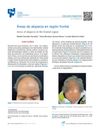
 The document presents a clinical case of a 71-year-old woman with fibrosing alopecia in a pattern distribution (FAPD), a scarring type of alopecia affecting the frontal region. It highlights the condition's distinction from androgenetic alopecia through its scarring nature and specific histological features, such as lymphocytic infiltration and follicular degeneration. FAPD is more prevalent in postmenopausal women and lacks definitive treatment guidelines. Current treatments, including oral minoxidil, spironolactone, and topical steroids, focus on halting progression rather than promoting hair regrowth in scarred areas. Early diagnosis and intervention are essential for improving outcomes.
 24 citations
,
January 2012 in “Indian Journal of Dermatology, Venereology and Leprology”
24 citations
,
January 2012 in “Indian Journal of Dermatology, Venereology and Leprology” Diffuse alopecia areata involves more inflammation and higher allergy-related antibodies than patchy types.
 13 citations
,
January 2014 in “Dermatology”
13 citations
,
January 2014 in “Dermatology” Radiation-induced alopecia after angioembolization usually heals on its own and can look like other hair loss types, but patient history helps prevent misdiagnosis.
 1 citations
,
July 2020 in “Journal of cosmetic dermatology”
1 citations
,
July 2020 in “Journal of cosmetic dermatology” A woman on immunosuppressants developed two rare scalp conditions, which improved with specific treatments.
 July 2018 in “Elsevier eBooks”
 Stopping tight hairstyles can prevent and reduce traction alopecia.
 162 citations
,
August 2004 in “Journal of Investigative Dermatology”
162 citations
,
August 2004 in “Journal of Investigative Dermatology” Hair loss causes stress and affects mental health; treatment and support needed.
 150 citations
,
April 2008 in “Journal of The American Academy of Dermatology”
150 citations
,
April 2008 in “Journal of The American Academy of Dermatology” Scalp dermoscopy is good for diagnosing a type of hair loss and helps choose the best spots for biopsy.
 105 citations
,
April 2004 in “Dermatologic Therapy”
105 citations
,
April 2004 in “Dermatologic Therapy” The document concludes that proper diagnosis and a combination of medical, hair-care, and surgical treatments are important for managing alopecia in black women.
 99 citations
,
July 2017 in “Clinical Reviews in Allergy & Immunology”
99 citations
,
July 2017 in “Clinical Reviews in Allergy & Immunology” New treatments for Alopecia Areata show promise but need to be more effective and affordable.
 70 citations
,
July 2020 in “Pharmacological Reports”
70 citations
,
July 2020 in “Pharmacological Reports” Cepharanthine, a Japanese hair loss drug, shows promise as a COVID-19 treatment but needs more testing.
 51 citations
,
January 2014 in “Pediatric Clinics of North America”
51 citations
,
January 2014 in “Pediatric Clinics of North America” The guide explains how to identify and treat children's hair loss, including fungal infections, autoimmune disorders, hairstyle changes, self-correcting conditions, and behavioral therapy for hair-pulling.
 39 citations
,
January 2011 in “Archives of Dermatology”
39 citations
,
January 2011 in “Archives of Dermatology” Reflectance confocal microscopy confirms that yellow dots are signs of damaged hair follicles in alopecia areata.
 36 citations
,
January 2010 in “Human & experimental toxicology”
36 citations
,
January 2010 in “Human & experimental toxicology” Eating paradise nuts led to selenium poisoning, causing nausea, hair loss, and other symptoms in two women.
 32 citations
,
July 2021 in “Journal of The American Academy of Dermatology”
32 citations
,
July 2021 in “Journal of The American Academy of Dermatology” Hair loss from COVID-19 usually starts around 45 days after infection and lasts about 47.5 days.