122 citations
,
December 2022 in “International Journal of Molecular Sciences” Nanoparticles improve skin treatment but need more research on safety and effectiveness.
3 citations
,
December 2021 in “Frontiers in Pharmacology” Ficus benghalensis leaf extracts can effectively promote hair growth and inhibit hair loss.
1 citations
,
February 2023 in “Plants” BB4CMU rice bran oil may help treat hair loss and gray hair.

New treatments for hair loss should target eight main causes and use specific plant compounds and peptides for better results.
 142 citations
,
March 2019 in “Frontiers in Cellular Neuroscience”
142 citations
,
March 2019 in “Frontiers in Cellular Neuroscience” The document concludes that adenosine receptor agonists have potential for treating various conditions, but only a few are approved due to challenges like side effects and the need for selective activation.
 83 citations
,
December 2001 in “Journal of Investigative Dermatology”
83 citations
,
December 2001 in “Journal of Investigative Dermatology” Minoxidil boosts hair growth by targeting adenosine and possibly sulfonylurea receptor 2B.
66 citations
,
February 2007 in “The journal of investigative dermatology/Journal of investigative dermatology” Adenosine may promote hair growth by increasing FGF-7 levels in dermal papilla cells.
 28 citations
,
October 2011 in “International Journal of Molecular Medicine”
28 citations
,
October 2011 in “International Journal of Molecular Medicine” Adenosine helps hair grow longer and stronger by boosting certain growth factors and signaling pathways.
 17 citations
,
April 2017 in “International Journal of Biological Macromolecules”
17 citations
,
April 2017 in “International Journal of Biological Macromolecules” Monoolein-alginate beads help heal wounds by controlling moisture and effectively delivering adenosine to the skin.
 11 citations
,
April 2015 in “International Journal of Cosmetic Science”
11 citations
,
April 2015 in “International Journal of Cosmetic Science” Adenosine helps grow thicker hair in Japanese men with hair loss.
 10 citations
,
October 2015 in “Journal of Dermatology”
10 citations
,
October 2015 in “Journal of Dermatology” Adenosine treatment thickens hair in Caucasian men with hair loss.
 8 citations
,
December 2020 in “The FASEB Journal”
8 citations
,
December 2020 in “The FASEB Journal” Blocking adenosine A2B receptor may prevent or treat hearing loss.
 3 citations
,
August 2020 in “Cutaneous and Ocular Toxicology”
3 citations
,
August 2020 in “Cutaneous and Ocular Toxicology” ATP helps prevent skin damage from vandetanib by reducing stress.
 2 citations
,
June 2017 in “Journal of biomedicine and translational research”
2 citations
,
June 2017 in “Journal of biomedicine and translational research” Lychee fruit polyphenol (Oligonol®) may regulate genes linked to cell growth and inflammation in human scalp cells.
1 citations
,
May 2024 in “International Journal of Molecular Sciences” Adenosine receptors could be promising targets for treating inflammatory skin diseases like psoriasis.
 1 citations
,
January 2018 in “Journal of cosmetology & trichology”
1 citations
,
January 2018 in “Journal of cosmetology & trichology” Hair loss lotion with specific ingredients effectively improves hair growth and thickness safely.
1 citations
,
January 2013 in “PubMed” Adenosine led to higher patient satisfaction than minoxidil for hair loss treatment.
 1 citations
,
January 2011 in “Journal of S C C J”
1 citations
,
January 2011 in “Journal of S C C J” Adenosine lotion improves hair thickness and density in women with thinning hair.
1 citations
,
September 1986 in “Journal of the Forensic Science Society” Hair root sheaths can be used to accurately analyze genetic markers.
 January 2026 in “Journal of Materials Chemistry B”
 TA-Ado effectively promotes hair growth and reduces hair loss.
 June 2024 in “International journal of molecular sciences”
 Adenosine complex helps increase hair thickness and density in hair loss.
December 2016 in “Chinese Journal of Dermatology” Adenosine boosts hair growth by increasing angiogenin levels.
 August 2016 in “Journal of Investigative Dermatology”
 The enzyme CD73 helps control human hair growth and could be targeted to treat hair growth disorders.
April 2016 in “Journal of Investigative Dermatology” CD73 may regulate hair growth and could be targeted for hair growth treatments.
March 2022 in “Molecules” Adenosine can help treat hair loss by promoting hair growth.
June 2020 in “Acta medica Philippina” Topical adenosine may effectively and safely treat hair loss.
13 citations
,
April 1982 in “The Journal of Dermatology” Poly(ADP-ribose) synthesis is linked to skin cell differentiation.
 11 citations
,
September 2011 in “British Journal of Dermatology”
11 citations
,
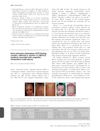
September 2011 in “British Journal of Dermatology” New ABCA12 gene mutations were linked to a skin condition with scaling and hair loss, and a treatment helped with hair loss in a related case.
 8 citations
,
October 2020 in “International Journal of Molecular Sciences”
8 citations
,
October 2020 in “International Journal of Molecular Sciences” Nonanal from fruits and vegetables promotes hair growth by increasing growth factors.
6 citations
,
February 2018 in “PubMed” Minoxidil helps hair growth by promoting stem cell differentiation through increased ATP synthase activity.