 14 citations
,
March 2022 in “Clinical Endocrinology”
14 citations
,
March 2022 in “Clinical Endocrinology” The document concludes that a systematic approach is crucial to identify causes of androgen excess in women beyond the most common cause, Polycystic ovary syndrome (PCOS).
 6 citations
,
January 2011 in “PubMed”
6 citations
,
January 2011 in “PubMed” The document concludes that most patients with endocrine disorders experience diffuse, non-scarring hair loss, with scarring hair loss being rare.
 19 citations
,
July 2013 in “The obstetrician & gynaecologist”
19 citations
,
July 2013 in “The obstetrician & gynaecologist” The document concludes that careful evaluation is needed to diagnose PCOS correctly due to similar symptoms in other conditions, and accurate testosterone level measurement is crucial.
 4 citations
,
November 2013 in “Journal of IMAB - Annual Proceeding (Scientific Papers)”
4 citations
,
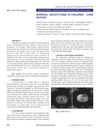
November 2013 in “Journal of IMAB - Annual Proceeding (Scientific Papers)” A rare adrenal tumor in a 9-year-old girl was successfully treated with surgery.
 2 citations
,
May 2018 in “Diagnosis”
2 citations
,
May 2018 in “Diagnosis” A 68-year-old woman developed male traits due to a tumor in her ovary, which was removed, returning her hormone levels to normal.
 2 citations
,
January 2013 in “Elsevier eBooks”
2 citations
,
January 2013 in “Elsevier eBooks” The chapter explains the causes of excessive hair growth and masculinization in women and how to measure hormone levels related to these conditions.
 1 citations
,
January 2006
1 citations
,
January 2006 Hirsutism is mainly caused by high androgen levels or sensitivity, with PCOS being the most common cause.
1 citations
,
December 2019 in “Medical Journal of Dr D Y Patil Vidyapeeth” A rare adrenal gland tumor can cause unusual symptoms due to hormone changes.
 352 citations
,
January 2006 in “The Journal of Clinical Endocrinology and Metabolism”
352 citations
,
January 2006 in “The Journal of Clinical Endocrinology and Metabolism” Most women referred for excess male hormone symptoms had polycystic ovary syndrome (PCOS), with other conditions being less common.
 195 citations
,
May 2003 in “Obstetrics and gynecology (New York. 1953. Online)/Obstetrics and gynecology”
195 citations
,
May 2003 in “Obstetrics and gynecology (New York. 1953. Online)/Obstetrics and gynecology” Most women with excess hair growth have an underlying hormonal issue, often treated with medication and hair removal methods.
 2 citations
,
November 2017 in “Journal of Endocrinological Investigation”
2 citations
,
November 2017 in “Journal of Endocrinological Investigation” The painting of an 18th-century Sicilian baroness shows she had hair loss, possibly due to ovarian issues, insulin resistance, or a specific type of tumor.
 September 2024 in “Pediatrics in Review”
 Parental support and gender-affirming care are crucial for the mental health of transgender adolescents.
The document concludes that antiandrogenic drugs like cyproterone acetate and spironolactone are effective but not permanent treatments for skin-related androgenization in women.
 35 citations
,
March 2012 in “Experimental and Clinical Endocrinology & Diabetes”
35 citations
,
March 2012 in “Experimental and Clinical Endocrinology & Diabetes” The conclusion is that accurately identifying the cause of high androgen levels in women with PCOS is crucial and requires specific tests.
 11 citations
,
January 2013 in “Indian Journal of Endocrinology and Metabolism”
11 citations
,
January 2013 in “Indian Journal of Endocrinology and Metabolism” A woman with a rare adrenal tumor and hormonal disorder had improved testosterone levels after surgery, but her menstrual irregularities continued.
 1 citations
,
January 2019 in “Medical principles and practice”
1 citations
,
January 2019 in “Medical principles and practice” A boy's hair loss improved after tumor removal and vitamin D treatment, but hair loss returned despite normal vitamin D and no tumor regrowth.
January 2013 in “Obstetrical & gynecological survey” Most women with hirsutism have normal hormone levels and can be treated with cosmetic methods; obesity and PCOS are common causes, and treatments depend on the underlying issue.
 29 citations
,
December 2012 in “Current Opinion in Endocrinology, Diabetes and Obesity”
29 citations
,
December 2012 in “Current Opinion in Endocrinology, Diabetes and Obesity” With careful management, people with congenital adrenal hyperplasia can have successful pregnancies and become parents.
 May 2023 in “Frontiers in Endocrinology”
 Blocking CRF1 receptors improved male hormone levels and reduced testicular tumor size in men with a specific adrenal condition.
 42 citations
,
January 2006 in “Obstetrical & Gynecological Survey”
42 citations
,
January 2006 in “Obstetrical & Gynecological Survey” The document concludes that correct diagnosis and management of PCOS are important, and more research is needed on its risks and treatments.
11 citations
,
August 2019 in “PubMed” Hirsutism in women is mostly caused by polycystic ovary syndrome and idiopathic hyperandrogenism.
 2 citations
,
January 2014 in “International Journal of Endocrinology”
2 citations
,
January 2014 in “International Journal of Endocrinology” Women with a certain type of tumor had higher levels of pregnancy hormone and male hormones, which decreased after treatment.
1 citations
,
December 2025 in “World Journal of Biology Pharmacy and Health Sciences” Early detection and thorough evaluation of hirsutism in children are crucial to address underlying health issues.
April 2025 in “The Journal of Clinical Endocrinology & Metabolism” Hirsutism affects many women and is managed with a combination of medical treatments and hair removal, tailored to individual needs.
 1 citations
,
July 2022 in “Case reports in endocrinology”
1 citations
,
July 2022 in “Case reports in endocrinology” A 70-year-old woman with a malignant adrenal tumor improved after surgery and radiotherapy.
 May 2021 in “Journal of the Endocrine Society”
 The case shows the importance of quick and thorough evaluation of adrenal tumors to prevent rapid disease progression and poor outcomes.
 October 2024 in “Journal of the Endocrine Society”
 The case highlights the complexity of diagnosing high testosterone in older women and the need for thorough testing.
Hyperandrogenism is diagnosed using clinical signs, lab tests, and imaging.
 April 2020 in “Journal of the Endocrine Society”
 A patient with untreated congenital adrenal hyperplasia had large benign tumors in her adrenal glands removed, improving her symptoms.
6 citations
,
March 2021 in “Frontiers in surgery” A woman's symptoms of increased body hair and testosterone were caused by a rare adrenal tumor, which was removed successfully.