16 citations
,
November 2018 in “The journal of pain/Journal of pain” 14,15-EET may help reduce poststroke pain by affecting certain brain proteins.
3 citations
,
May 2025 in “Plant Cell & Environment” CLE14 peptide promotes root hair growth in Arabidopsis.
 26 citations
,
June 2018 in “The journal of immunology/The Journal of immunology”
26 citations
,
June 2018 in “The journal of immunology/The Journal of immunology” AIRE-deficient rats developed severe autoimmune disease similar to APECED, useful for testing treatments.
46 citations
,
November 2019 in “Journal of Integrative Plant Biology” CaM7 and CNGC14 interaction controls root hair growth in Arabidopsis.
January 2026 in “Zenodo (CERN European Organization for Nuclear Research)” January 2026 in “Zenodo (CERN European Organization for Nuclear Research)”  3 citations
,
August 2021 in “Research Square (Research Square)”
3 citations
,
August 2021 in “Research Square (Research Square)” The most common sign of aging at the gene level is more Ectodysplasin A2 Receptor (EDA2R) being made.
 June 2024 in “British Journal of Dermatology”
 KRT14 gene variants cause dermatopathia pigmentosa reticularis, affecting nails, teeth, and hair.
September 2023 in “Journal of the American Academy of Dermatology” 21 citations
,
September 2005 in “The anatomical record. Part A, Discoveries in molecular, cellular, and evolutionary biology/Anatomical record. Part A, Discoveries in molecular, cellular, and evolutionary biology” Caspase-14 is important for skin and hair development in all mammals.
A new AIRE gene mutation causes rare autoimmune symptoms in a Lebanese boy.
![The Synthesis of (−)-4-Methyl-8-Chloro-Trans-1,2,3,4,4a,5,6,10b-Octahydrobenzo-[f]-Quinolin-3-One-[3-14C] (LY300502-14C) via a Circuitous Route](/images/assets/73bab8dc-bdf0-45e3-8ef7-73d0d4b93cb1/small/21074.jpg) 3 citations
,
October 1994 in “Journal of Labelled Compounds and Radiopharmaceuticals”
3 citations
,
October 1994 in “Journal of Labelled Compounds and Radiopharmaceuticals” Scientists made a carbon-14 labeled version of a drug with a 48% yield and over 99% purity.
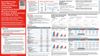 November 2025 in “SKIN The Journal of Cutaneous Medicine”
 Baricitinib works better in adolescents than adults for treating severe alopecia areata.
9 citations
,
August 2021 in “Biomedicines” 17β-estradiol boosts APE1/Ref-1 secretion in cells and mice via a calcium-dependent pathway.
66 citations
,
August 2007 in “Applied and environmental microbiology” The engineered yeast strain BLYAS can quickly and sensitively detect androgenic chemicals.
The 1540nm fractional erbium-glass laser helps treat hair loss caused by hormones.
July 2024 in “Journal of Investigative Dermatology” ATR04-484 ointment shows promise for treating skin issues from cancer therapies.
55 citations
,
April 2008 in “Clinical Genetics” A new mutation in the ST14 gene was found in a patient with ARIH syndrome, showing milder symptoms and no tooth issues.
March 2026 in “Experimental Dermatology” The new model helps understand and develop treatments for genetic skin disorders like AEC.
 9 citations
,
March 2018 in “European journal of dermatology/EJD. European journal of dermatology”
9 citations
,
March 2018 in “European journal of dermatology/EJD. European journal of dermatology” A new mutation in the ST14 gene causes a rare skin and hair disorder in a specific family.
6 citations
,
January 2000 in “The Journal of Trace Elements in Experimental Medicine” Zinc supplements effectively treat acrodermatitis enteropathica.
 February 2025 in “bioRxiv (Cold Spring Harbor Laboratory)”
 Keratin 15 helps keep skin cells in a young, undifferentiated state.
 1 citations
,
September 2023 in “Journal of the American Academy of Dermatology”
1 citations
,
September 2023 in “Journal of the American Academy of Dermatology” Baricitinib significantly improves hair regrowth in severe alopecia areata.
4 citations
,
December 2014 in “Dermatologica sinica/Zhōnghuá pífūkē yīxué zázhì” The excimer lamp is a safe and effective treatment for severe alopecia areata.
 1 citations
,
June 2019 in “Current developments in nutrition”
1 citations
,
June 2019 in “Current developments in nutrition” A patient with Ehlers-Danlos Syndrome improved after treatment for fat malabsorption and essential fatty acid deficiency.
 53 citations
,
September 1999 in “The journal of cell biology/The Journal of cell biology”
53 citations
,
September 1999 in “The journal of cell biology/The Journal of cell biology” K16 can partially replace K14 but causes hair loss and skin issues.
August 2024 in “British Journal of Dermatology” Rezpegaldesleukin shows promise for treating severe alopecia areata.
1 citations
,
August 2021 in “Journal of Investigative Dermatology” ASLAN004 was safe and well-tolerated, supporting further development for treating certain diseases.
![Activity of 17β-(N-Alkyl/Arylformamido) and 17β-[(N-Alkyl/Aryl) Alkyl/Arylamido]-4-Methyl-4-Aza-5α-Androstan-3-Ones as 5α-Reductase Inhibitors in the Hamster Flank Organ and Ear](/images/assets/861159f1-7bd4-420c-a16b-4829458efe68/small/15592.jpg) 10 citations
,
August 1998 in “Journal of Investigative Dermatology”
10 citations
,
August 1998 in “Journal of Investigative Dermatology” The compounds tested could potentially treat hair loss and alopecia.