15 citations
,
July 2015 in “Developmental Dynamics” Orai1 protein is crucial for tooth development and affects enamel thickness and mineralization.
4 citations
,
May 2023 in “Cells” Baricitinib and its combination with lonafarnib improve fat cell formation in certain genetic disorders.
Thymosin β4 helps with healing, inflammation, and organ protection.
May 2005 in “Faculty Opinions – Post-Publication Peer Review of the Biomedical Literature” Truncated LTBP-1 disrupts TGF-beta signaling, affecting hair growth.
 1 citations
,
June 2019 in “Current developments in nutrition”
1 citations
,
June 2019 in “Current developments in nutrition” A patient with Ehlers-Danlos Syndrome improved after treatment for fat malabsorption and essential fatty acid deficiency.
6 citations
,
June 2012 in “PloS one” A new mRNA variant of the SCF gene in sheep skin produces a shorter, different protein.
 73 citations
,
June 2010 in “PLoS Genetics”
73 citations
,
June 2010 in “PLoS Genetics” A gene mutation in mice causes hair loss, weak bones, and protein buildup, showing how protein processing issues can lead to diseases.
12 citations
,
August 2007 in “Human Molecular Genetics” Lymphotoxin-β is crucial for proper skin development in embryos.
 January 2025 in “Clinical and Translational Medicine”
 A specific RNA can help hair growth in baldness by boosting stem cell activity.
May 2022 in “The journal of immunology/The Journal of immunology” FOXN1 is crucial for thymus development and immune response in Xenopus laevis.
 50 citations
,
May 2011 in “Journal of Ethnopharmacology”
50 citations
,
May 2011 in “Journal of Ethnopharmacology” Eclipta alba extract shows potential as an anticancer agent by inhibiting cancer cell growth and promoting cell death.
 59 citations
,
April 2016 in “Cell Reports”
59 citations
,
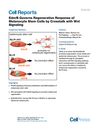
April 2016 in “Cell Reports” EdnrB signaling helps melanocyte stem cells regenerate and could be targeted to treat pigmentation issues.
December 2011 in “University of Southern California Digital Library” High BMP signaling disrupts hair growth and balance in skin cells.
31 citations
,
October 1992 in “PubMed” A mycobacterial protein shares a similar region with a human skin protein, possibly affecting skin diseases.
 October 2024 in “Journal of the Endocrine Society”
 Certain genetic variants impair enzyme activity, contributing to non-classic congenital adrenal hyperplasia.
 57 citations
,
January 2013 in “International Journal of Medical Sciences”
57 citations
,
January 2013 in “International Journal of Medical Sciences” Lef1 helps stem cells become hair cells by interacting with specific signaling pathways.
November 2024 in “Journal of Functional Foods” AP collagen peptides improve hair elasticity and gloss.
An infant with a zinc deficiency skin disorder improved with zinc treatment.
September 2023 in “Journal of the American Academy of Dermatology”  13 citations
,
January 2013 in “Applied and Environmental Microbiology”
13 citations
,
January 2013 in “Applied and Environmental Microbiology” A gene in Sebekia benihana, CYP-sb21, is needed for a specific reaction on the drug Cyclosporine A, which could be important for hair growth without affecting the immune system.
94 citations
,
July 2003 in “Journal of biological chemistry/The Journal of biological chemistry” EGF controls hair growth by regulating hair follicles' growth phases.
 November 2023 in “The journal of investigative dermatology/Journal of investigative dermatology”
 Removing MCPIP1 from myeloid cells in mice leads to hair loss and prevents skin tumors but causes pigmented spots.
 11 citations
,
July 2021 in “Physiologia Plantarum”
11 citations
,
July 2021 in “Physiologia Plantarum” SIPHL1 from tomato enhances plants' response to low phosphate levels.
July 2021 in “British Journal of Dermatology” The boy's genetic diagnosis of ectodermal dysplasia helped improve management and counseling for him and his sister.
 11 citations
,
March 2014 in “Journal of Investigative Dermatology”
11 citations
,
March 2014 in “Journal of Investigative Dermatology” Genetic mutation and carcinogen treatment are both needed for skin cancer to develop in these specific mice.
93 citations
,
March 2017 in “Molecular Plant” CNGC14 is crucial for calcium entry needed for root hair growth in plants.
6 citations
,
December 2023 in “Journal of Molecular Cell Biology” Removing Gsdma1/2/3 genes reduces skin cell overgrowth by blocking a specific cell pathway.
8 citations
,
June 2001 in “Journal of Biological Chemistry” A truncated protein linked to breast cancer may change cell adhesion.
 14 citations
,
July 2016 in “Anatomical Science International”
14 citations
,
July 2016 in “Anatomical Science International” The study suggests that the arrector pili muscle is important for hair health and its damage might contribute to hair loss.
24 citations
,
January 2023 in “Cancer Research” AMPK activation may reduce melanoma risk in red-haired individuals.