 1 citations
,
March 2023 in “European Journal of Human Genetics”
1 citations
,
March 2023 in “European Journal of Human Genetics” The UK's EDS National Diagnostic Service found that early diagnosis, lifestyle advice, and regular check-ups are crucial for managing vascular Ehlers-Danlos syndrome. A combination of losartan and bisoprolol can reduce vascular events, improving survival and quality of life.
 August 2025 in “BMC Pregnancy and Childbirth”
 A new EDA gene variant causes X-linked hypohidrotic ectodermal dysplasia in a Chinese family.
3 citations
,
January 2013 in “Türk veterinerlik ve hayvancılık dergisi/Turkish journal of veterinary and animal sciences” A cat in Turkey had Ehlers-Danlos syndrome, showing very stretchy skin and easy bruising.
 October 2023 in “Pediatric dermatology”
 Middle Eastern patients with epidermolysis bullosa show specific genetic mutations linked to different types of the disease.
18 citations
,
January 2018 in “BMC dermatology” A new mutation in the PLEC gene causes a rare condition with skin blistering, muscle weakness, and hair loss.
 April 2023 in “Journal of Investigative Dermatology”
 The specific skin disease variant p.(Arg2000Trp) in plectin can cause a wide range of symptoms, which should be considered when diagnosing patients.
 31 citations
,
August 2005 in “The American Journal of Dermatopathology”
31 citations
,
August 2005 in “The American Journal of Dermatopathology” The study concluded that PKP1 is essential for skin integrity and hair growth, and its dysfunction causes the symptoms of ectodermal dysplasia/skin fragility syndrome.
 May 2024 in “Animal genetics”
 A cat's poor wound healing was linked to a genetic deletion in the COL5A1 gene.
March 2026 in “Experimental Dermatology” The new model helps understand and develop treatments for genetic skin disorders like AEC.
 17 citations
,
August 2012 in “Journal of Medical Genetics”
17 citations
,
August 2012 in “Journal of Medical Genetics” A new mutation in the XEDAR gene might cause a rare skin condition called hypohidrotic ectodermal dysplasia.
 6 citations
,
January 2011 in “Journal of pediatric endocrinology & metabolism/Journal of pediatric endocrinology and metabolism”
6 citations
,
January 2011 in “Journal of pediatric endocrinology & metabolism/Journal of pediatric endocrinology and metabolism” An 11-year-old Greek girl was diagnosed with a rare genetic disorder, highlighting the importance of genetic testing and family history.
51 citations
,
January 1997 in “PubMed” GABEB is a less severe skin condition caused by a gene mutation affecting collagen, leading to blisters and other symptoms.
3 citations
,
July 2024 in “Frontiers in Medicine” Mutations in the KLHL24 gene cause a skin disorder in some Russian families.
 30 citations
,
June 2016 in “Journal of Human Genetics”
30 citations
,
June 2016 in “Journal of Human Genetics” Researchers found genetic mutations causing hypohidrotic ectodermal dysplasia in 88% of studied patients and identified new mutations and genetic variations affecting the disease.
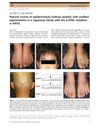 3 citations
,
January 2019 in “Journal of Dermatology”
3 citations
,
January 2019 in “Journal of Dermatology” The p.P25L mutation in the KRT5 gene causes a rare skin condition that worsens over time and may lead to hair loss starting in young adulthood.
 39 citations
,
January 2015 in “Annals of dermatology/Annals of Dermatology”
39 citations
,
January 2015 in “Annals of dermatology/Annals of Dermatology” Three new types of a skin blistering disease were found, caused by specific gene mutations.
 February 2009 in “Journal of The American Academy of Dermatology”
 The document concludes that detailed clinical descriptions of seven family cases help understand dominant dystrophic epidermolysis bullosa's symptoms and inheritance.
22 citations
,
September 2003 in “Journal of Investigative Dermatology” New mutations in the EBP gene cause CDPX2, affecting bones, skin, eyes, and hair, with females generally less affected than males.
 6 citations
,
August 2022 in “International Journal of Molecular Sciences”
6 citations
,
August 2022 in “International Journal of Molecular Sciences” EDA signaling is linked to skin disorders, various cancers, and liver disease.
 January 2023 in “Indian dermatology online journal”
 A child with ectodermal dysplasia-syndactyly syndrome has a new mutation in the NECTIN4 gene.
 32 citations
,
April 2013 in “Anais Brasileiros de Dermatologia”
32 citations
,
April 2013 in “Anais Brasileiros de Dermatologia” The document concludes that inherited epidermolysis bullosa is a challenging genetic condition requiring multidisciplinary care and new treatments.
 2 citations
,
August 2012 in “Journal of the American Academy of Dermatology”
2 citations
,
August 2012 in “Journal of the American Academy of Dermatology” Two patients with the same genetic mutation had both blistering skin and easily pulled out hair.
March 2024 in “International journal of molecular sciences” Three specific genetic variants cause severe skin issues in children with EBS, highlighting the need for early genetic screening.
 January 1999 in “American Journal of Medical Genetics Part A”
 The report expanded knowledge of MBTPS1-related disorders by identifying new symptoms.
7 citations
,
April 2004 in “International Journal of Dermatology” The newborn's skin blistering is due to a genetic condition called epidermolytic hyperkeratosis.
44 citations
,
January 2017 in “Journal of Investigative Dermatology” Mutations in the KLHL24 gene cause skin blistering in epidermolysis bullosa simplex.
 April 2017 in “Journal of Investigative Dermatology”
 Certain mutations in the KLHL24 gene cause a skin disorder by breaking down an important skin protein.
20 citations
,
January 1997 in “Dermatology” The patient with EEC syndrome had scarring alopecia due to deep folliculitis, possibly linked to abnormal hair structure.
11 citations
,
December 2013 in “Clinical and experimental dermatology” A child with skin and heart issues had rare genetic mutations affecting skin and heart cell cohesion.

A new AIRE gene mutation causes rare autoimmune symptoms in a Lebanese boy.