 10 citations
,
December 2005 in “Aktuelle Dermatologie”
10 citations
,
December 2005 in “Aktuelle Dermatologie” Alfatradiol (0.025%) is an effective and safe treatment for hair loss in both women and men.
 1 citations
,
June 2017 in “Skin”
1 citations
,
June 2017 in “Skin” Apremilast may help treat lichen planopilaris and frontal fibrosing alopecia when other treatments fail.

Microneedling may improve quality of life and reduce inflammation in frontal fibrosing alopecia.
28 citations
,
June 1995 in “The Journal of Dermatology” The flaky skin mouse mutation is a natural model for studying human psoriasis.
 20 citations
,
January 2016 in “Intractable & Rare Diseases Research”
20 citations
,
January 2016 in “Intractable & Rare Diseases Research” Combination therapy, especially with finasteride, is effective for treating frontal fibrosing alopecia.
November 2012 in “Annales de Dermatologie et de Vénéréologie” Frontal fibrosing alopecia can occur in children, not just postmenopausal women.
 1 citations
,
July 2019 in “Clinical Rheumatology”
1 citations
,
July 2019 in “Clinical Rheumatology” Leflunomide is more likely to help treat alopecia areata than cause it.
April 2017 in “Leukemia research” Tofacitinib helped most teenagers in the study regrow hair with mild side effects.
 1 citations
,
May 2025 in “The Journal of Rheumatology”
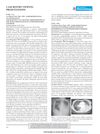
1 citations
,
May 2025 in “The Journal of Rheumatology” A fungus ball in the lung can cause coughing up blood in SLE patients.
 November 2025 in “DOAJ (DOAJ: Directory of Open Access Journals)”
 The choice between belimumab and anifrolumab for treating lupus depends on the patient's specific symptoms.
 March 2026 in “Zenodo (CERN European Organization for Nuclear Research)”
 The N-K GM Series offers a free, effective solution to eliminate aflatoxin and cancer, improving health and life expectancy.
 26 citations
,
August 2016 in “Actas Dermo-Sifiliográficas”
26 citations
,
August 2016 in “Actas Dermo-Sifiliográficas” Frontal Fibrosing Alopecia in men is often missed and can come with symptoms like facial bumps and hair loss on eyebrows and limbs.
December 2018 in “International journal of women’s dermatology” FFA in young women is often missed, and no single treatment works best.
 1 citations
,
January 2020 in “Skin appendage disorders”
1 citations
,
January 2020 in “Skin appendage disorders” Finasteride may help treat frontal fibrosing alopecia, but more research is needed.
3 citations
,
March 2024 in “Journal of the American Academy of Dermatology” Low-dose naltrexone helps improve symptoms and stabilize frontal fibrosing alopecia and lichen planopilaris.
 5 citations
,
August 2014 in “Journal of The American Academy of Dermatology”
5 citations
,
August 2014 in “Journal of The American Academy of Dermatology” Smoking doesn't cause or prevent Frontal Fibrosing Alopecia, hormonal imbalance may be involved, and a combination of antiandrogens and steroids can help stabilize the condition.
 April 2023 in “World Journal Of Advanced Research and Reviews”
 Cosmetic products or emotional factors might contribute to Frontal Fibrosing Alopecia, and trichoscopy is useful for diagnosis.
 January 2018 in “General internal medicine and clinical innovations”
 Busulfan/cyclophosphamide and total bone irradiation are equally effective for AML transplants.
 6 citations
,
January 2018 in “International Journal of Trichology”
6 citations
,
January 2018 in “International Journal of Trichology” A married couple both developed a rare type of hair loss, possibly due to shared environmental factors.
Excluding alopecia and mucous membrane components from the CLASI-A score reduces its effectiveness in capturing important disease activity.
 6 citations
,
June 2018 in “PLOS ONE”
6 citations
,
June 2018 in “PLOS ONE” The Alopecia Areata Assessment Tool (ALTO) effectively identifies alopecia areata from other hair loss types but needs more validation.
12 citations
,
January 2016 in “Skin Appendage Disorders” Hydroxychloroquine is ineffective for treating frontal fibrosing alopecia with lupus erythematosus.
 May 2019 in “Anais brasileiros de dermatologia/Anais Brasileiros de Dermatologia”
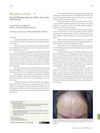
 Frontal fibrosing alopecia mostly affects postmenopausal women, with diagnosis often delayed by 3 years.
 6 citations
,
December 2004 in “Anais Brasileiros de Dermatologia”
6 citations
,
December 2004 in “Anais Brasileiros de Dermatologia” Some family members had a condition with both loose hair and unique eye changes, possibly indicating a new type of ectodermal dysplasia.
 March 2023 in “Journal of Cosmetic Dermatology”
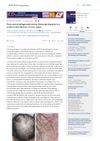
 A woman's progressive hair loss was correctly diagnosed as a rare condition called fibrosing alopecia in a pattern distribution after initially being mistaken for a more common type.
 May 2023 in “Indian journal of science and technology”
 The new deep learning system can accurately recognize hair loss conditions with a 95.11% success rate.
 2 citations
,
January 2017 in “Przegla̧d dermatologiczny”
2 citations
,
January 2017 in “Przegla̧d dermatologiczny” Two trichoscopic patterns found in hair loss: diffuse fibrotic and androgenetic alopecia, affecting treatment choice and regrowth chances.

The document concludes that the FOLLYSIS© system improves hair transplant processes and patient monitoring with high accuracy and less skin trauma.
 14 citations
,
April 2019 in “International Journal of Women's Health”
14 citations
,
April 2019 in “International Journal of Women's Health” Some treatments can stabilize Frontal Fibrosing Alopecia, but more research is needed to find effective treatments, and hair transplants often fail.
 August 2021 in “Case Reports”
 A woman thought to have rosacea was actually suffering from Frontal Fibrosing Alopecia, a hair loss condition. Despite treatment, her condition didn't change, showing the importance of accurate early diagnosis.