January 2026 in “Dermatologic Therapy” Folliculotropic Mycosis Fungoides requires stage-based treatment, with early stages using skin therapies and advanced stages needing aggressive treatments.
April 2025 in “International Journal of Dermatology” Renaming frontal fibrosing alopecia to a syndrome could improve diagnosis and treatment.
 March 2018 in “Dermatología Argentina”
 The study found that the average age of women diagnosed with Frontal Fibrosing Alopecia in Argentina is higher than in other countries, but their symptoms are similar.
71 citations
,
February 2012 in “The American Journal of Human Genetics” A specific ATR gene mutation is linked to a hereditary oropharyngeal cancer syndrome.
 July 2015 in “Journal of the Dermatology Nurses’ Association”
 A 66-year-old woman experienced hair loss due to Frontal Fibrosing Alopecia, a condition with no consistently effective treatment, but it usually stabilizes over time. More research is needed for better understanding and treatment options.
January 2015 in “Faculty of 1000 Research Ltd” Androgenetic alopecia may be irreversible due to the detachment of a muscle from hair follicles.
February 2026 in “The Plant Journal” ADF8 and ADF11 help root hairs grow by responding to hormones and environmental signals.
July 2020 in “DOAJ (DOAJ: Directory of Open Access Journals)” Excessive sun protection might contribute to frontal fibrosing alopecia.
3 citations
,
June 2016 in “JEADV. Journal of the European Academy of Dermatology and Venereology/Journal of the European Academy of Dermatology and Venereology” A patient with hair loss condition grew excessive hair in areas covered by a cast.
 February 2025 in “Cermin Dunia Kedokteran”
 ADEM is a sudden brain disorder often following infection or vaccination, diagnosed by ruling out other conditions.
August 2018 in “Journal of the American Academy of Dermatology”  August 2021 in “Case Reports”
 A woman thought to have rosacea was actually suffering from Frontal Fibrosing Alopecia, a hair loss condition. Despite treatment, her condition didn't change, showing the importance of accurate early diagnosis.
 3 citations
,
November 2020 in “Clinical, Cosmetic and Investigational Dermatology”
3 citations
,
November 2020 in “Clinical, Cosmetic and Investigational Dermatology” Early diagnosis and combination therapy, especially with finasteride and dutasteride, are key to managing Frontal Fibrosing Alopecia effectively.
4 citations
,
January 2025 in “Diagnostics” High-frequency ultrasonography helps diagnose and manage hair and nail disorders safely and effectively.
 2 citations
,
April 2017 in “Actas Dermo-Sifiliográficas”
2 citations
,
April 2017 in “Actas Dermo-Sifiliográficas” Best treatment for Frontal Fibrosing Alopecia is 5-alpha-reductase inhibitors and intralesional corticosteroids.
 3 citations
,
May 2024 in “Journal of Drug Delivery and Therapeutics”
3 citations
,
May 2024 in “Journal of Drug Delivery and Therapeutics” Aftimoon has potential health benefits for various diseases and could be integrated into modern healthcare.
12 citations
,
July 2020 in “Actas Dermo-Sifiliográficas” Frontal fibrosing alopecia mostly affects postmenopausal women, often involves eyebrows, and is linked to conditions like lichen planus and rosacea.
January 2014 in “Spectrum Research Repository (Concordia University)” FA-MNPs effectively targeted and killed cancer cells but didn't overcome drug resistance.
 1 citations
,
July 2024 in “Skin Research and Technology”
1 citations
,
July 2024 in “Skin Research and Technology” High-frequency ultrasound can effectively visualize and assess hair loss.
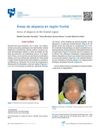 January 2025 in “Revista del Centro Dermatológico Pascua”
 Early diagnosis and treatment can help manage fibrosing alopecia in older women.
July 2024 in “Journal of Investigative Dermatology” The Fas/FasL pathway may play a role in alopecia areata.
12 citations
,
December 2011 in “Journal of Dermatological Science” The C-terminal tail of AHF/trichohyalin is essential for organizing keratin filaments in keratinocytes.
 33 citations
,
January 2015 in “Journal of Cosmetic Dermatology”
33 citations
,
January 2015 in “Journal of Cosmetic Dermatology” Familial frontal fibrosing alopecia affects premenopausal women too, and early diagnosis is important, but no proven medication exists yet.
 20 citations
,
January 2016 in “Intractable & Rare Diseases Research”
20 citations
,
January 2016 in “Intractable & Rare Diseases Research” Combination therapy, especially with finasteride, is effective for treating frontal fibrosing alopecia.
June 2025 in “British Journal of Dermatology” ALUDWIG can help standardize female hair loss assessment from a single image.
October 2021 in “Scholarworks (University of Massachusetts Amherst)” FERONIA is crucial for plant growth, pollen tube reception, and sugar signaling.
 9 citations
,
August 2018 in “Journal der Deutschen Dermatologischen Gesellschaft”
9 citations
,
August 2018 in “Journal der Deutschen Dermatologischen Gesellschaft” Most patients with frontal fibrosing alopecia are middle-aged women, often have thyroid disease, and some treatments can help stabilize the condition.
 40 citations
,
January 2013 in “International journal of trichology”
40 citations
,
January 2013 in “International journal of trichology” Perifollicular erythema can indicate active frontal fibrosing alopecia.
 21 citations
,
September 2021 in “Fertility and Sterility”
21 citations
,
September 2021 in “Fertility and Sterility” A blood test level of 3.2 ng/mL of Antimüllerian hormone is good for identifying polycystic ovarian morphology in European women aged 25–45.
 57 citations
,
January 2003 in “Clinical and experimental dermatology”
57 citations
,
January 2003 in “Clinical and experimental dermatology” Postmenopausal frontal fibrosing alopecia is a type of hair loss in postmenopausal women that may stop on its own but has no effective treatment.