 1 citations
,
October 2017
1 citations
,
October 2017 Suruhan extract made rabbit hair grow longer but didn't increase hair thickness.
 November 2017 in “International journal of family & community medicine”
 A man's low testosterone and related symptoms improved after he stopped taking hair loss drugs.
 September 2017 in “World journal of Pharmacy and pharmaceutical sciences”
 The polyherbal ointment made from plant extracts was safe and effectively promoted hair growth in rats.
 29 citations
,
July 2008 in “Journal of Cutaneous Pathology”
29 citations
,
July 2008 in “Journal of Cutaneous Pathology” Hair root sheaths are more common in non-scarring hair loss and help diagnose the type of hair loss.
 9 citations
,
August 2008 in “Journal of Oral and Maxillofacial Surgery”
9 citations
,
August 2008 in “Journal of Oral and Maxillofacial Surgery” A woman experienced temporary hair loss after jaw surgery, which can be reduced by careful head positioning during the operation.
 59 citations
,
June 2008 in “Journal of The American Academy of Dermatology”
59 citations
,
June 2008 in “Journal of The American Academy of Dermatology” The article explains the genetic causes and symptoms of various hair disorders and highlights the need for more research to find treatments.
 7 citations
,
August 2008 in “Cases Journal”
7 citations
,
August 2008 in “Cases Journal” A hair tightly wrapped around a toddler's toe caused severe crying and was treated by surgery.
 80 citations
,
March 2008 in “Contact Dermatitis”
80 citations
,
March 2008 in “Contact Dermatitis” Nearly half of the French individuals surveyed reported having a sensitive scalp, more common in women, often linked to hair loss and symptoms like itching, and triggered by factors including shampoos and pollution.
 22 citations
,
February 2008 in “Journal of Dermatological Science”
22 citations
,
February 2008 in “Journal of Dermatological Science” EPR spectroscopy showed that spontaneous hair growth results in thicker skin and less pigmented hair than depilation-induced growth.
 12 citations
,
February 2008 in “Journal of The American Academy of Dermatology”
12 citations
,
February 2008 in “Journal of The American Academy of Dermatology” Combining skin tissue pathology with genetics has greatly improved the diagnosis and understanding of certain skin diseases.
 18 citations
,
January 2008 in “Journal of The American Academy of Dermatology”
18 citations
,
January 2008 in “Journal of The American Academy of Dermatology” Certain proteins and their receptors are more active during the growth phase of human hair and could be targeted to treat hair disorders.
 43 citations
,
November 2007 in “Dermatologic Clinics”
43 citations
,
November 2007 in “Dermatologic Clinics” Hair and nail changes can indicate health issues, including cancer and side effects from cancer treatments.
 24 citations
,
January 2008 in “KARGER eBooks”
24 citations
,
January 2008 in “KARGER eBooks” The document concludes that ongoing research using animal models is crucial for better understanding and treating Alopecia Areata.
 September 2003 in “Journal of the Royal Society of Medicine”
 The document concludes that while some advocate for a patient voucher system, it may be unequal and current healthcare reforms should be given a chance, and it also recommends various medical books for their comprehensive coverage and advice on specific health issues.
 53 citations
,
October 1993 in “Drug Safety”
53 citations
,
October 1993 in “Drug Safety” Oral retinoids can cause side effects ranging from mild to severe, including birth defects, and require careful monitoring and contraception.
 1 citations
,
September 2023 in “Clinical, cosmetic and investigational dermatology”
1 citations
,
September 2023 in “Clinical, cosmetic and investigational dermatology” Certain genetic variants linked to immune response increase the risk of alopecia areata in Taiwanese people.
 3 citations
,
January 2018 in “Chiang Mai University Journal”
3 citations
,
January 2018 in “Chiang Mai University Journal” Centella asiatica extract may help promote hair growth.
4 citations
,
June 2023 in “Frontiers in immunology” JAK inhibitors help hair regrowth in alopecia areata but have a high risk of side effects.
 October 2022 in “BMC genomics”
 RNA editing significantly affects hair growth and follicle cycling in the Tianzhu white yak.
 3 citations
,
May 2022 in “The journal of investigative dermatology/Journal of investigative dermatology”
3 citations
,
May 2022 in “The journal of investigative dermatology/Journal of investigative dermatology” Skin lesions in Carney Complex are caused by a gene change in some skin cells that leads to increased pigmentation and may lead to tumors.
4 citations
,
October 1993 in “Journal of the American Academy of Dermatology” Azelaic acid's effectiveness in treating certain skin conditions needs more research.
 34 citations
,
October 1982 in “Journal of applied polymer science”
34 citations
,
October 1982 in “Journal of applied polymer science” Moisture content significantly affects how human hair breaks.
FGF9 helps hair follicles grow in small-tailed Han sheep by affecting cell growth and certain signaling pathways.
 September 2022 in “JAAD case reports”
 The man has a genetic skin condition called pachyonychia congenita.
 August 2023 in “Research Square (Research Square)”
 Two microRNAs affect hair follicle development in sheep by targeting specific genes.
 1 citations
,
November 2022 in “DOAJ (DOAJ: Directory of Open Access Journals)”
1 citations
,
November 2022 in “DOAJ (DOAJ: Directory of Open Access Journals)” Male and female human hairs have different microscopic structures that can help in forensic analysis.
6 citations
,
May 2023 in “International journal of molecular sciences” Collagen-enhanced mesenchymal stem cells significantly improve skin wound healing.
April 2020 in “The FASEB journal” Poncirin is a promising inhibitor of Janus Kinase 3, potentially better than tofacitinib.
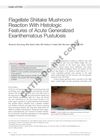 2 citations
,
September 2021 in “Cutis”
2 citations
,
September 2021 in “Cutis” Eating shiitake mushrooms caused a man to develop a rash similar to a skin condition known as AGEP.
December 2012 in “Reactions weekly”