 6 citations
,
February 2023 in “Journal of the American Academy of Dermatology”
6 citations
,
February 2023 in “Journal of the American Academy of Dermatology” Upadacitinib improved hair regrowth and quality of life in alopecia areata patients with minimal side effects.
 January 2026 in “Figshare”
 Finasteride can cause melasma, especially in people with darker skin.
 5 citations
,
December 2019 in “JAAD Case Reports”
5 citations
,
December 2019 in “JAAD Case Reports” A woman experienced rapid hair loss after taking albendazole, but it started to improve when she stopped the medication.
 4 citations
,
August 2022 in “The Scientific World Journal”
4 citations
,
August 2022 in “The Scientific World Journal” Merremia peltata leaf extract, particularly the bufotalinin compound, shows potential for treating hair loss.
 January 2024 in “International Journal of Dermatology Venereology and Leprosy Sciences”
 Tofacitinib may be safe and effective for treating certain skin conditions in children.
1 citations
,
September 2025 in “Eye” Certain drugs can cause eyelid inflammation, so doctors should monitor and educate patients on eyelid care.
 6 citations
,
June 2016 in “Experimental Dermatology”
6 citations
,
June 2016 in “Experimental Dermatology” Frontal Fibrosing Alopecia is a poorly understood condition that is hard to treat and causes distressing hair loss.
October 2025 in “Phytomedicine” Bazi Bushen capsules reduce skin aging and damage from UV rays.
 April 2017 in “Australasian Journal of Dermatology”
 The session covered updates on skin treatments, including radiotherapy, imiquimod, acitretin, JAK inhibitors, and strategies for managing rosacea and preventing surgical infections.
3 citations
,
July 2022 in “Indian Journal of Dermatology” ALEP is a drug-triggered skin reaction with pustules that clears up in a week after stopping the drug.
 December 2023 in “Bulletin of the Medical Institute of Continuing Education”
 Angelica Dahurica extract helps reduce hair loss and improve hair growth and scalp condition.
May 2024 in “Archives of Dermatological Research” TAT-GILZ peptide promotes hair growth by boosting stem cell activity.
 15 citations
,
December 2014 in “Dermatology and therapy”
15 citations
,
December 2014 in “Dermatology and therapy” Sorafenib can cause facial acne-like eruptions, which improve after reducing the dose or stopping the drug.
 April 2023 in “Revista colombiana de reumatología”
 JAK inhibitors like tofacitinib can effectively treat severe alopecia areata.
 July 2025 in “Journal of the European Academy of Dermatology and Venereology”
 A new treatment plan helps manage folliculitis decalvans effectively.
 222 citations
,
September 2016 in “JCI insight”
222 citations
,
September 2016 in “JCI insight” Tofacitinib is safe and effective for severe alopecia areata, but hair loss may return 2 months after stopping treatment.
 98 citations
,
January 2013 in “Journal of The American Academy of Dermatology”
98 citations
,
January 2013 in “Journal of The American Academy of Dermatology” Dutasteride may help stabilize Frontal Fibrosing Alopecia, but more research is needed.
 26 citations
,
June 2018 in “Australasian Journal of Dermatology”
26 citations
,
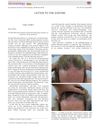
June 2018 in “Australasian Journal of Dermatology” Stopping sunscreen use on the forehead led to hair regrowth in a woman with frontal fibrosing alopecia.
1 citations
,
April 2016 in “Journal of Investigative Dermatology” Zinc deficiency causes reversible hair loss by disrupting hair growth and stem cell function.
The article suggests that patients with Frontal Fibrosing Alopecia may have more contact allergies, but it doesn't prove that allergies cause the condition.
TNFα and interleukin-1 blockers reduce skin inflammation from EGFR antibody therapy.
 August 2019 in “Reactions Weekly”
 Daclizumab may cause psoriasis-like skin problems in multiple sclerosis patients.
 1 citations
,
January 2016 in “International journal of research in ayurveda and pharmacy”
1 citations
,
January 2016 in “International journal of research in ayurveda and pharmacy” The study found that a specific combination of five medicinal plants effectively inhibits the fungus that causes dandruff.
 9 citations
,
January 2017 in “Organic Process Research & Development”
9 citations
,
January 2017 in “Organic Process Research & Development” In 2017, a new method was created to efficiently produce a topical antiandrogen, a compound used to treat excess sebum and acne, with a high yield and purity.
 May 2025 in “Journal of Nanobiotechnology”
 The gel improves hair regrowth and reduces irritation in alopecia areata treatment.
 1 citations
,
July 2019 in “Medicina Clínica (English Edition)”
1 citations
,
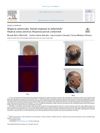
July 2019 in “Medicina Clínica (English Edition)” Tofacitinib partially improved hair regrowth in a patient with severe hair loss.
![Discovery of 7-Methoxy-6-[4-(4-Methyl-1,3-Thiazol-2-yl)-1H-Imidazol-5-yl]-1,3-Benzothiazole (TASP0382088): A Potent and Selective Transforming Growth Factor-β Type I Receptor Inhibitor as a Topical Drug for Alopecia](/images/assets/9620bd26-3366-4f2a-bcac-f511697bbc41/small/35997.jpg) 6 citations
,
January 2013 in “Chemical & pharmaceutical bulletin/Chemical and pharmaceutical bulletin”
6 citations
,
January 2013 in “Chemical & pharmaceutical bulletin/Chemical and pharmaceutical bulletin” A new compound shows promise as a topical treatment for hair loss.
TNFα and interleukin-1 blockers reduce skin inflammation from EGFR antibody therapy.
74 citations
,
August 2002 in “Clinical Endocrinology” Flutamide and CPA are more effective than finasteride for treating acne in hyperandrogenic women.