January 2016 in “Dermatology Online Journal” Hormonal therapy changes skin and hair in transgender patients, who need better researched dermatologic care.
 January 2016 in “Springer eBooks”
 The document concludes that there are various causes and treatments for hair loss, with hair transplantation being a notable option.
 January 2016 in “Georg Thieme Verlag eBooks”
 The document recommends personalized, culturally sensitive treatments to rejuvenate the aging Asian face, focusing on natural results and specific techniques for skin, hair, and facial features.
 January 2016 in “Elsevier eBooks”
 Trichoscopy is a key method for dermatologists to quickly and effectively diagnose hair and scalp conditions.
 November 2015 in “International journal of science and research”
 Adult acne is mostly inflammatory, affects women more, and often scars, needing good treatment to prevent damage.
 April 2015 in “Cambridge University Press eBooks”
 Many women experience sexual dysfunction, but few seek help, and better treatment and medical training are needed.
 February 2015 in “Dermatologic Surgery”
 Smaller reticle sizes are as accurate as the standard size for measuring hair density in hair restoration.
 January 2015 in “Our Dermatology Online”
 Intralesional triamcinolone is the most effective treatment for hair regrowth in alopecia areata patients.
 January 2015 in “Przegla̧d dermatologiczny”
 308 nm excimer light therapy may help hair regrowth in alopecia areata with delayed results and no serious side effects.
North American ginseng extract helped regrow hair in balding mice.
 September 2014 in “Journal der Deutschen Dermatologischen Gesellschaft”
 Diabetes can cause a variety of skin disorders, some of which may signal more serious health issues.
 May 2014 in “Clinical and Experimental Dermatology”
 A 70-year-old woman with a rare skin condition improved after treatment with topical steroids and acitretin.
 May 2014 in “Journal of The American Academy of Dermatology”
 Psoriasis increases annual healthcare costs by $4,044 per patient, with biologic treatments costing significantly more than phototherapy.
 May 2014 in “Journal of The American Academy of Dermatology”
 Living near more dermatologists and using certain cancer screening tests lowers the chance of being diagnosed with advanced skin cancer.
 May 2014 in “Journal of The American Academy of Dermatology”
 The number of new cases of cutaneous B-cell lymphoma has leveled off since the early 2000s, and survival rates have improved since 1973.
 April 2014 in “Significance”
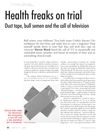
 Unconventional home remedies can sometimes show surprising results.
 March 2014 in “CRC Press eBooks”
 Some nutrients and antioxidants may improve skin and hair health, but more research is needed to confirm these benefits.
 November 2013 in “International Journal of Medical and Health Sciences”
 Doctors often miss Hair Tourniquet Syndrome, which can lead to serious damage if not treated quickly.
 October 2013 in “European Orthopaedics and Traumatology”
 A woman's hair grew back within 3 months after temporary hair loss from improper head positioning during shoulder surgery.

Millet extract, wheat germ oil, L-cystine, and calcium pantothenate reduced hair loss and improved hair growth in women with diffuse alopecia.
 May 2012 in “Scientific American”
 New app improves storm surge predictions; advances in baldness treatment show potential but require time.
 May 2012 in “Scientific American”
 Blocking a compound called prostaglandin D₂ might help treat hair loss.
 January 2012 in “Elsevier eBooks”
 Hair loss can cause emotional and social issues, and various treatments, including medication, surgery, and psychological support, are needed.
Combining traditional hair removal methods with modern technology could improve cosmetology.
 January 2011 in “Yearbook of Dermatology and Dermatologic Surgery”
 Thicker melanomas and nodular types are more likely to spread to sentinel lymph nodes.
 December 2010 in “Jurnal Natural (Faculty of Mathematics and Natural Science, Syiah Kuala University)”
 Age, race, family history, and certain genetic factors increase prostate cancer risk.
 February 2009 in “Journal of the American Academy of Dermatology”
 Transverse sections are better for non-scarring hair loss, vertical sections are better for lichen planopilaris, and either method works for other scarring hair loss types.
 September 2008 in “Fertility and Sterility”
 Exposure to fatty acids significantly increased androgen levels in female dogs, suggesting a link to conditions like insulin resistance and PCOS.
 March 2008 in “Aging health”
 Docetaxel is safe and works well for older people with cancer, with manageable side effects.
 July 2007 in “Clinical Risk”
 The claimant sued for negligence after a hair treatment caused harm and distress, and the defendant responded after legal action started.