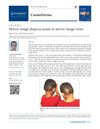
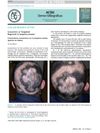
Mirror-image twins can have alopecia areata on opposite sides of their heads.
40 citations
,
September 2004 in “Biomacromolecules” The Glu413Lys mutation in keratin affects hair stability, while Glu413Asp does not.
13 citations
,
March 2020 in “Spectrochimica Acta Part A Molecular and Biomolecular Spectroscopy” Alopecic hair has more irregular structures and chemical changes than normal hair, reducing its strength.
March 2005 in “Journal of the American Academy of Dermatology” Higher levels of IL-1a and IL-1RA were found in severe alopecia areata cases.
 1 citations
,
August 2023 in “Genome research”
1 citations
,
August 2023 in “Genome research” The spiny mouse regenerates ear tissue asymmetrically, with gene expression differences possibly explaining its unique healing abilities.
 13 citations
,
June 2010 in “Journal of dermatological treatment”
13 citations
,
June 2010 in “Journal of dermatological treatment” Diphencyprone is effective for treating patchy hair loss in alopecia areata, but tacrolimus is not.
April 2017 in “The journal of investigative dermatology/Journal of investigative dermatology” Researchers found that certain miRNAs, which affect immune system regulation, are differently expressed in mice with a hair loss condition compared to healthy mice.
 2 citations
,
July 2015 in “Archives of Dermatological Research”
2 citations
,
July 2015 in “Archives of Dermatological Research” A new gene variant in the DSP gene is linked to a unique type of hair loss.
January 2025 in “Microorganisms” Using Armillaria strain A541 boosts Polyporus umbellatus yield and polysaccharide content.
24 citations
,
November 1997 in “Journal of Biological Chemistry” Mouse high-glycine/tyrosine proteins have distinct patterns in hair follicles, peaking at specific hair cycle days.
2 citations
,
April 2025 in “Small Ruminant Research” South African sheep breeds have diverse genes affecting traits like coat color, horn development, and wool quality.
July 2005 in “The American Journal of Human Genetics” The AR gene is linked to male-pattern baldness, TNFSF4 to heart disease, SLC19A3 to BBGD, MCT8 to a syndrome, and segmental duplications to genetic variation.
 22 citations
,
December 2016 in “PloS one”
22 citations
,
December 2016 in “PloS one” A specific protein in chicken embryos links early skin layers to feather development.
7 citations
,
February 2020 in “Clinical and Experimental Dermatology” Both HLA-B and MICA are independently linked to alopecia areata.
Nonlinear artificial neural networks are better at identifying different types of animal hair than linear ones.
91 citations
,
August 2019 in “Frontiers in Microbiology” RpoS helps Borrelia burgdorferi survive in hosts and adapt to different environments.
112 citations
,
January 2004 in “The International journal of developmental biology” Feather patterns form through genetic and epigenetic controls, with cells self-organizing into periodic patterns.
5 citations
,
May 1994 in “Facial plastic surgery clinics of North America” Minoxidil was promising for treating male and female pattern baldness in 1994, but more research on genetics and other treatments was needed.
June 2025 in “Albus Scientia” MC1R gene variations affect skin, hair color, UV sensitivity, and melanoma risk.
 April 2016 in “Actas Dermo-Sifiliográficas”
 The document concludes that a unique target-like hair regrowth pattern in alopecia areata may be more common than thought and should be properly identified.
April 2019 in “Faculty Opinions – Post-Publication Peer Review of the Biomedical Literature” PCOS shares similar genetic traits across different diagnosis criteria and is linked to other health conditions.
 December 2022 in “bioRxiv (Cold Spring Harbor Laboratory)”
 The new vaccine platform led to a stronger immune response and better protection against the flu than the traditional vaccine.
 30 citations
,
December 2001 in “Experimental dermatology”
30 citations
,
December 2001 in “Experimental dermatology” Gonadal hormones significantly affect the severity of alopecia areata in mice.
January 2021 in “Deep Blue (University of Michigan)” Androgen receptors in the brain affect metabolism and reproduction differently in males and females, and may help manage PCOS symptoms in females.
April 2006 in “The Journal of Urology” Genetic variations may affect how well finasteride works for BPH patients.
 September 2024 in “PubMed”
 Certain RNAs may help diagnose alopecia areata by affecting keratin genes.
32 citations
,
January 2000 in “Human Heredity” Monilethrix severity varies and may be influenced by other genetic or environmental factors.
10 citations
,
February 2019 in “Journal of Cellular Biochemistry” Specific RNA patterns are linked to alopecia areata.
 35 citations
,
August 2010 in “The American journal of pathology”
35 citations
,
August 2010 in “The American journal of pathology” Researchers created a new mouse model for studying Citrullinemia Type I and similar conditions, showing symptoms and treatment responses like those in humans.
 January 2025 in “Nutrients”
 Genetic factors and diet significantly increase the risk of male pattern baldness.