 August 2025 in “ACS Omega”
 New compounds show promise as nonsteroidal treatments for hair loss.
 4 citations
,
May 2014 in “PubMed”
4 citations
,
May 2014 in “PubMed” Monoethanolamine-based hair colorants can cause more damage to hair than ammonia-based ones.
![Activity of 17β-(N-Alkyl/Arylformamido) and 17β-[(N-Alkyl/Aryl) Alkyl/Arylamido]-4-Methyl-4-Aza-5α-Androstan-3-Ones as 5α-Reductase Inhibitors in the Hamster Flank Organ and Ear](/images/assets/861159f1-7bd4-420c-a16b-4829458efe68/small/15592.jpg) 10 citations
,
August 1998 in “Journal of Investigative Dermatology”
10 citations
,
August 1998 in “Journal of Investigative Dermatology” The compounds tested could potentially treat hair loss and alopecia.
 19 citations
,
March 1961 in “Nature”
19 citations
,
March 1961 in “Nature” A fatty acid/protein complex in human hair helps protect it from damage.
 1 citations
,
July 2023 in “International Journal of Biological Macromolecules”
1 citations
,
July 2023 in “International Journal of Biological Macromolecules” The study created a new hair loss treatment paste that regrows hair faster and with fewer side effects than minoxidil alone.
January 2026 in “SSRN Electronic Journal”  January 2025 in “Journal of Food Biochemistry”
 2′‐Fucosyllactose reduces hair loss and promotes hair growth in mice.
 2 citations
,
November 2008 in “Industrial & Engineering Chemistry Research”
2 citations
,
November 2008 in “Industrial & Engineering Chemistry Research” Impure benzeneseleninic anhydride samples cause lower finasteride intermediate yields.
April 2019 in “Journal of Investigative Dermatology” Targeting immune pathways like JAK/STAT may help treat frontal fibrosing alopecia.
 January 2025 in “Regenerative Biomaterials”
 The hydrogel helps reduce scarring and improve wound healing by releasing salvianolic acid B in acidic conditions.
5 citations
,
November 2015 in “Journal of Enzyme Inhibition and Medicinal Chemistry” Certain derivatives are more effective 5α-reductase type 2 inhibitors than finasteride.
 January 2021 in “Dermatologic Therapy”
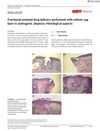
 Channels stay open for 24 hours, making laser treatment potentially effective for hair loss.
 February 1999 in “Analytical Sciences”
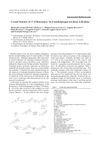
 A new antiandrogen compound was made and its detailed three-dimensional shape was described.
 16 citations
,
October 2003 in “Journal of applied polymer science”
16 citations
,
October 2003 in “Journal of applied polymer science” 2-iminothiorane hydrochloride improves hair waving permanence without damage.
 November 2024 in “Journal of Cosmetic Dermatology”
 Early treatment can reverse hair loss from dermal fillers.
 January 2026 in “Figshare”
 ASLNC168501 may help treat hair loss by boosting hair follicle stem cell activity.
18 citations
,
January 2000 in “Journal of Adhesion Science and Technology” Modified artificial hair with collagen improves tissue adhesion and is safe for long-term use.

The RNA AL136131.3 slows down hair growth and speeds up hair loss by affecting sugar breakdown in hair follicles.
Ethanol changes GABAA receptor α4 subunit levels through phosphorylation and neuroactive steroids.
January 2013 in “Scholarworks (University of Massachusetts Amherst)” FERONIA regulates plant growth, pollen interactions, and sugar signaling.
15 citations
,
November 2024 in “Materials” PHAs are promising biodegradable materials for medical and dental uses.
9 citations
,
July 2019 in “Dermatologic therapy” Alitretinoin can effectively treat frontal fibrosing alopecia.
 2 citations
,
April 2017 in “Actas Dermo-Sifiliográficas”
2 citations
,
April 2017 in “Actas Dermo-Sifiliográficas” Best treatment for Frontal Fibrosing Alopecia is 5-alpha-reductase inhibitors and intralesional corticosteroids.
 17 citations
,
April 2017 in “International Journal of Biological Macromolecules”
17 citations
,
April 2017 in “International Journal of Biological Macromolecules” Monoolein-alginate beads help heal wounds by controlling moisture and effectively delivering adenosine to the skin.
 3 citations
,
January 2009 in “Sen'i Gakkaishi”
3 citations
,
January 2009 in “Sen'i Gakkaishi” Using both TGA and DTDG in hair straightening reduces hair damage compared to using TGA alone.
1 citations
,
August 2014 in “OhioLink ETD Center (Ohio Library and Information Network)” Alkylated keratin from human hair can help deliver growth factors for bone healing.
13 citations
,
March 2017 in “Skin Research and Technology” Formaldehyde damages curly hair more than glyoxylic acid.
 12 citations
,
June 2019 in “Psychoneuroendocrinology”
12 citations
,
June 2019 in “Psychoneuroendocrinology” Allopregnanolone is needed for certain brain processing issues caused by D1 dopamine receptor activation.
 December 2023 in “Sains Malaysiana”
 The enzyme Rand protease works well for leather dehairing and its stability is important, with Leu75 playing a key role.
Stiffness gradients in alginate gels can guide cancer cell invasion and study cellular behaviors.