 1 citations
,
February 2015 in “Journal of evolution of medical and dental sciences”
1 citations
,
February 2015 in “Journal of evolution of medical and dental sciences” 0.05% Betamethasone Dipropionate is the most effective topical treatment for alopecia areata.
October 2025 in “Actas Dermo-Sifiliográficas” RF-mesotherapy with bicalutamide may be a promising new treatment for hair loss.
Icosapent ethyl may help treat long-lasting symptoms after COVID-19.
 51 citations
,
June 2016 in “Journal of the European Academy of Dermatology and Venereology”
51 citations
,
June 2016 in “Journal of the European Academy of Dermatology and Venereology” Tofacitinib was effective in treating hair loss in two patients with alopecia universalis.
A new lipid-based formula using myristyl myristate can improve estradiol treatment for hair loss.
 July 2026 in “Frontiers in Medicine”
 A new treatment plan for alopecia areata considers disease severity, quality of life, and progression to offer personalized care.
October 2022 in “Dermatology practical & conceptual” Both treatments help hair regrowth, with PRP being slightly better.
 84 citations
,
July 2008 in “Aaps Pharmscitech”
84 citations
,
July 2008 in “Aaps Pharmscitech” Ethosomes improve finasteride delivery through skin for hair loss treatment.
January 2020 in “Surgical and Cosmetic Dermatology” Hair loss in women with androgenetic alopecia was reduced by using a hair treatment with human hair follicle stem cells.
 November 2025 in “Mendeley Data”
 Standard dosing is more effective for severe alopecia areata in children, but unorthodox dosing can be safe and considered if needed.
164 citations
,
February 2019 in “Anais Brasileiros de Dermatologia” Adult female acne requires personalized treatment and maintenance to prevent relapse.
September 2017 in “The journal of investigative dermatology/Journal of investigative dermatology” N-acetyl-GED may help prevent and partially reverse a process that leads to scarring hair loss.
 September 2024 in “Skin Appendage Disorders”
 Tofacitinib helped a woman regrow her hair without relapses after other treatments failed.
January 2023 in “Dermatologic Therapy” Intralesional corticosteroids and 5-alpha-reductase inhibitors are the best treatments for frontal fibrosing alopecia.
 2 citations
,
January 2022 in “Hair transplant forum international”
2 citations
,
January 2022 in “Hair transplant forum international” The FUE-LE technique combines two hair transplant methods to harvest more hair with minimal visible scarring, especially for patients with advanced hair loss.
August 2025 in “Bioactive Materials” Ac-GFFY-IGF peptide is a promising, safe, and effective treatment for hair loss, better than current options.
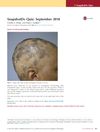 August 2018 in “Journal of Investigative Dermatology”
 Tofacitinib may help regrow hair in alopecia areata patients.
Tofacitinib significantly regrows hair in severe alopecia without major side effects.
 December 2013 in “Faculty Opinions – Post-Publication Peer Review of the Biomedical Literature”
 Flutamide, an oral anti-androgen therapy, is effective in treating female pattern hair loss, even without systemic androgen excess.
 4 citations
,
September 2011 in “American Journal of Clinical Dermatology”
4 citations
,
September 2011 in “American Journal of Clinical Dermatology” Ethinylestradiol/chlormadinone acetate may be an effective and well-tolerated treatment for skin conditions caused by excess androgens.
 8 citations
,
June 2022 in “Frontiers in Medicine”
8 citations
,
June 2022 in “Frontiers in Medicine” Both individual and combined treatments of tofacitinib and corticosteroids can help regrow hair in moderate-to-severe alopecia areata, but ongoing treatment may be necessary.
July 2021 in “International Journal of Applied Pharmaceutics” The finasteride nanogel could be an effective topical treatment for hair loss.
6 citations
,
December 2022 in “Anais Brasileiros de Dermatologia” January 2016 in “Indian dermatology online journal” The patient has frontal fibrosing alopecia (FFA).
April 2026 in “Trends in Sciences” Acanthus ebracteatus extract in a microemulsion can promote hair growth and is stable for use as a hair tonic.
 July 2026 in “Journal of Drug Delivery and Therapeutics”
 The Finasteride-loaded gel may effectively treat hair loss with fewer side effects.
July 2025 in “The Egyptian Journal of Hospital Medicine” Both treatments improved alopecia areata, but methotrexate caused more skin darkening, while triamcinolone caused skin lightening and thinning.
 79 citations
,
September 2009 in “Pediatric dermatology”
79 citations
,
September 2009 in “Pediatric dermatology” The 308-nm Excimer laser is effective and safe for treating patchy alopecia areata in children.
1 citations
,
July 2023 in “International Journal of Pharmaceutical Sciences and Drug Research” The HPTLC method is effective and accurate for measuring linoleic and oleanolic acid in Eclipta alba.