Search
for
Sort by
Research
420-450 / 1000+ results
research 139 Anti-BCC efficacy of a topical hedgehog inhibitor without adverse effects in BCNS patients in a phase 2 randomized controlled trial
Topical patidegib gel effectively treats basal cell carcinoma in Gorlin syndrome patients without causing the side effects seen with oral treatments.
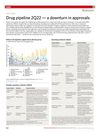
research Drug pipeline 2Q22 — a downturn in approvals
Drug approvals slowed in 2Q22, but notable drugs like Amvuttra, Camzyos, and Olumiant were approved.
research BAYONET trial: staged combination with encorafenib, binimetinib, plus cetuximab following encorafenib plus cetuximab for BRAF V600E-mutant metastatic colorectal cancer
The combination treatment showed a higher response rate but no significant survival benefits.
research Commentary on a Randomized Placebo-Controlled, Double-Blind, Half-Head Study to Assess the Efficacy of Platelet-Rich Plasma on the Treatment of Androgenetic Alopecia
PRP treatment increased hair density, especially in men and younger patients with AGA.
research Errata
The document corrects errors in previous articles, including a reversed term, updated subject weights, hair count data, and reference numbering.
research Efficacy and safety of ritlecitinib in adults and adolescents with alopecia areata: a randomised, double-blind, multicentre, phase 2b–3 trial
Ritlecitinib effectively treats alopecia areata and is well-tolerated.
research Supplemental Material: Tolerability and Efficacy of Unorthodox Dosing Regimens of Tofacitinib and Baricitinib in Pediatric Patients with Moderate to Severe Alopecia Areata
Standard dosing is more effective for severe alopecia areata in children, but unorthodox dosing can be safe and considered if needed.
research Stress, Hair Growth Control, and the Neuro-Endocrine-Immune Connection
Stress may affect hair growth by influencing hair follicle development and could contribute to hair loss.
research Comparison of allogeneic stem cell transplant conditioning regimens in AML, MDS and CLL
Busulfan/cyclophosphamide and total bone irradiation are equally effective for AML transplants.

research Faculty Opinions recommendation of Low-level light therapy for androgenetic alopecia: a 24-week, randomized, double-blind, sham device-controlled multicenter trial.
Low-level light therapy significantly increased hair density and thickness in people with hair loss, but they didn't notice a difference.
research Efficacy of betamethasone valerate foam formulation in comparison with betamethasone dipropionate lotion in the treatment of mild‐to‐moderate alopecia areata: A multicenter, prospective, randomized, controlled, investigator‐blinded trial
Betamethasone valerate foam is more effective and safe for treating mild-to-moderate alopecia areata than betamethasone dipropionate lotion.
research Comparative study of photobiomodulation and low frequency on the body contour: controlled, randomized, double blind clinical trial
Both photobiomodulation and low-frequency treatments effectively reduce body measurements.
research Comparing the efficacy of oral apremilast, intralesional corticosteroids, and their combination in patients with patchy alopecia areata: a randomized clinical controlled trial
research Trichoscopic evaluation in oral tofacitinib and oral betamethasone in the treatment of moderate to severe alopecia areata
Oral betamethasone works faster than oral tofacitinib for hair regrowth in alopecia areata.
research Baricitinib maintains regrowth of hair, eyebrows, and eyelashes over 3 years
Baricitinib helps keep hair, eyebrows, and eyelashes regrown for 3 years in most people with severe hair loss.
research A randomized placebo-controlled single-center pilot study of the safety and efficacy of apremilast in subjects with moderate-to-severe alopecia areata
Apremilast was not effective in treating moderate-to-severe alopecia areata.
research Treatment of moderate-to-severe alopecia areata in adolescents with baricitinib: A retrospective review of 29 patients
Baricitinib helped most teenagers with severe hair loss regrow hair and had mild side effects.
research PD02-05 SRD5A2 EXPRESSION IS A PREDICTOR OF RESPONSE TO FINASTERIDE IN THE MTOPS TRIAL
Higher SRD5A2 expression predicts better response to finasteride in treating urinary symptoms.
research Monoclonal Antibody Against Prolactin Receptor: A Randomized Placebo-Controlled Study Evaluating Safety, Tolerability, and Pharmacokinetics of Repeated Subcutaneous Administrations in Postmenopausal Women
The drug BAY 1158061 is safe, well-tolerated, and shows potential for treating diseases related to prolactin.
research Efficacy and Safety of a Low-Level Light Therapy for Androgenetic Alopecia: A 24-Week, Randomized, Double-Blind, Self-Comparison, Sham Device-Controlled Trial
Low-level light therapy safely improves hair coverage, thickness, and count in androgenetic alopecia patients.
research Safety and patient-reported outcomes in patients with hormone receptor-positive, HER2-negative advanced breast cancer treated with CDK4/6 inhibitors in China: A cross-sectional study.
Dalpiciclib is the safest and most satisfying CDK4/6 inhibitor for advanced breast cancer patients in China.
research Clinical Trial of Finasteride on Alopecia X in a Dog

research Faculty Opinions recommendation of Mesotherapy with Bicalutamide: A New Treatment for Androgenetic Alopecia.
Bicalutamide mesotherapy improved hair density in women with hair loss and was well received.

research PSS20 MEDIATION MODELING AND MEASUREMENT CHARACTERISTICS OF THE ITCH SEVERITY SCORE FROM A PHASE 2B TRIAL OF ORAL CP-690-550 IN PATIENTS WITH MODERATE TO-SEVERE PLAQUE PSORIASIS
CP-690,550 significantly reduced itching in patients with moderate-to-severe plaque psoriasis.
research Etrasimod for alopecia areata: The scenario for a less extensive and moderate form
Etrasimod is safe but not effective for severe alopecia areata, though it may help milder cases.
research 76957 Efficacy and Safety of Upadacitinib in Adolescents and Adults with Severe Alopecia Areata: A Subgroup Analysis of the UP-AA Phase 3 Clinical Program
research Exploring the Potential Routine Use of Electronic Healthcare Record Data to Strengthen Early Signal Assessment in UK Medicines Regulation: Proof-of-Concept Study
Using electronic health records can help identify drug side effects but has some limitations.
research Baricitinib Safety for Events of Special Interest in Populations at Risk: Analysis from Randomised Trial Data Across Rheumatologic and Dermatologic Indications
Baricitinib, a drug for rheumatoid arthritis, atopic dermatitis, and alopecia areata, is generally safe with low risk of major side effects, even in patients with risk factors. It's also effective in promoting hair regrowth in alopecia areata patients.
research Treatment of androgenetic alopecia in females in reproductive age with topical estradiolbenzoate, prednisolon and salicylic acid.
The treatment slightly increased hair growth and was safe for most women.