Both treatments for localized alopecia areata are equally effective.
 January 2022 in “International Journal of Frontiers in Medicine”
 Treating seborrheic alopecia with Traditional Chinese Medicine by balancing internal factors can be effective.
 December 2021 in “Consilium Medicum”
 The combined Selencin treatment effectively reduces hair loss and improves hair health after COVID-19.
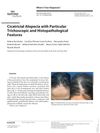 November 2018 in “Skin appendage disorders”
 The document concludes that a woman has both Frontal Fibrosing Alopecia and Lichen Simplex Chronicus, a previously unreported combination of conditions.
 January 2025 in “FASKES Jurnal Farmasi Kesehatan dan Sains”
 Erythrina subumbrans leaves may help treat hair loss.
 August 2024 in “Scholars Journal of Applied Medical Sciences”
 Combining PRP therapy with minoxidil is the most effective treatment for hair loss in men.
 January 2022 in “Revista del Centro Dermatológico Pascua”
 PRP therapy is a promising treatment for male hair loss on the vertex.
 January 2022 in “Дерматологія та венерологія”
 Frontal fibrosing alopecia causes hair loss along the frontal hairline, mainly in postmenopausal women, and needs better treatments.

Female hair loss is often hereditary and can be treated with medication, hair transplants, and lasers.
Hair transplant is effective for treating hair loss caused by radiation and improves patients' quality of life.
 March 2020 in “Journal of Cosmetic Dermatology”
 Hair loss affects self-esteem; patients seek effective, low side-effect treatments.
 March 2019 in “European archives of medical research”
 Platelet-rich plasma injections are a cheap and effective way to reduce hair loss and improve hair quality in people with mild to moderate androgenetic alopecia.
 June 2017 in “Journal of The American Academy of Dermatology”
 Microneedling with PRP and minoxidil (5%) improves hair growth more than minoxidil (5%) alone.
 August 2015 in “Dermatologica Sinica”
 Men with severe hair loss may have poorer sperm quality.
 June 2001 in “International Journal of Cosmetic Surgery and Aesthetic Dermatology”
 Finasteride improves hair growth in men with androgenetic alopecia.
 September 1998 in “Journal of The European Academy of Dermatology and Venereology”
 Topical 5α-reductase inhibitor helps counteract hair loss and stabilize it.
 August 1993 in “Journal of Dermatological Science”
 Testosterone metabolism in balding scalp cells may not be the main cause of hair loss.
Women with androgenetic alopecia (hair loss) have normal prostate specific antigen levels but higher testosterone levels.
 January 2017 in “Journal of cosmetology & trichology”
 Hair loss can cause anxiety and depression, especially in young, single women, and early psychological support is important.
 September 2010 in “Advances in Dermatology and Allergology/Postępy Dermatologii i Alergologii”
 TrichoScan is reliable for counting and measuring hair density but may not accurately assess hair types in women with hair loss.
 126 citations
,
January 2010 in “British Journal of Dermatology”
126 citations
,
January 2010 in “British Journal of Dermatology” Baldness is more common in Chinese men than women, increasing with age, and is influenced by genetics.
 95 citations
,
January 2012 in “British Journal of Dermatology”
95 citations
,
January 2012 in “British Journal of Dermatology” Androgens block hair growth by disrupting cell signals; targeting GSK-3 may help treat hair loss.
 65 citations
,
April 2020 in “International Journal of Molecular Sciences”
65 citations
,
April 2020 in “International Journal of Molecular Sciences” PRP injections may be a safe, effective alternative for hair loss treatment compared to minoxidil and finasteride.
 47 citations
,
October 2016 in “Molecular and Cellular Endocrinology”
47 citations
,
October 2016 in “Molecular and Cellular Endocrinology” Androgens prevent hair growth by changing Wnt signals in cells.
 9 citations
,
May 2012 in “British Journal of Dermatology”
9 citations
,
May 2012 in “British Journal of Dermatology” Reversing female hair loss.
 7 citations
,
March 2013 in “British Journal of Dermatology”
7 citations
,
March 2013 in “British Journal of Dermatology” No genetic link between prostaglandins and hair loss found.
 January 2026 in “Acta Dermatovenerologica Alpina Pannonica et Adriatica”
 Primary cicatricial alopecia causes permanent hair loss by destroying hair follicles, and its exact cause is unknown.
 150 citations
,
October 2010 in “The American Journal of Pathology”
150 citations
,
October 2010 in “The American Journal of Pathology” The document concludes that more research is needed to better understand and treat primary cicatricial alopecias, and suggests a possible reclassification based on molecular pathways.
 103 citations
,
December 2011 in “Journal of the American Academy of Dermatology”
103 citations
,
December 2011 in “Journal of the American Academy of Dermatology” Chemotherapy often causes temporary hair loss, which is distressing and needs better treatment and support.
 95 citations
,
November 2016 in “Journal of The American Academy of Dermatology”
95 citations
,
November 2016 in “Journal of The American Academy of Dermatology” Treatments for permanent hair loss from scarring aim to stop further loss, not regrow hair, and vary by condition, with partial success common.