4 citations
,
March 2022 in “Pharmaceutics” Regenerative cellular therapies show promise for treating non-scarring hair loss but need more research.
3 citations
,
November 2021 in “Journal of biomedical materials research. Part B, Applied biomaterials” AMFIBHA scaffold significantly healed large full-thickness burn wounds in rabbits and restored skin's mechanical properties.
1 citations
,
September 2015 in “Pathology - Research and Practice” Stress during pregnancy can thin fetal skin.
 February 2026 in “PubMed”
 Porcine-derived placental powder may improve wound healing by reducing inflammation and enhancing tissue repair.
Stem cells can improve skin grafts by enhancing blood flow and hair growth.
 May 2018 in “International journal of cell science & molecular biology”
 Early anti-aging hair treatments should focus on anti-inflammatory agents and promoting healthy hair growth cycles.
20 citations
,
October 2021 in “Applied materials today” A new microneedle patch and yellow light therapy significantly promote hair regrowth.
 8 citations
,
February 2020 in “Fertility and Sterility”
8 citations
,
February 2020 in “Fertility and Sterility” Operative hysteroscopy is still the main treatment for Asherman syndrome, but more research is needed on post-surgery methods.
1 citations
,
March 2006 in “The FASEB journal” Keratin-based scaffolds are safe and effective for tissue engineering.
 November 2008 in “Medical & surgical dermatology”
 A device was made in 2008 to measure hair loss severity. Other findings include: frizzy mutation in mice isn't related to Fgfr2, C/EBPx marks preadipocytes, Cyclosporin A speeds up hair growth in mice, blocking plasmin and metalloproteinases hinders healing, hyperbaric oxygen helps ischemic wound healing, amniotic membranes heal wounds better than polyurethane foam, rhVEGF165 from a fibrin matrix improves tissue flap viability and induces VEGF-R2 expression, and bFGF enhances wound healing and reduces scarring in rabbits.
42 citations
,
August 1972 in “Archives of Disease in Childhood” Fetal exposure to diazoxide can cause hair loss and abnormal hair growth in infants.

Fetal environments contain various chemicals that may disrupt hormones.
25 citations
,
May 2004 in “Prenatal Diagnosis” Prenatal genetic diagnosis may not predict MELAS syndrome severity in offspring.
 13 citations
,
November 2024 in “Frontiers in Microbiology”
13 citations
,
November 2024 in “Frontiers in Microbiology” Mesenchymal stem cells can help heal burn wounds and reduce scarring.
8 citations
,
August 2025 in “Journal of Translational Medicine” CD44 signaling can help heal wounds without scars.
 2 citations
,
May 2023 in “Life”
2 citations
,
May 2023 in “Life” Plumbagin may help protect cells, reduce inflammation, and has potential for treating various diseases, but more research is needed.
 November 2024 in “NeoReviews”
 Pallister-Killian Syndrome is a complex genetic disorder requiring coordinated care and genetic counseling.
 October 2023 in “Indian Journal of Ophthalmology - Case Reports”
 Kallmann syndrome can cause eye issues and other health problems, requiring various treatments.
 January 2018 in “Turkiye Klinikleri Journal of Dermatology”
 Stem cell treatments show promise for treating hair loss.
 18 citations
,
October 2021 in “Frontiers in Physiology”
18 citations
,
October 2021 in “Frontiers in Physiology” Lipocalin-Type Prostaglandin D2 Synthase (L-PGDS) is a protein that plays many roles in the body, including sleep regulation, pain management, food intake, and protection against harmful substances. It also affects fat metabolism, glucose intolerance, cell maturation, and is involved in various diseases like diabetes, cancer, and arthritis. It can influence sex organ development and embryonic cell differentiation, and its levels can be used as a diagnostic marker for certain conditions.
 September 2025 in “Indian Journal of Child Health”
 Satoyoshi Syndrome is hard to diagnose and treat due to its rarity and complex symptoms.
 9 citations
,
August 2024 in “Tissue Engineering and Regenerative Medicine”
9 citations
,
August 2024 in “Tissue Engineering and Regenerative Medicine” Collagen-heparin-FGF2-VEGF scaffolds can improve skin healing.
 168 citations
,
August 2000 in “American Journal of Pathology”
168 citations
,
August 2000 in “American Journal of Pathology” Fibromodulin might help reduce scarring if increased in adult wounds like in fetal skin that heals without scars.
 87 citations
,
April 2018 in “Biochemical and Biophysical Research Communications”
87 citations
,
April 2018 in “Biochemical and Biophysical Research Communications” Exosomes from dermal papilla cells can help grow hair and might treat hair loss.
 71 citations
,
September 2006 in “Cell Transplantation”
71 citations
,
September 2006 in “Cell Transplantation” Fetal skin cells from a cell bank heal wounds faster and with less scarring than adult cells.
 48 citations
,
March 2003 in “BJOG: An International Journal of Obstetrics and Gynaecology”
48 citations
,
March 2003 in “BJOG: An International Journal of Obstetrics and Gynaecology” Mothers and newborns with dental fillings had higher mercury in their hair, but getting fillings during pregnancy didn't raise mercury levels further.
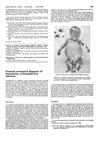 39 citations
,
June 1982 in “The BMJ”
39 citations
,
June 1982 in “The BMJ” Blood tests confirmed a baby in the womb had a CMV infection.
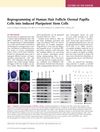 26 citations
,
February 2012 in “Journal of Investigative Dermatology”
26 citations
,
February 2012 in “Journal of Investigative Dermatology” Human hair follicle cells can be successfully transformed into different types of cells, but not more efficiently than other adult cells.
 18 citations
,
October 2014 in “Experimental Dermatology”
18 citations
,
October 2014 in “Experimental Dermatology” Local skin glucocorticoid production is crucial for healthy skin, and its disruption can lead to skin diseases.
 16 citations
,
January 2000 in “The Journal of clinical endocrinology and metabolism/Journal of clinical endocrinology & metabolism”
16 citations
,
January 2000 in “The Journal of clinical endocrinology and metabolism/Journal of clinical endocrinology & metabolism” Antiandrogen drugs can reduce PSA levels in women with excess hair, suggesting PSA is a sign of male hormone activity in women.