1 citations
,
December 2016 in “Revista română de medicină de laborator” The NIPAL4 mutation c.527C>A is common in Romanian patients with autosomal recessive congenital ichthyosis.
2 citations
,
October 2023 in “PubMed” Scientists created a cell model to study and find treatments for a skin disease called RDEB.
 March 2023 in “JAAD case reports”
 A new genetic change in the keratin 10 gene caused a skin condition called ichthyosis hystrix in a father and his daughter.
1 citations
,
January 2015 in “The Journal of Dermatology” Genetic testing is crucial for diagnosing and managing non-Herlitz junctional epidermolysis bullosa.
 December 2023 in “bioRxiv (Cold Spring Harbor Laboratory)”
 Abnormal contraction of connective tissue in hair follicles causes hair loss by killing off important cells, and treating this could improve hair growth.
 165 citations
,
September 2001 in “Genes & development”
165 citations
,
September 2001 in “Genes & development” CDP is crucial for lung and hair follicle cell development.
Basaloid follicular hamartoma is a rare, benign skin growth often misdiagnosed.
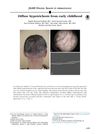 September 2016 in “Journal of The American Academy of Dermatology”
 The girl has a genetic hair condition causing thin hair since childhood.
25 citations
,
May 2004 in “Prenatal Diagnosis” Prenatal genetic diagnosis may not predict MELAS syndrome severity in offspring.
 December 2023 in “Clinical Cosmetic and Investigational Dermatology”
 An 8-year-old Saudi boy was diagnosed with a rare genetic disorder causing hair loss, skin issues, and light sensitivity.
20 citations
,
December 1999 in “Journal of Investigative Dermatology” Mutations in the hHb6 gene cause the hair disorder monilethrix.
 26 citations
,
December 2011 in “Journal of Investigative Dermatology”
26 citations
,
December 2011 in “Journal of Investigative Dermatology” New gene identification techniques have improved the understanding and classification of inherited hair disorders.
4 citations
,
October 2003 in “Annales de Génétique” A specific gene mutation causes different hair defects in Indian monilethrix families.
 5 citations
,
March 2005 in “Journal of The American Academy of Dermatology” 4 citations
,
September 2004 in “Experimental Dermatology”
5 citations
,
March 2005 in “Journal of The American Academy of Dermatology” 4 citations
,
September 2004 in “Experimental Dermatology” Connexin mutations can cause various diseases like hearing loss and skin disorders.
7 citations
,
January 2008 in “Indian Journal of Dermatology” Pigmentary mosaicism causes skin color changes and can affect multiple body systems, but has no cure.
 30 citations
,
June 2016 in “Journal of Human Genetics”
30 citations
,
June 2016 in “Journal of Human Genetics” Researchers found genetic mutations causing hypohidrotic ectodermal dysplasia in 88% of studied patients and identified new mutations and genetic variations affecting the disease.
9 citations
,
January 1989 in “Journal of Small Animal Practice” Abyssinian cats can have a hair abnormality that makes their coat look rough and dull.
 36 citations
,
October 2000 in “British Journal of Dermatology”
36 citations
,
October 2000 in “British Journal of Dermatology” A different gene near the hairless gene on chromosome 8p21 causes a rare hair loss condition in a German family.
 May 2024 in “JCI insight”
 A variant in the ADAM17 gene causes hair loss by increasing protein degradation through TRIM47.
20 citations
,
October 2005 in “Archives of Dermatological Research”  January 1999 in “American Journal of Medical Genetics Part A”
 The report expanded knowledge of MBTPS1-related disorders by identifying new symptoms.
2 citations
,
January 2018 in “International Journal of Trichology” Two sisters had a rare hair condition without other usual symptoms.
 July 2017 in “Contemporary Endocrinology”
 The document concludes that patient outcomes for Congenital Adrenal Hyperplasia are often not ideal because of poor management and a need for better diagnosis and treatment methods.
September 2025 in “Indian Journal of Dermatology” A Turkish woman has a hair condition caused by a LIPH gene mutation.
2 citations
,
January 2025 in “Development” BMP5 is essential for ear cartilage cell growth in rodents.
Recognizing bamboo hair helps diagnose Netherton’s syndrome.
 99 citations
,
July 2012 in “PLoS Genetics”
99 citations
,
July 2012 in “PLoS Genetics” A mutation in the KRT75 gene causes frizzle feathers in chickens.
 21 citations
,
June 2010 in “Anais Brasileiros De Dermatologia”
21 citations
,
June 2010 in “Anais Brasileiros De Dermatologia” The document reports the first Brazilian case of a girl with Becker nevus syndrome, characterized by skin changes, breast underdevelopment, and scoliosis.
 1 citations
,
July 2023 in “Cureus”
1 citations
,
July 2023 in “Cureus” A rare hair disorder with multiple hairs from one follicle was found on a patient's abdomen.