 July 2025 in “Frontiers in Bioengineering and Biotechnology”
 More research and standardization are needed for effective hypospadias treatment using tissue engineering.
Stem cells can improve skin grafts by enhancing blood flow and hair growth.
 January 2025 in “Advances in Clinical Medicine”
 Platelet-Rich Plasma shows promise for treating low back pain but needs more research.
 August 2024 in “Frontiers in Pharmacology”
 Antibody treatments show promise for hair loss but need more research.
 December 2023 in “bioRxiv (Cold Spring Harbor Laboratory)”
 Different types of inactive melanocyte stem cells exist with unique characteristics and potential to develop into other cells.
 December 2023 in “International journal of multidisciplinary research and analysis”
 SH-MSCs gel reduced IL-6 and increased TGF-β, suggesting it could treat alopecia.
 December 2022 in “Jurnal Kesehatan Jompa”
 AAG causes hair loss in many people, with limited treatments like finasteride, minoxidil, light therapy, and hair transplants.
 November 2021 in “Research Square (Research Square)”
 MRI can enhance the quality and effectiveness of certain stem cells.
 July 2018 in “Elsevier eBooks”
 New hair loss treatments show promise, but more research is needed to confirm their effectiveness.
 April 2018 in “The journal of investigative dermatology/Journal of investigative dermatology”
 Double-stranded RNA helps regenerate hair follicles by increasing retinoic acid production and signaling.
 September 2016 in “Journal of dermatological science”
 Adult skin cells can be used to create new hair in a lab.
 January 2016 in “Springer eBooks”
 New materials and methods could improve skin healing and reduce scarring.
 December 2013 in “Biomedical and biopharmaceutical research”
 Nanotechnology shows promise for better drug delivery and cancer treatment.
 January 2009 in “Nihon Keshouhin Gijutsushakaishi/Journal of S C C./Nihon Keshouhin Gijutsushakai kaishi”
 Curved human hair has different structures on each side, which might cause its shape and is similar to wool.
 December 2008 in “The American Journal of Cosmetic Surgery”
 Multi-pass laser skin treatments improved healing, reduced pain, and had no major complications.
 September 2006 in “Plastic and Reconstructive Surgery”
 Hair transplant surgeries can be improved by preserving follicles in a special solution, and surgeries done at outpatient facilities are more profitable than those at hospitals.
 September 2006 in “Plastic and Reconstructive Surgery”
 The SGAP flap effectively treats large sacral pressure sores with good results and minimal complications.
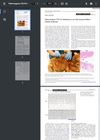 May 2024 in “Animal genetics”
 A cat's poor wound healing was linked to a genetic deletion in the COL5A1 gene.
April 2020 in “Journal of the Endocrine Society” Somatostatin analogues effectively manage ectopic ACTH syndrome when surgery isn't possible.
 November 2024 in “Journal of Translational Internal Medicine”
 Exosomes from stem cells help hair regrowth by activating a specific signaling pathway.
 September 2017 in “The journal of investigative dermatology/Journal of investigative dermatology”
 The reconstructed skin model from hair follicles functions like human skin in processing chemicals and can be used to test ingredient safety.
 November 2023 in “The journal of investigative dermatology/Journal of investigative dermatology”
 Combining stem cell exosomes with microneedling improves facial skin aging effectively and safely.
Sox13 is a marker for early hair follicle development but not essential for skin and hair growth.
November 2022 in “Journal of Investigative Dermatology” NCSTN gene mutation causes abnormal skin cell differentiation and more inflammation, contributing to Hidradenitis Suppurativa.
 May 2025 in “Frontiers in Bioengineering and Biotechnology”
 EX104 shows promise in treating hair loss by promoting hair growth and improving scalp health.
January 2025 in “Case Reports in Dermatological Medicine” Adipose tissue-derived exosomes may help regrow hair in alopecia areata.
822 citations
,
January 2021 in “Genome biology” scMC effectively separates biological signals from technical noise in single-cell genomics data.
December 2022 in “Stem Cells and Development” Exosomes from stem cells help improve nerve repair in rats.
January 2026 in “DOAJ (DOAJ: Directory of Open Access Journals)” EH-MSCs can help regrow hair by boosting IGF-1 and reducing IL-1Beta.
20 citations
,
April 2022 in “Journal of Personalized Medicine” Powered exoskeleton training improves body perception and quality of life in spinal cord injury patients.