 192 citations
,
March 1998 in “British Journal of Dermatology”
192 citations
,
March 1998 in “British Journal of Dermatology” Minoxidil boosts growth factor in hair cells, potentially promoting hair growth.
 159 citations
,
October 2015 in “Science Advances”
159 citations
,
October 2015 in “Science Advances” Blocking JAK-STAT signaling can lead to hair growth.
 131 citations
,
March 2004 in “The American journal of pathology”
131 citations
,
March 2004 in “The American journal of pathology” Modulating BMP activity changes the number, size, shape, and type of ectodermal organs.
 116 citations
,
September 2001 in “Journal of The American Academy of Dermatology”
116 citations
,
September 2001 in “Journal of The American Academy of Dermatology” Hair loss occurs due to fewer papillary cells, smaller follicles, and shorter growth phases.
98 citations
,
November 1999 in “Dermatology Online Journal” IGF-1 can boost hair growth by promoting cell growth and preventing cell death.
 82 citations
,
September 2018 in “Nature Communications”
82 citations
,
September 2018 in “Nature Communications” A certain smell receptor in hair follicles can affect hair growth when activated by a synthetic sandalwood scent.
69 citations
,
May 1997 in “Veterinary Pathology” The angora mouse mutation causes long hair and hair defects due to a gene deletion.
 68 citations
,
March 2018 in “Biomaterials”
68 citations
,
March 2018 in “Biomaterials” Tiny needles with valproic acid can effectively regrow hair.
 67 citations
,
July 1985 in “British journal of dermatology/British journal of dermatology, Supplement”
67 citations
,
July 1985 in “British journal of dermatology/British journal of dermatology, Supplement” Men's thigh hair grows longer and has a longer growth cycle than women's, but arm hair growth is similar between genders.
 65 citations
,
February 2017 in “Pflügers Archiv - European Journal of Physiology”
65 citations
,
February 2017 in “Pflügers Archiv - European Journal of Physiology” Macrophages are vital for skin healing, hair growth, salt balance, and cancer defense.
61 citations
,
January 2011 in “PloS one” Notch signaling is essential for healthy skin and hair follicle maintenance.
 57 citations
,
November 1987 in “Pediatric Dermatology”
57 citations
,
November 1987 in “Pediatric Dermatology” Children's hair grows in different types from before birth through puberty, with growth rates and characteristics varying by age, sex, and race.
 56 citations
,
July 2005 in “Journal of The American Academy of Dermatology”
56 citations
,
July 2005 in “Journal of The American Academy of Dermatology” Using both vertical and transverse sections gives a better diagnosis of alopecia than using one method alone.
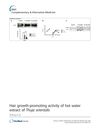 54 citations
,
January 2013 in “BMC Complementary and Alternative Medicine”
54 citations
,
January 2013 in “BMC Complementary and Alternative Medicine” Thuja orientalis hot water extract may help hair grow by starting the growth phase and improving hair follicle development.
54 citations
,
May 2001 in “Journal of Investigative Dermatology” Excessive putrescine causes hair loss in transgenic mice by disrupting hair follicle development.
 53 citations
,
March 2014 in “Growth Hormone & IGF Research”
53 citations
,
March 2014 in “Growth Hormone & IGF Research” IGF-1 injections help mice grow more hair by increasing cell growth and blocking a hair growth inhibitor.
 51 citations
,
January 2004 in “Skin Pharmacology and Physiology”
51 citations
,
January 2004 in “Skin Pharmacology and Physiology” The document explains hair growth and shedding, factors affecting it, and methods to evaluate hair loss, emphasizing the importance of skin biopsy for diagnosis.
49 citations
,
July 2006 in “British Journal of Dermatology” Calcifying epithelioma cells can differentiate into hair cortex and outer root sheath.
 48 citations
,
June 2013 in “Journal of Dermatological Science”
48 citations
,
June 2013 in “Journal of Dermatological Science” Valproic acid may help hair grow and could be a safe treatment for hair loss.
42 citations
,
June 2019 in “Aging” 3,4,5-tri-O-caffeoylquinic acid promotes hair growth by activating the β-catenin pathway.
 42 citations
,
July 2012 in “PLOS ONE”
42 citations
,
July 2012 in “PLOS ONE” Estrogen can temporarily slow down hair growth but this can be reversed.
41 citations
,
January 2015 in “Development” Atoh1 expression can create new Merkel cells in the skin.
 36 citations
,
January 2021 in “Scientific Reports”
36 citations
,
January 2021 in “Scientific Reports” Key genes and pathways, including Wnt, NF-Kappa, and JAK-STAT, are crucial for starting Pashmina fiber growth in goats.
 35 citations
,
November 2010 in “Journal of Cutaneous Pathology”
35 citations
,
November 2010 in “Journal of Cutaneous Pathology” Dilated follicular infundibula and increased catagen/telogen follicles are key indicators for diagnosing alopecia areata.
 34 citations
,
September 2019 in “Clinical, Cosmetic and Investigational Dermatology”
34 citations
,
September 2019 in “Clinical, Cosmetic and Investigational Dermatology” Light therapy can stimulate hair growth and is more effective when started early, but more research is needed on its long-term effects and optimal use.
 33 citations
,
September 2019 in “Dermatologic Surgery”
33 citations
,
September 2019 in “Dermatologic Surgery” Using a special stem cell formula on the scalp once a month for six months helped people with hair loss grow more hair.
33 citations
,
September 1990 in “Proceedings of the National Academy of Sciences” The study showed that a specific DNA sequence can control gene expression in hair growth areas of mice.
 33 citations
,
September 2012 in “Australasian Journal of Dermatology”
33 citations
,
September 2012 in “Australasian Journal of Dermatology” Chemotherapy can cause hair changes similar to alopecia areata, which might lead to misdiagnosis.
 32 citations
,
December 2013 in “Biological & Pharmaceutical Bulletin”
32 citations
,
December 2013 in “Biological & Pharmaceutical Bulletin” Rice bran extract can potentially treat hair loss by promoting hair growth and increasing the number of hair follicles.
 32 citations
,
December 1969 in “The Lancet”
32 citations
,
December 1969 in “The Lancet” Children with marasmus have more resting hair follicles and thinner, less pigmented hair, showing long-term malnutrition.