 July 2025 in “Dermatologica Sinica”
 Glycyrrhizin may help regrow hair by activating a specific pathway.
 3 citations
,
March 2014 in “Turkderm”
3 citations
,
March 2014 in “Turkderm” Hair loss in men can be slowed or reversed with treatments like minoxidil and finasteride, but it resumes if treatment stops. It may also indicate early heart disease and obesity.
 May 2025 in “Journal of Inflammation Research”
 Natural killer and CD8+ T cells play a key role in hair loss in androgenetic alopecia.
 2 citations
,
February 2021 in “Endocrinology, diabetes & metabolism case reports”
2 citations
,
February 2021 in “Endocrinology, diabetes & metabolism case reports” A teenage girl had both a rare ovarian tumor and a severe form of polycystic ovarian syndrome.
April 2026 in “Clinical Cosmetic and Investigational Dermatology” Androgenetic alopecia involves a fungal imbalance in hair follicles, suggesting potential for microbiome-targeted treatments.
September 2017 in “The journal of investigative dermatology/Journal of investigative dermatology” N-acetyl-GED may help prevent and partially reverse a process that leads to scarring hair loss.
April 2023 in “Journal of Investigative Dermatology” TGFβ-2 may cause hair loss in androgenetic alopecia.
 January 2024 in “Archives of Dermatological Research”
 Different types of male pattern baldness have unique inflammation-related protein patterns.
 May 2023 in “Elsevier eBooks”
 Some treatments that modify the immune system might help with certain types of hair loss but haven't been explored for common hair loss alone.
 1 citations
,
January 2018 in “Acta dermato-venereologica”
1 citations
,
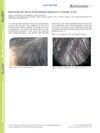
January 2018 in “Acta dermato-venereologica” A teenager's hair with alternating white and dark bands, known as Pili annulati, is a genetic condition that is usually harmless and often considered attractive.
April 2007 in “Linchuang pifuke zazhi” TGF-β1 and 2 may play a role in hair loss in AGA.
January 2015 in “Journal of North Sichuan Medical College” Androgenetic alopecia is more common in males, can be influenced by lifestyle, and may be linked to other skin issues.
December 2023 in “International Journal of Dermatology” Accurate diagnosis of alopecia areata incognito requires trichoscopy and histopathology.
 8 citations
,
June 2012 in “Australasian Journal of Dermatology”
8 citations
,
June 2012 in “Australasian Journal of Dermatology” A rare form of alopecia causes hair thinning without bald spots and may be more common than thought, responding well to steroid treatment.
 15 citations
,
June 2020 in “Experimental Dermatology”
15 citations
,
June 2020 in “Experimental Dermatology” Hormones and genes affect hair growth and male baldness.
 August 2016 in “Journal of Investigative Dermatology”
 Zinc deficiency disrupts hair growth and cycle, but zinc supplements can fix this.
 93 citations
,
February 2015 in “Journal of Investigative Dermatology”
93 citations
,
February 2015 in “Journal of Investigative Dermatology” Oxidative stress affects hair loss in men with androgenetic alopecia.
33 citations
,
September 1987 in “American Journal of Medical Genetics” Uncombable hair is inherited dominantly with complete penetrance.
January 2003 in “Clínicas pediátricas de Norteamérica” Androgenetic alopecia is a common cause of hair loss, with treatments like minoxidil and hair transplantation available, and new therapies are being developed.
December 2025 in “Journal of the European Academy of Dermatology and Venereology” The correction does not change the study's main findings.
 October 2023 in “Journal of the Endocrine Society”
 Estetrol helps keep scalp hair in the growth phase longer and improves hair follicle health by affecting the hair root and increasing stem cells.
 13 citations
,
May 1993 in “International Journal of Dermatology”
13 citations
,
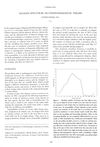
May 1993 in “International Journal of Dermatology” The paper suggests that telogen effluvium, a type of hair loss, may be a long-lasting condition triggered by stress or illness in people whose hair growth is unusually synchronized.
 2 citations
,
January 2017 in “Skin appendage disorders”
2 citations
,
January 2017 in “Skin appendage disorders” Women with and without hair loss have similar amounts of exogen hairs, so these hairs are not a key factor in hair loss conditions.
8 citations
,
January 2014 in “Indian Journal of Paediatric Dermatology” Congenital atrichia with papular lesions causes permanent hair loss and skin bumps from birth.
 33 citations
,
August 2015 in “F1000Research”
33 citations
,
August 2015 in “F1000Research” New model shows muscle affects hair loss differently in men and women.

Activating certain cells in hair follicles can prevent hair loss caused by cancer treatments.
17 citations
,
November 1967 in “American Journal of Anatomy” Hairless mice have longer hair follicles and abnormal structures during the catagen phase.
11 citations
,
February 2011 in “The Journal of Dermatology” Mutations in the hairless gene cause a rare form of permanent hair loss.
A new treatment using conjugated linoleic acid nanovesicles can rejuvenate hair follicles and improve hair growth in androgenic alopecia.