April 2014 in “The FASEB Journal” Women with androgenetic alopecia often have other symptoms of high androgen levels, requiring further hormone testing.
12 citations
,
August 2002 in “Archives of Dermatology” 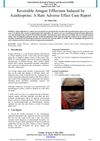 May 2025 in “International Journal of Science and Research (IJSR)”
 Stopping azathioprine led to full hair regrowth and recovery in 2.5 months.
 July 2018 in “Elsevier eBooks”
 Telogen Effluvium is a common, usually reversible hair loss condition, often improved by removing the trigger and possibly treated with various products, though their effectiveness is uncertain.
 April 2024 in “International journal of research in dermatology”
 Azathioprine can cause hair loss and matted hair.
28 citations
,
June 2000 in “PubMed” Androgenetic alopecia is common hair loss due to genetics and DHT.
 19 citations
,
January 2013 in “International journal of medical sciences”
19 citations
,
January 2013 in “International journal of medical sciences” Increasing Wnt5a in mice skin delays hair growth but doesn't stop it.
 1 citations
,
January 2022 in “Faculty reviews”
1 citations
,
January 2022 in “Faculty reviews” The best long-lasting results in treating hair loss may be achieved through combination therapy, including treatments like finasteride, minoxidil, and platelet-rich plasma injections.
TGF-β1 and 2 in hair follicles may be linked to hair loss in AGA.
October 2025 in “Annals of Medicine and Surgery” Retinoids may improve hair growth in androgenic alopecia when used with other treatments.
 6 citations
,
February 2021 in “Frontiers in Cell and Developmental Biology”
6 citations
,
February 2021 in “Frontiers in Cell and Developmental Biology” Eating too much or too little vitamin A can cause hair loss.
 2 citations
,
October 2017 in “Revista Da Associacao Medica Brasileira”
2 citations
,
October 2017 in “Revista Da Associacao Medica Brasileira” Removing p16INK4a from skin cells can lead to faster and more clumped growth, which might help with hair growth.
Hair loss is caused by hormonal changes that shorten hair growth phases and shrink hair follicles.
Telogen hair loss affects emotional well-being and quality of life, with no standard treatment available.
 August 2021 in “Clinical and Experimental Dermatology”
 Children under 10 can experience hair thinning without hormone issues, and it may improve with treatment.
November 2024 in “Journal of Investigative Dermatology” Stimulating OR10J1 can promote hair growth and may help treat hair loss.
 March 2025 in “Meditsinskiy sovet = Medical Council”
 Diffuse telogen alopecia is temporary hair loss treated by addressing the root cause and improving scalp health.
 February 2011 in “Vestnik dermatologii i venerologii”
 Women of child-bearing age with androgenic alopecia lose hair density, especially in certain areas, and their hair becomes thinner. They also lose more than twice as much hair as healthy women.
 April 2024 in “Biomedicine & pharmacotherapy”
 Pilose antler extract helps hair grow in mice with a type of hair loss by speeding up the growth phase.
 May 2015 in “Hair transplant forum international”
 Androgenetic alopecia causes hair loss by shrinking hair follicles due to androgens, with the connection between the muscle and hair follicle determining if the loss is reversible.
25 citations
,
May 2013 in “Experimental Dermatology” Epidermal growth factor helps hair recover after chemotherapy.
158 citations
,
February 2012 in “Journal of Investigative Dermatology” FGF18 helps keep hair in its resting phase, affecting hair growth cycles.
January 2006 in “Casopís lékar̆ů c̆eských” Female hair loss is influenced by genetics and hormones, often starting in middle age or after hormonal changes.
 1 citations
,
September 2019 in “Springer eBooks”
1 citations
,
September 2019 in “Springer eBooks” Telogen effluvium is a condition that causes temporary hair loss due to stress or shock to the body.
173 citations
,
November 2004 in “Seminars in Reproductive Medicine” Adrenarche increases adrenal androgens around age 6, affecting hair growth and development.
 September 2003 in “Clinics in Family Practice”
 Different hair diseases affect people during childbearing years, with treatments ranging from medication to psychological support.
 4 citations
,
January 1997 in “EXPERIMENTAL ANIMALS”
4 citations
,
January 1997 in “EXPERIMENTAL ANIMALS” Histamine and its enzyme may help start hair regrowth.
 April 2023 in “The journal of investigative dermatology/Journal of investigative dermatology”
 DKK2 and SOSTDC1 together are necessary for the normal timing of the first regression phase in the hair growth cycle.
176 citations
,
September 2006 in “Stem Cells” BMP signaling prevents hair growth by stopping stem cell activation.
August 2012 in “Faculty Opinions – Post-Publication Peer Review of the Biomedical Literature” FGF18 controls hair cycle rest and growth phases.