March 2024 in “Jagiellonian University Repository (Jagiellonian University)” Genetic and lifestyle factors influence skin and hair aging, and prediction models can help assess aging and cosmetic treatments.
26 citations
,
December 2013 in “Seminars in cell & developmental biology” Skin varies in thickness, color, and features due to complex genetic and cellular processes.
 41 citations
,
June 2006 in “Journal of Investigative Dermatology”
41 citations
,
June 2006 in “Journal of Investigative Dermatology” Beard and scalp hair cells have different gene expressions, which may affect beard growth characteristics.
Loss of Dnmt3a and Dnmt3b increases aggressive skin tumors by affecting PPAR-γ.
36 citations
,
July 2007 in “Journal of Investigative Dermatology” Certain HLA class II alleles increase or decrease the risk of alopecia areata.
 5 citations
,
October 2018 in “Research in psychotherapy”
5 citations
,
October 2018 in “Research in psychotherapy” The Italian version of a relationship scale was adapted for cancer patients, showing some differences from the original and suggesting its use could improve therapy and treatment adherence.
 2 citations
,
October 1990 in “The Lancet”
2 citations
,
October 1990 in “The Lancet” Some people have a genetic variation that makes them less effective at breaking down drugs.
 2 citations
,
January 2017 in “Journal of Biotechnology Research Center”
2 citations
,
January 2017 in “Journal of Biotechnology Research Center” Hair dyes affect DNA analysis results, with the prepFiler kit working best for hair with follicles.
 40 citations
,
January 2017 in “Intestinal Research”
40 citations
,
January 2017 in “Intestinal Research” Genotyping for NUDT15 p.Arg139Cys can help predict thiopurine side effects in Japanese IBD patients.
February 2018 in “bioRxiv (Cold Spring Harbor Laboratory)” Rodent spiny hair traits are due to genetic factors other than the Edar gene.
 115 citations
,
September 2005 in “International Journal of Dermatology”
115 citations
,
September 2005 in “International Journal of Dermatology” Different ethnic groups have unique hair growth patterns, with African hair growing slower and less dense, Asian hair growing fast but sparse, and Caucasian hair being densest; men are more likely to experience hair loss than women.
Neonatal allopregnanolone and stress affect behavior differently in adolescence and adulthood.
July 2005 in “The American Journal of Human Genetics” The AR gene is linked to male-pattern baldness, TNFSF4 to heart disease, SLC19A3 to BBGD, MCT8 to a syndrome, and segmental duplications to genetic variation.
1 citations
,
January 2003 in “Benjamins eBooks” Confinement in farrowing crates doesn't increase chronic stress in sows, but hair cortisol measurements may not reliably indicate stress due to hair growth variations.
 2 citations
,
January 2020 in “Journal of Experimental Social Psychology”
2 citations
,
January 2020 in “Journal of Experimental Social Psychology” Baldness and shaved heads change how traits are seen but don't really affect leader preferences.
 November 2022 in “Scientific Reports”
 Certain ESR1 gene variations may affect hormone levels and fat distribution in women with high male hormone levels.
140 citations
,
October 2008 in “Nature Genetics”  August 2024 in “Biophysics Reviews”
 Mammal hairs have different internal structures.
1 citations
,
January 2018 in “Indian dermatology online journal” Early diagnosis and genetic evaluation of ADULT syndrome are crucial to reduce stress and medical costs.
 April 2023 in “Medizinische Genetik”
 New gene discoveries have improved diagnosis and treatment for skin and hair disorders, but more research is needed to fully understand them.
75 citations
,
January 2004 in “Molecular and Cellular Biology” XEDAR deficiency prevents muscle degeneration in EDA-A2 transgenic mice.
November 2021 in “Zenodo (CERN European Organization for Nuclear Research)” Understanding the 2D:4D digit ratio in vitiligo patients may help in clinical assessments.
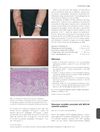 28 citations
,
February 2010 in “British journal of dermatology/British journal of dermatology, Supplement”
28 citations
,
February 2010 in “British journal of dermatology/British journal of dermatology, Supplement” WNT10A mutations cause varied symptoms in patients with odonto-onycho-dermal dysplasia.
 June 2024 in “Archives of Dermatological Research”
 SFRP2 and PTGDS may be key factors in female hair loss.
48 citations
,
September 2011 in “British Journal of Dermatology” Epigenetic changes in blood cells may contribute to alopecia areata.
 26 citations
,
September 2010 in “Experimental Dermatology”
26 citations
,
September 2010 in “Experimental Dermatology” Two gene areas linked to male pattern baldness found, more research needed.
1 citations
,
December 2024 in “The Journal of Dermatology” Traumatic stress and alexithymia may contribute to alopecia areata.
 8 citations
,
January 2022 in “Infectious diseases News Opinions Training”
8 citations
,
January 2022 in “Infectious diseases News Opinions Training” Genetic differences affect COVID-19 severity and treatment effectiveness.
4 citations
,
November 2024 in “Current Opinion in Genetics & Development”  1 citations
,
December 2022 in “Frontiers in Immunology”
1 citations
,
December 2022 in “Frontiers in Immunology” Tissue environment greatly affects the unique epigenetic makeup of regulatory T cells, which could impact autoimmune disease treatment.