 September 2024 in “Health Sciences”
 Androgenic alopecia can be treated with minoxidil, finasteride, and hormonal therapy.
 14 citations
,
July 1987 in “Dermatologic Clinics”
14 citations
,
July 1987 in “Dermatologic Clinics” The document concludes that treating female hair loss should target reducing excess androgen and blocking its effects on hair follicles, with the best treatments being hormonal therapy, adrenal suppression, and topical minoxidil.
 16 citations
,
April 2011 in “Recent Patents on Inflammation & Allergy Drug Discovery”
16 citations
,
April 2011 in “Recent Patents on Inflammation & Allergy Drug Discovery” Alopecia Areata is an autoimmune disease causing hair loss in patches, often starting before age 20, and while some cases recover on their own, treatments include topical corticosteroids, minoxidil, and promising new methods like IL-31 antibodies and 308-nm Excimer laser therapy.
May 2020 in “International journal of molecular biology” Mutations in the AR gene cause hair thinning and loss.
 April 2012 in “Encyclopedia of Life Sciences”
 Different genes are linked to various types of hair loss.
 1 citations
,
August 1994 in “Journal of Cutaneous Pathology”
1 citations
,
August 1994 in “Journal of Cutaneous Pathology” Hair loss happens due to faster cell growth and fewer cells in affected follicles.
 109 citations
,
May 2011 in “Dermatologic Therapy”
109 citations
,
May 2011 in “Dermatologic Therapy” Alopecia areata is a type of hair loss that can lead to complete baldness, often associated with other autoimmune conditions, and half of the cases may see hair return within a year.
 November 2014 in “Prescriber”
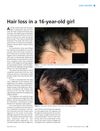
 The 16-year-old girl with hair loss was successfully treated for alopecia areata, leading to significant hair regrowth.
 4 citations
,
May 2002 in “Therapeutische Umschau”
4 citations
,
May 2002 in “Therapeutische Umschau” AGA treated with finasteride, minoxidil, and hair transplantation.
13 citations
,
August 1991 in “The Journal of the American Osteopathic Association” Inflammation may play a role in causing androgenetic alopecia.
 80 citations
,
January 1995 in “The American Journal of Medicine”
80 citations
,
January 1995 in “The American Journal of Medicine” Hair loss in androgenetic alopecia is caused by genetic factors and androgen excess, and can be treated with combined therapies.
 4 citations
,
April 2016 in “Experimental Dermatology”
4 citations
,
April 2016 in “Experimental Dermatology” AGA causes hair loss through follicle miniaturization and hair cycle changes; regrowth depends on anagen initiation in kenogen follicles.
 December 2022 in “Jurnal Kesehatan Jompa”
 AAG causes hair loss in many people, with limited treatments like finasteride, minoxidil, light therapy, and hair transplants.
December 2023 in “International Journal of Dermatology” Accurate diagnosis of alopecia areata incognito requires trichoscopy and histopathology.
 June 2025 in “Italian Journal of Dermatology and Venereology”
 Thorough scalp examination is crucial for diagnosing alopecia areata incognita in men with diffuse hair loss.
 August 2022 in “Gene Reports”
 New hair loss treatments could be improved by using combined biological markers.
 October 2023 in “Case Reports”
 A man with a new type of male pattern hair loss that affects the back of the head responded well to common hair loss treatments.
 February 2025 in “European Journal of Dermatology”
 Androgenetic alopecia is complex and needs more research for better treatments.
 48 citations
,
May 1999 in “International Journal of Dermatology”
48 citations
,
May 1999 in “International Journal of Dermatology” Alopecia areata is an unpredictable autoimmune hair loss condition, treated based on severity, with half of patients regrowing hair within a year without treatment.
12 citations
,
August 2002 in “Archives of Dermatology”  February 2025 in “Dermatology and Therapy”
 Alopecia areata incognita causes sudden hair loss but usually improves with topical steroids.
1 citations
,
March 2000 in “PubMed” A 16-year-old boy's alopecia areata progressed unusually to resemble male pattern baldness.
 1 citations
,
December 2013 in “Journal of Evolution of Medical and Dental Sciences”
1 citations
,
December 2013 in “Journal of Evolution of Medical and Dental Sciences” Alopecia areata causes patchy hair loss due to unknown factors, affecting all ages and genders.
 January 2011 in “International Journal of Trichology”
 The document concludes that doctors should recognize congenital triangular alopecia to avoid unnecessary treatments, as it does not respond to steroids like alopecia areata does.
 January 2009 in “CRC Press eBooks”
 Androgenetic alopecia, or common baldness, is the main cause of hair loss in men due to shrinking hair follicles from hormones, and it's normal but can be a problem if it's too much or too early.
 August 2021 in “EMC - AKOS - Trattato di Medicina”
 Acquired alopecia is hair loss that can be reversible or irreversible, depending on whether the hair follicle is destroyed.
April 2021 in “Medical Science and Discovery” Early hair loss in men may signal broader health issues similar to PCOS in women.
 May 2023 in “Clinical and Experimental Dermatology”
 Alopecia areata has a high chance of persisting and relapsing, with a significant risk of total hair loss, especially if it starts in childhood.
 September 2023 in “bioRxiv (Cold Spring Harbor Laboratory)”
 Some hair growth cells remain in partially bald areas of Indian men with hair loss.
 17 citations
,
October 2013 in “Plastic and reconstructive surgery. Global open”
17 citations
,
October 2013 in “Plastic and reconstructive surgery. Global open” Male pattern baldness may be caused by scalp pressure on hair follicles, which increases with age and leads to a cycle of hair loss. This process is not directly determined by genes.