 March 2011 in “European Urology Supplements”
 Gene variation affects prostate issues and hair loss.
January 2011 in “The Chinese Journal of Dermatovenereology” Shorter GGN repeats in the androgen receptor gene are linked to androgenetic alopecia.
 March 2009 in “International Journal of Dermatology”
 The androgen receptor gene doesn't help identify women likely to have female pattern hair loss.
 January 2009 in “Egyptian Journal of Medical Human Genetics”
 The study suggests that a specific gene variation and higher gene activity are linked to increased baldness in Egyptian men.
January 2009 in “Journal of Clinical Dermatology” CAG repeat numbers in the AR gene likely don't affect hair loss in Korean men.
 May 2008 in “Hair transplant forum international”
 A genetic test can identify people at risk of male pattern baldness early, allowing for quicker treatment.
 January 2008 in “Journal of The American Academy of Dermatology”
 ROS may affect hair loss related to hormones.
January 2006 in “Chinese Journal of Dermatology” Shorter GGC triplet repeats in the androgen receptor gene are linked to less hair loss in Han men.
January 2004 in “Journal of Guangzhou University of Traditional Chinese Medicine” Androgen receptor abnormalities may contribute to hair loss in androgenetic alopecia.
 March 1998 in “Journal of Dermatological Science”
 Combining RU58841 and minoxidil significantly increases hair growth.

The medicine Diane is effective in treating hair loss, severe acne, and excessive hair growth.
 83 citations
,
April 1992 in “Clinical Endocrinology”
83 citations
,
April 1992 in “Clinical Endocrinology” Having enough iron improves the effectiveness of a specific hair loss treatment in women.
7 citations
,
January 1990 Spironolactone improved hair density and quality in women with hair loss.
Balding hair follicles have reduced growth factors and increased inhibitory factors, suggesting new treatment paths for hair loss.
 105 citations
,
January 2009 in “Medicine”
105 citations
,
January 2009 in “Medicine” Hirsutism is more linked to high androgen levels than acne or hair loss, and a mix of hormonal tests is best for diagnosis; certain treatments can reduce symptoms.
January 2020 in “International Journal of Trichology” Androgen-producing ovarian tumors can cause male-pattern hair loss in women.
 65 citations
,
October 1999 in “Journal of The American Academy of Dermatology”
65 citations
,
October 1999 in “Journal of The American Academy of Dermatology” Finasteride effectively reduces hair loss by decreasing androgen levels.
 50 citations
,
July 2014 in “International Journal of Clinical Pharmacology and Therapeutics”
50 citations
,
July 2014 in “International Journal of Clinical Pharmacology and Therapeutics” New finasteride solution effectively reduces baldness-causing hormone, potentially with fewer side effects.
 32 citations
,
January 1990 in “Clinical Endocrinology”
32 citations
,
January 1990 in “Clinical Endocrinology” Women with female pattern hair loss have higher levels of certain androgens, suggesting increased androgen exposure to hair follicles.
3 citations
,
March 2022 in “Research journal of pharmacy and technology” Parsley contains compounds that might be good for treating hair loss.
 3 citations
,
July 2018 in “JAAPA”
3 citations
,
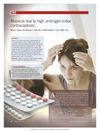
July 2018 in “JAAPA” Some birth control pills can cause hair loss, and switching to ones with less androgen should help.
 1 citations
,
December 2017 in “Journal of The European Academy of Dermatology and Venereology”
1 citations
,
December 2017 in “Journal of The European Academy of Dermatology and Venereology” Vertex baldness has higher DHT levels than frontal baldness, but testosterone and PSA levels are similar.
 1 citations
,
January 2016 in “Journal of Microbial & Biochemical Technology”
1 citations
,
January 2016 in “Journal of Microbial & Biochemical Technology” The Free Androgen Index (FAI) is the best indicator of early hair loss in men before age 30.
 December 2023 in “European Journal of Pharmacology”
 C3G and Vitisin A may help prevent hair loss by blocking male hormones and stopping hair cell death.
September 2019 in “Human Andrology” Higher serum androgens contribute to male pattern baldness.
January 2026 in “Dermatologic Therapy” Higher dihydrotestosterone (DHT) levels are linked to male pattern baldness.
 78 citations
,
June 2003 in “Journal of Investigative Dermatology Symposium Proceedings”
78 citations
,
June 2003 in “Journal of Investigative Dermatology Symposium Proceedings” TGF-β1 from dermal papilla cells suppresses hair growth, and targeting it may help treat androgenetic alopecia.
 47 citations
,
December 2000 in “Archives of Dermatological Research”
47 citations
,
December 2000 in “Archives of Dermatological Research” Androgens significantly affect female hair loss, and hormonal treatments may help.
3 citations
,
January 2011 in “International journal of trichology” Low DHEA-S levels might be linked to alopecia areata and could be a potential treatment target.
 3 citations
,
July 1990 in “Acta dermato-venereologica”
3 citations
,
July 1990 in “Acta dermato-venereologica” A man's baldness improved possibly due to a medication that blocks male hormones.