 159 citations
,
July 2006 in “Endocrine Reviews”
159 citations
,
July 2006 in “Endocrine Reviews” Estrogens significantly influence hair growth by interacting with receptors in hair follicles and may help regulate the hair growth cycle.
February 2015 in “American journal of medical and biological research” Balding hair follicles have less growth-promoting factors and more inhibitory factors, leading to hair loss.
 209 citations
,
September 2008 in “Dermatologic Therapy”
209 citations
,
September 2008 in “Dermatologic Therapy” Androgens can both increase and decrease hair growth in different parts of the body.
4 citations
,
July 2006 in “British journal of dermatology/British journal of dermatology, Supplement” Testosterone increases hair follicle cell growth when beard or axillary skin cells are present together.
13 citations
,
January 2002 in “Clinics in dermatology” A mushroom extract might reduce hair loss and liver damage caused by certain chemotherapy drugs in animals.

Different hair growth phases affect how follicles respond to X-rays, and hormones like testosterone and dihydrotestosterone play a key role in baldness; transplanted hair can grow on bald scalp areas.
 38 citations
,
October 1988 in “Clinics in Dermatology”
38 citations
,
October 1988 in “Clinics in Dermatology” Hormones, nutrition, and seasonal changes regulate hair growth cycles, with androgens extending growth phases and factors like aging and malnutrition affecting hair loss and thinning.
15 citations
,
May 2002 in “PubMed” Hormones, especially DHT, affect hair loss and growth, and targeting specific enzymes may help treat hair loss.
 19 citations
,
September 2011 in “Journal of Dermatological Science”
19 citations
,
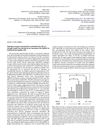
September 2011 in “Journal of Dermatological Science” TGF-β1 increases androgen receptor activity in hair loss, but Hic-5/ARA55 can counter this effect.
 233 citations
,
November 2002 in “The journal of investigative dermatology/Journal of investigative dermatology”
233 citations
,
November 2002 in “The journal of investigative dermatology/Journal of investigative dermatology” Creating stronger blockers for skin enzymes might lead to better treatment for conditions like acne and excessive hair growth.
 37 citations
,
January 1997 in “Clinics in Dermatology”
37 citations
,
January 1997 in “Clinics in Dermatology” Hair problems are common and distressing for women, but increasing knowledge of treatments offers hope.
48 citations
,
April 1995 in “PubMed” Testosterone helps beard and axillary hair cells grow by releasing growth factors from dermal papilla cells.
3 citations
,
June 2015 in “CRC Press eBooks” Male pattern hair loss affects up to 80% of men due to genetics and hormone sensitivity.
 September 2021 in “CRC Press eBooks”
 Alopecia areata incognita causes sudden hair thinning, responds well to steroids, and is more common in those with genetic hair loss conditions.
 1 citations
,
August 2002 in “Zeitschrift für Hautkrankheiten”
1 citations
,
August 2002 in “Zeitschrift für Hautkrankheiten” Male androgenetic alopecia involves hair follicle miniaturization due to DHT, with potential treatments using inhibitors and blockers.
Hirsutism is excessive male-pattern hair growth in women, often treated cosmetically or with hormone therapy if contraception is also desired.
 2 citations
,
January 2004 in “Enshou saisei”
2 citations
,
January 2004 in “Enshou saisei” Male pattern baldness is caused by certain cells in hair follicles and could potentially be treated by targeting a specific growth factor, TGF-β1.
 January 1992 in “Juntendo Medical Journal”
 Male pattern baldness is mainly caused by a hormone called dihydrotestosterone (DHT), and drugs that can block this hormone might help prevent hair loss.
61 citations
,
December 2001 in “Journal of Investigative Dermatology” Steroid sulfatase in hair follicles may be a target for treating hair loss.
 15 citations
,
May 2020 in “BMC complementary medicine and therapies”
15 citations
,
May 2020 in “BMC complementary medicine and therapies” Polygonum multiflorum extract helps hair grow longer and fights the effects of hormones that cause hair loss.
24 citations
,
January 2018 in “Indian Journal of Dermatology, Venereology and Leprology” Androgenetic alopecia is mainly caused by genetic factors and increased androgen activity, leading to hair follicle miniaturization.
 33 citations
,
August 1985 in “Archives of Dermatology”
33 citations
,
August 1985 in “Archives of Dermatology” Acquired Progressive Kinking of Hair is likely an early sign of male pattern baldness.
 March 1998 in “Journal of dermatological science”
 Protease Nexin-1 is found in human hair growth cells and is affected by male hormones.
 September 2017 in “Pediatric Dermatology”
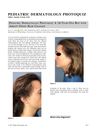
 A 14-year-old boy was diagnosed with a rare hair condition that may lead to hair thinning and has no known effective treatments.
 January 2023 in “Springer eBooks”
 Most older adults experience pattern hair loss due to shrinking hair follicles, with men and women showing different balding patterns.
 8 citations
,
February 2010 in “Journal of Dermatology”
8 citations
,
February 2010 in “Journal of Dermatology” A topical treatment safely and effectively reduced acne by causing targeted cell death in sebaceous glands without side effects.
 3 citations
,
July 2011 in “Expert Review of Dermatology”
3 citations
,
July 2011 in “Expert Review of Dermatology” Effective treatments for excessive hair growth in women include creams, laser therapy, and medications, with the choice depending on individual needs and potential side effects.
 3 citations
,
February 2005 in “Aktuelle Dermatologie”
3 citations
,
February 2005 in “Aktuelle Dermatologie” Prolactin and TGF-β receptor blockers might help treat hair loss.
 June 2023 in “Brazilian Journal of Health Review”
 Common baldness is a hereditary condition that can be treated with medications or surgery to prevent progression and improve self-esteem.
 July 2019 in “Journal of Investigative Dermatology”
 The research found that male pattern hair loss is mostly genetic and involves hair thinning due to hormonal effects and changes in gene expression.