Women with acne and hair loss, even if they have regular periods, often have polycystic ovary syndrome.
 April 2023 in “Elsevier eBooks”
 PCOS is a hormonal disorder causing symptoms like excess hair, acne, irregular periods, and fertility issues.
 April 2023 in “Elsevier eBooks”
 PCOS is a common and costly condition in North American women, causing various health issues like obesity, diabetes, and fertility problems.
January 2023 in “Zenodo (CERN European Organization for Nuclear Research)” Hirsutism is common among Iraqi women, often without a known cause, but family history is significant.
Women with Polycystic Ovary Syndrome (PCOS) have a higher risk of developing type 2 diabetes due to insulin resistance.
 December 2022 in “International Journal of Health Science”
 High levels of male hormones in women with PCOS can lead to fertility issues and symptoms like irregular periods, hair growth, acne, and hair loss; lifestyle changes are recommended for management.
 November 2022 in “The Journal of Clinical Endocrinology and Metabolism”
 Postmenopausal hyperandrogenism, a condition with symptoms like increased hair growth and acne, is usually caused by PCOS but can also be due to other factors. It's diagnosed by checking testosterone levels and treated either by removing the adrenal tumor or through antiandrogen therapy.
 November 2022 in “Journal of the Endocrine Society”
 A rare ovarian tumor caused high testosterone and excess hair in a woman, which was resolved after tumor removal.
 October 2022 in “Más dermatología”
 Early diagnosis and treatment are crucial for managing female hair loss effectively.
 September 2022 in “Journal of Contemporary medical practice”
 Most women with Polycystic Ovarian Disease have trouble getting pregnant due to hormonal imbalances, but lifestyle changes and certain drugs can help.
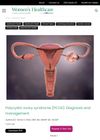 September 2022 in “Women's healthcare”
 PCOS is managed by lifestyle changes and personalized medication to improve symptoms and fertility.
 August 2022 in “International journal of reproduction, contraception, obstetrics and gynecology”
 The study found that 7.21% of young girls have polycystic ovarian syndrome, with symptoms like irregular periods, abnormal hair growth, and acne. Early diagnosis is important to prevent long-term complications.
 March 2022 in “Scientific Journal of Kurdistan University of Medical Sciences”
 Oral contraceptives with desogestrel and drospirenone improve PCOS symptoms.
Hyperandrogenism is diagnosed using clinical signs, lab tests, and imaging.
 October 2021 in “Journal of pharmaceutical research international”
 Yoga, specifically Malasana, can help reduce anxiety and depression in women with Polycystic Ovarian Syndrome.
 October 2021 in “Turkderm”
 Hormonal imbalances, not insulin resistance or dyslipidemia, may be more important in causing acne in women over 25.
 January 2021 in “ISGE series”
 Polycystic ovary syndrome causes chronic inflammation affecting all body systems, but proper nutrition, exercise, and supplements can improve the condition.
 October 2020 in “Medicine - Programa De Formación Médica Continuada Acreditado”
 Female hyperandrogenism is a condition caused by too much male hormones, leading to skin issues and ovulation problems, often due to Polycystic Ovary Syndrome, and is treated based on individual symptoms.
May 2020 in “Scientific periodicals of Ukraine” Alopecia and acne in women are complex conditions needing coordinated care and personalized treatment.
March 2020 in “Endocrinology research and practice.” Treating prolactinoma doesn't significantly affect hirsutism or cause high androgen levels.
 January 2020 in “International Journal of Medical Research and Health Sciences”
 Many female students at Northern Border University in Saudi Arabia may have Polycystic ovary syndrome (PCOS) and related emotional distress, so those at risk should get further tests and treatment.
Karunjchirakam Chooranam significantly improved symptoms in most PCOS cases.
The case showed the need for quick investigation of virilization in women and how emotional health is linked to physical health.
 January 2019 in “Springer eBooks”
 Acne is linked to inflammation and insulin resistance, and is associated with various syndromes that require different treatments.
 January 2019 in “ISGE series”
 The document concludes that effectively managing PCOS requires a multifaceted approach.
 September 2018 in “Fertility and Sterility”
 African American women have a higher risk of preterm delivery than Caucasian women, and inflammatory stimuli affect gene expression in cells related to PCOS, showing a heightened inflammatory state in women with PCOS.
 April 2017 in “Journal of evolution of medical and dental sciences”
 Most women with excess hair growth had Polycystic Ovary Syndrome, and severity wasn't linked to hormone levels.
 October 2016 in “Journal of the Dermatology Nurses’ Association”
 Polycystic Ovary Syndrome (PCOS) affects 6%-15% of women of reproductive age, causing symptoms like acne and hair loss, and increasing the risk of type 2 diabetes and heart disease; it's managed through diet, exercise, and medications like Metformin and hormonal contraceptives.
 September 2016 in “Gynecology Obstetrics and Reproductive Medicine”
 Effective treatment for skin issues in women with PCOS includes oral contraceptives, antiandrogens, and other medications and procedures.
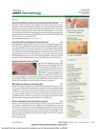 September 2016 in “JAMA Dermatology”
 Melanoma patients can learn to check their skin, early balding in men may indicate similar risks as PCOS in women, certain criteria can help predict skin cancer behavior, small skin cancer may not need extra therapy after surgery, and sterile gloves don't reduce infection in minor surgeries.