 1 citations
,
December 2022 in “Gynecological Endocrinology”
1 citations
,
December 2022 in “Gynecological Endocrinology” The most common skin issues in females with Polycystic Ovary Syndrome (PCOS) are excessive hair growth, hair loss, oily skin, acne, dark skin patches, and skin tags, which may be linked to hormone and insulin levels.
 1 citations
,
October 2010 in “Cambridge University Press eBooks”
1 citations
,
October 2010 in “Cambridge University Press eBooks” The document suggests new ways to assess and diagnose hyperandrogenism to improve accuracy.
 November 2025 in “Journal of Nanobiotechnology”
 A new treatment using special nanovesicles with linoleic acid shows promise in improving hair growth and reducing irritation for hair loss.
A new treatment using conjugated linoleic acid nanovesicles can rejuvenate hair follicles and improve hair growth in androgenic alopecia.
A new treatment using conjugated linoleic acid in nanovesicles can rejuvenate hair follicles and improve hair growth in androgenic alopecia.
 January 2012 in “Methods in pharmacology and toxicology”
 TRPV3 could be a target for treating pain, skin disorders, and hair problems, but more research is needed to create effective drugs.
January 2025 in “Anais Brasileiros de Dermatologia” Male pattern baldness worsens with age and can be treated with medications like minoxidil and finasteride, but side effects and personalized care are important.
 21 citations
,
August 1994 in “Clinical endocrinology”
21 citations
,
August 1994 in “Clinical endocrinology” 5α-Reductase inhibitors can help treat hair loss, acne, and prostate issues by reducing DHT levels.
 September 2016 in “JAMA Dermatology”
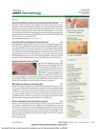
 Melanoma patients can learn to check their skin, early balding in men may indicate similar risks as PCOS in women, certain criteria can help predict skin cancer behavior, small skin cancer may not need extra therapy after surgery, and sterile gloves don't reduce infection in minor surgeries.
 4 citations
,
November 2020 in “BMC Dermatology”
4 citations
,
November 2020 in “BMC Dermatology” Researchers identified genes in scalp hair follicles that may affect hair traits and hair loss.
1 citations
,
August 2022 in “Frontiers in Medicine” ALRV5XR effectively promotes hair regrowth in both men and women through different mechanisms.
November 2025 in “Journal of Investigative Dermatology” AMP-303 injections can increase hair growth in androgenetic alopecia with minimal side effects.
 December 2006 in “8th European Congress of Endocrinology incorporating the British Endocrine Societies”
 Men with early hair loss and hormonal changes like PCOS could be the male equivalent of PCOS, not linked to metabolic syndrome.
 July 2012 in “Hair transplant forum international”
 Lifestyle choices like stress, smoking, heavy drinking, sun exposure, and chemical hair treatments might speed up hair loss in people with androgenetic alopecia.
 October 2025 in “Journal of Cosmetic Dermatology”
 Conventional treatments like dutasteride and minoxidil are effective for male hair loss, with some alternative treatments also showing promise.

The conclusion is that a treatment called cp-asiAR can reduce hair loss and promote hair growth, making it a potential new therapy for androgenetic alopecia.
 May 2023 in “The journal of sexual medicine”
 Ovarian Hyperthecosis caused hypersexuality in an older woman and was successfully treated with surgery.
April 2023 in “Journal of Investigative Dermatology” cp-asiAR may effectively treat hair loss by targeting androgen receptors.
 May 2008 in “Hair transplant forum international”
 A genetic test can identify people at risk of male pattern baldness early, allowing for quicker treatment.
 1265 citations
,
October 2013 in “The Journal of Clinical Endocrinology and Metabolism”
1265 citations
,
October 2013 in “The Journal of Clinical Endocrinology and Metabolism” The guideline suggests using specific criteria to diagnose PCOS, recommends various treatments for its symptoms, and advises screening for related health issues.
Mohamed Kandil suggests renaming Polycystic Ovary Syndrome to "Polyfollicular Anovulatory Androgenic Syndrome" to better describe its symptoms, but concerns exist that it may not cover all related issues like obesity and depression.
 4025 citations
,
December 2003 in “Human Reproduction”
4025 citations
,
December 2003 in “Human Reproduction” The 2003 consensus updated PCOS diagnosis criteria and linked PCOS to higher risks of diabetes and heart problems, recommending lifestyle changes to lower these risks.
 232 citations
,
December 2005 in “Andrology”
232 citations
,
December 2005 in “Andrology” PCOS is caused by both genetics and environmental factors like diet and obesity.
89 citations
,
August 2013 in “PloS one” Androgen receptors are active in many tissues of both male and female mice, not just reproductive organs.
 85 citations
,
June 2006 in “Best Practice & Research Clinical Endocrinology & Metabolism”
85 citations
,
June 2006 in “Best Practice & Research Clinical Endocrinology & Metabolism” The document concludes that hirsutism is the main sign for diagnosing hyperandrogenism, which requires a detailed patient history and physical exam.
 77 citations
,
May 2012 in “Expert Opinion on Emerging Drugs”
77 citations
,
May 2012 in “Expert Opinion on Emerging Drugs” New treatments for male hypogonadism are effective and should be personalized.
 70 citations
,
January 2000 in “Hormone Research in Paediatrics”
70 citations
,
January 2000 in “Hormone Research in Paediatrics” SAHA syndrome is a condition in women involving skin and hair issues, often related to hormonal imbalances, and is treated based on the underlying cause.
 68 citations
,
December 2014 in “Cell Biochemistry and Function”
68 citations
,
December 2014 in “Cell Biochemistry and Function” Nuclear hormone receptors play a significant role in skin wound healing and could lead to better treatment methods.
 67 citations
,
February 2010 in “Acta Obstetricia et Gynecologica Scandinavica”
67 citations
,
February 2010 in “Acta Obstetricia et Gynecologica Scandinavica” Hirsutism is a strong sign of high male hormones and metabolic problems in women with PCOS, but acne and hair loss are not.
 56 citations
,
December 2011 in “Steroids”
56 citations
,
December 2011 in “Steroids” The document suggests treating individuals with nonclassic congenital adrenal hyperplasia who show symptoms, especially those related to excess male hormones.