 1 citations
,
December 2025 in “Selçuk tıp dergisi/Selçuk Üniversitesi Tıp Fakültesi dergisi”
1 citations
,
December 2025 in “Selçuk tıp dergisi/Selçuk Üniversitesi Tıp Fakültesi dergisi” Lower 2D:4D finger ratios in HS patients suggest prenatal hormone influence on the disease.

Women with PCOS have hormonal imbalances and increased central obesity, highlighting the need for early detection and management.
 14 citations
,
September 1986 in “Archives of Dermatology”
14 citations
,
September 1986 in “Archives of Dermatology” Women with low SHBG levels and a high 3a-diol G to SHBG ratio are likely to experience female pattern baldness, possibly due to a slight excess of androgens affecting sensitive hair bulbs.
18 citations
,
January 1985 in “Acta Obstetricia Et Gynecologica Scandinavica” Hirsutism severity is linked to androgen levels, especially in women with a lower LH/FSH ratio.
 3 citations
,
October 2015 in “International Journal of Dermatology”
3 citations
,
October 2015 in “International Journal of Dermatology” Normal hair density and diameter ratios were established to help diagnose adult hair loss.
 June 2014 in “British Journal of Dermatology”
 Eczema patients have a lower skin lipid to protein ratio, older and longer-staying hospital patients are more likely to get pressure ulcers, hair loss in AGA is linked to muscle degeneration, vitamin D deficiency is common in alopecia areata and linked to its severity, standard liver tests don't effectively detect fibrosis in psoriasis patients on methotrexate, and bullous pemphigoid patients have a higher death risk but combination therapy may reduce it.
 2 citations
,
June 2011 in “Expert Review of Dermatology”
2 citations
,
June 2011 in “Expert Review of Dermatology” Female pattern hair loss involves thinning hair on crown and frontal scalp, diagnosed by hair ratio, and treated with minoxidil, antiandrogens, or hair transplantation.
 October 2024 in “Journal of College of Physicians And Surgeons Pakistan”
 People with androgenetic alopecia are more likely to have metabolic syndrome.
 28 citations
,
June 2010 in “European Journal of Cancer”
28 citations
,
June 2010 in “European Journal of Cancer” Baldness at age 40 is not linked to a higher risk of aggressive prostate cancer.
 9 citations
,
June 2014 in “British Journal of Dermatology”
9 citations
,
June 2014 in “British Journal of Dermatology” The study found that balding scalps have more thin hairs and larger oil glands, which might contribute to skin conditions related to hair loss.
3 citations
,
December 2021 in “Acta dermato-venereologica” People with androgenetic alopecia have a higher risk of metabolic syndrome.
 2 citations
,
December 2021 in “ScienceRise”
2 citations
,
December 2021 in “ScienceRise” The best way to extract oil from Urtica dioica roots is by using corn oil, a 1:5 ratio of raw material to extract, extracting for 6 hours, and using the maceration method.
 2 citations
,
May 2012 in “Indian drugs”
2 citations
,
May 2012 in “Indian drugs” Finasteride, a hair loss treatment, works better and is more stable when delivered through specially prepared gels, leading to increased hair growth.
1 citations
,
October 2022 in “Evidence-based Complementary and Alternative Medicine” Traditional Chinese Medicine may help treat hair loss but needs more research.
April 2026 in “World Allergy Organization Journal” Allergic rhinitis increases hair loss risk, but antihistamines can reduce it.
 April 2025 in “Journal of Pioneering Medical Science”
 Topical minoxidil is safer and improves hair density better than oral minoxidil.
 April 2025 in “International Journal of Dermatology and Venereology”
 Androgenetic alopecia may cause schizophrenia, but schizophrenia does not cause androgenetic alopecia.
 February 2025 in “Clinical Cosmetic and Investigational Dermatology”
 Genetic risk for hair loss can increase depression risk, but depression doesn't increase hair loss risk.
 August 2024 in “Journal of Cosmetic Dermatology”
 CGF injections may safely and effectively promote hair growth in androgenetic alopecia patients.
 January 2023 in “Sovremennye problemy nauki i obrazovaniâ”
 Miliacin may help prevent hair loss and improve hair growth in mice with a condition similar to human baldness.
January 2026 in “Skin Research and Technology” The study's findings on VLDL as a biomarker for hair loss are unreliable.
 August 2024 in “Skin Research and Technology”
 Omega-6 and LDL cholesterol increase the risk of hair loss.
34 citations
,
August 2007 in “PubMed” Balding in men is strongly linked to high blood pressure and family history.
 27 citations
,
March 2008 in “Journal of The European Academy of Dermatology and Venereology”
27 citations
,
March 2008 in “Journal of The European Academy of Dermatology and Venereology” Men with a certain type of hair loss (AGA) have higher bad cholesterol and lower good cholesterol levels, making them more likely to get heart disease.
 16 citations
,
May 2013 in “Urology”
16 citations
,
May 2013 in “Urology” Metabolic syndrome linked to urinary symptoms; hair loss not significant.
 12 citations
,
March 2004 in “International Journal of Dermatology”
12 citations
,
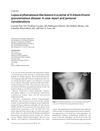
March 2004 in “International Journal of Dermatology” Woman's hair loss diagnosis changed from CTE to AA; multiple biopsies important for accurate diagnosis.
 4 citations
,
March 2022 in “Journal of Infection”
4 citations
,
March 2022 in “Journal of Infection” Anti-androgen therapy might help protect against COVID-19 infection and reduce death risk.
 1 citations
,
August 2024 in “Skin Research and Technology”
1 citations
,
August 2024 in “Skin Research and Technology” There is no causal relationship between androgenetic alopecia and serum uric acid.
 1 citations
,
May 2019 in “Journal of The European Academy of Dermatology and Venereology”
1 citations
,
May 2019 in “Journal of The European Academy of Dermatology and Venereology” New method, hair distribution width (HDW), improves accuracy in diagnosing androgenetic alopecia (AGA).
May 2025 in “Actas Dermo-Sifiliográficas” Botulinum toxin is not effective for treating androgenetic alopecia.