June 2021 in “The Journal of Family Practice” A 69-year-old woman has a fast-growing hand lesion that didn't improve with salicylic acid.
March 2021 in “Revista da Associação Médica Brasileira” September 2019 in “Human Andrology” Higher serum androgens contribute to male pattern baldness.
53 citations
,
July 2021 in “International Journal of Molecular Sciences” Geranium pyrenaicum extracts show potential for cancer, antiviral, and enzyme inhibition treatments.
 February 2024 in “JAAD International”
 Measuring the variety in hair thickness can help diagnose male pattern baldness in Korean men.
 February 2026 in “Zenodo (CERN European Organization for Nuclear Research)”
 Alopecia affects mental health, causing depression and anxiety, but new treatments can improve both hair growth and quality of life.
 October 2025 in “Indian Dermatology Online Journal”
 Trichoscopy helped correctly diagnose and treat a scalp and eyebrow fungal infection.
 7 citations
,
January 2012 in “International Journal of Trichology”
7 citations
,
January 2012 in “International Journal of Trichology” A man with Woolly Hair Syndrome had very curly, fragile hair, and doctors used a special scalp examination to diagnose him without invasive tests.
 November 2024 in “Australasian Journal of Dermatology”
 The study's methods are flawed, making its conclusions about finasteride and mental health unreliable.
 5 citations
,
March 2009 in “Pediatric Dermatology”
5 citations
,
March 2009 in “Pediatric Dermatology” The study found that pili bifurcati causes hair to intermittently split into two branches, each with its own outer layer.
 24 citations
,
January 2015 in “International Journal of Trichology”
24 citations
,
January 2015 in “International Journal of Trichology” Early balding in young Indian men may indicate a higher risk of metabolic syndrome and potential heart disease.
69 citations
,
December 2015 in “BMC plant biology” Three genes in Arabidopsis are important for plant growth and development by affecting sugar attachment to proteins.
 December 2023 in “Benha Journal of Applied Sciences”
 Men with male pattern baldness have higher blood sugar, bad cholesterol, and ZAG protein levels than healthy men.
July 2024 in “LA CIENCIA AL SERVICIO DE LA SALUD Y NUTRICIÓN” The condition is harmless, doesn't worsen, and needs no invasive treatment.
November 2020 in “Дерматовенерология, косметология” The M-type is the most common form of male hair loss, and the BASP-classification is easy for different medical professionals to use.
November 2022 in “Frontiers in Medicine” Severe hair loss in Chinese men is linked to high blood pressure, while in women, it's linked to larger waist size and cholesterol issues.
Medicinal plants are important for local health in La Tranca Arriba.
 6 citations
,
January 2016 in “International Journal of Trichology”
6 citations
,
January 2016 in “International Journal of Trichology” The conclusion is that more hair loss (androgenetic alopecia) is linked to larger prostate size, suggesting hair loss could be an early sign of benign prostatic hyperplasia.
 1 citations
,
October 2023 in “RECIMA21 - Revista Científica Multidisciplinar - ISSN 2675-6218”
1 citations
,
October 2023 in “RECIMA21 - Revista Científica Multidisciplinar - ISSN 2675-6218” Alopecia androgenética in women can lower self-esteem and cause mental health issues.

The document says that Androgenetic alopecia, a common hair loss condition, affects women less often and usually less severely, but early diagnosis and treatment are important.
An automated system can accurately classify hair disorders using image analysis.
 September 2021 in “CRC Press eBooks”
 Alopecia areata incognita causes sudden hair thinning, responds well to steroids, and is more common in those with genetic hair loss conditions.
January 2023 in “ALEXMED ePosters (Online)” Alopecia patients have a higher risk of heart disease.
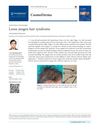 February 2023 in “Cosmoderma”
 Loose anagen hair syndrome causes easily shed hair but usually improves with time.
26 citations
,
October 1999 in “Archives of Dermatology” Curly hair in certain scalp areas can be an early sign of hair loss.
December 2025 in “The International Journal of Medical Science and Health Research” Rosemary may effectively treat hair loss with fewer side effects than conventional treatments.
September 2021 in “Eureka: Health Sciences” Androgenetic alopecia in women may be improved by targeting oxidative stress, inflammation, and fibrosis.

Androgenetic alopecia, or hair loss, is caused by genetic factors and hormones, with different mechanisms in men and women, and can be linked to insulin resistance and polycystic ovary syndrome.
January 2021 in “Menoufia Medical Journal (Print)” Androgenetic alopecia negatively affects emotions and self-confidence, especially in younger people.
 2 citations
,
April 2016 in “Más dermatología”
2 citations
,
April 2016 in “Más dermatología” The supplement with Serenoa repens and Pygeum africanum significantly increased active hair growth and decreased rest phase hair in post-menopausal women with hair loss, with only mild digestive side effects.