7 citations
,
April 1992 in “Journal of steroid biochemistry and molecular biology/The Journal of steroid biochemistry and molecular biology” Women with non-classical congenital adrenal hyperplasia have higher levels of certain steroids, which can be reduced by treatment.
7 citations
,
April 2023 in “Biomedicines” Dihydrotestosterone boosts inflammation in fat cells more than testosterone.
January 2004 in “DOAJ (DOAJ: Directory of Open Access Journals)” Men with androgenetic alopecia do not have elevated DHEA-S levels.
 7 citations
,
January 2018 in “Reproduction”
7 citations
,
January 2018 in “Reproduction” Inhibiting 5α-reductase increases progesterone levels in late pregnant mares.

Women with androgenetic alopecia have normal levels of most blood steroids and binding proteins, but higher dehydroepiandrosterone. Some also have low "sex hormone-binding globulin" and "corticosteroide-binding globulin" capacity, and high "free androgen index" and "free cortisol index". Diane treatment can normalize these levels and improve hair conditions.
14 citations
,
April 1978 in “International Journal of Dermatology” Antiandrogens can treat acne, hirsutism, and seborrhea by reducing sebum production and androgen action.
April 2011 in “Cancer Research” 20(S)-Protopanaxadiol-aglycone may help prevent and treat prostate cancer by reducing androgen receptor activity.
 5 citations
,
July 1994 in “PubMed”
5 citations
,
July 1994 in “PubMed” Finasteride, when taken daily, lowers dihydrotestosterone levels but doesn't noticeably affect adrenal steroid production, except by blocking the 5 alpha-reductase enzyme.
2 citations
,
February 2025 in “Journal of Nanobiotechnology” Modified frameworks with stearic acid enhance drug delivery and promote hair growth.
![Synthesis, Biological Evaluation, and Molecular Docking of 4-Amino-2H-benzo[h]chromen-2-one Analogs Containing the Piperazine Moiety](/images/assets/2ecf4eed-7dbe-4f1a-83db-739625546cdd/small/31808.jpg) 7 citations
,
August 2019 in “Bioorganic & medicinal chemistry”
7 citations
,
August 2019 in “Bioorganic & medicinal chemistry” Analog 23 is a promising compound for prostate cancer treatment.
 16 citations
,
March 2000 in “Clinical Biochemistry”
16 citations
,
March 2000 in “Clinical Biochemistry” Women with hair loss had higher levels of certain hormones, suggesting a link to a condition like PCOS.
 9 citations
,
September 2017 in “Journal of Investigative Dermatology Symposium Proceedings”
9 citations
,
September 2017 in “Journal of Investigative Dermatology Symposium Proceedings” Prostaglandin D2 increases testosterone production in skin cells through a process involving reactive oxygen species, and antioxidants may help treat hair loss.
56 citations
,
November 2007 in “Molecular and cellular endocrinology” Two enzymes regulate androgen receptor activity, affecting treatments for androgen insufficiency and benign prostatic hyperplasia.
177 citations
,
June 1991 in “The Journal of Clinical Endocrinology & Metabolism” Caucasian men have more chest hair and higher levels of certain androgen products than Chinese men.
January 2011 in “Zhongguo xin yao zazhi” A new, safer method to make finasteride from progesterone is effective for industrial use.
1 citations
,
March 2021 in “F1000Research” Plant-based compounds might be effective, low-side-effect treatments for prostate cancer by blocking a specific enzyme.
 26 citations
,
October 2011 in “International Journal of Biological Macromolecules”
26 citations
,
October 2011 in “International Journal of Biological Macromolecules” Some newly made compounds are promising for treating enlarged prostate, hair loss, viruses, and prostate cancer, and might be better than current drugs.
 8 citations
,
March 2010 in “Gynecological Endocrinology”
8 citations
,
March 2010 in “Gynecological Endocrinology” Free Testosterone Index, bioavailable testosterone, and androstenedione are the most accurate for diagnosing excess male hormones in PCOS.
 7 citations
,
January 1994 in “Annual Reports in Medicinal Chemistry”
7 citations
,
January 1994 in “Annual Reports in Medicinal Chemistry” Understanding how androgens work is key for creating new treatments for prostate issues and hair/skin conditions.
18 citations
,
December 2005 in “Journal of Medicinal Chemistry” A brominated phenoxy compound effectively inhibits a human enzyme and shows potential for clinical use.
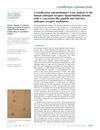 1 citations
,
November 2008 in “Acta crystallographica”
1 citations
,
November 2008 in “Acta crystallographica” Scientists successfully created and analyzed the structure of a part of the human androgen receptor with specific modulators and a peptide to understand how it binds differently in various tissues.
 January 1987 in “Journal of steroid biochemistry/Journal of Steroid Biochemistry”
 Norethisterone (jenapharm) therapy is effective for endometrial cancer.

ACA from Alpinia galanga may prevent testosterone-related hair loss.
12 citations
,
March 2000 in “Clinical Chemistry” Chronic DHEA supplementation slightly increases testosterone in hair but stays within safe limits.
58 citations
,
July 1974 in “The Journal of clinical endocrinology and metabolism/Journal of clinical endocrinology & metabolism” Cyproterone acetate combined with ethinyl estradiol significantly reduced hirsutism in women.
 9 citations
,
August 1952 in “The Journal of Clinical Endocrinology & Metabolism”
9 citations
,
August 1952 in “The Journal of Clinical Endocrinology & Metabolism” A 17-year-old female with adrenogenital syndrome produces very high levels of androgens, which prevent complete feminization despite high estrogen doses.
 May 2021 in “Journal of the Endocrine Society”
 A woman's hair loss and other symptoms were due to a rare hormone deficiency treatable with steroids.
 February 2020 in “Definitions”
 5 Alpha-Reductase Inhibitors reduce the effects of testosterone by blocking its conversion into a stronger form.
 April 2012 in “Journal of IMAB”
 Men with male pattern baldness don't necessarily have high levels of Dehydroepyandrosterone-sulfate, and there's no link between its levels and the severity of hair loss.
1 citations
,
February 2025 in “Toxicology in Vitro” Diphlorethohydroxycarmalol may help treat hair loss better than current medications.