 May 2006 in “Women's Health Medicine”
 Excessive hair growth in women, often from high androgen levels, is usually caused by PCOS, and can be treated with hair removal, medication, and possibly weight loss.
 January 1983 in “Elsevier eBooks”
 Cyproterone acetate is used to treat conditions like prostate cancer, early puberty, excessive sexual drive, and female androgenization by affecting androgen functions and suppressing certain hormones.
 November 2020 in “Psychoneuroendocrinology”
 Finasteride might affect memory by impacting cholinergic system.
 October 2015 in “Elsevier eBooks”
 Finasteride helps hair growth and prostate issues but may cause sexual side effects and increase tumor risk.
 June 2001 in “International Journal of Cosmetic Surgery and Aesthetic Dermatology”
 Finasteride improves hair growth in men with androgenetic alopecia.
 2 citations
,
August 2013 in “The Lancet. Diabetes & endocrinology”
2 citations
,
August 2013 in “The Lancet. Diabetes & endocrinology” The FDA rejected a testosterone drug again due to safety concerns.

The document's conclusion cannot be provided because the document is not available or cannot be read.
January 2026 in “Elsevier eBooks” 35 citations
,
November 1989 in “Journal of steroid biochemistry/Journal of Steroid Biochemistry” Epitestosterone may act as a weak antiandrogen and can inhibit an enzyme involved in testosterone metabolism.
 16 citations
,
October 1994 in “The Journal of Steroid Biochemistry and Molecular Biology”
16 citations
,
October 1994 in “The Journal of Steroid Biochemistry and Molecular Biology” Two non-steroidal antiandrogens, RU 58841 and RU 56187, form a common metabolite at different rates, which may influence their effects; RU 56187 could be used for prostate cancer treatment and RU 58841 for acne treatment.

Women with androgenetic alopecia have normal levels of most blood steroids and binding proteins, but higher dehydroepiandrosterone. Some also have low "sex hormone-binding globulin" and "corticosteroide-binding globulin" capacity, and high "free androgen index" and "free cortisol index". Diane treatment can normalize these levels and improve hair conditions.
January 2004 in “DOAJ (DOAJ: Directory of Open Access Journals)” Men with androgenetic alopecia do not have elevated DHEA-S levels.
April 2022 in “Reactions Weekly”  September 2017 in “Journal of Investigative Dermatology Symposium Proceedings”
 Prostaglandin D2 increases testosterone production in skin cells through a process involving reactive oxygen species, which could be a new target for treating hair loss and other skin conditions driven by testosterone.
94 citations
,
August 2002 in “Experimental Dermatology” 17α-estradiol boosts aromatase activity in female hair follicles, potentially helping with hair loss.
 1 citations
,
March 2012 in “Journal of Dermatological Science”
1 citations
,
March 2012 in “Journal of Dermatological Science” Testosterone, progesterone, and levonorgestrel change enzyme levels related to fat production in hamster skin, which could affect skin oil and acne.
March 2020 in “Upravlìnnâ, ekonomìka ta zabezpečennâ âkostì v farmacìï” The "Flavosterol" emulgel meets quality standards for treating hair loss.
 18 citations
,
March 2002 in “The journal of investigative dermatology/Journal of investigative dermatology”
18 citations
,
March 2002 in “The journal of investigative dermatology/Journal of investigative dermatology” Estrogen increases blood vessel growth factor production, while testosterone blocks this increase.
 11 citations
,
December 2018 in “Assay and Drug Development Technologies”
11 citations
,
December 2018 in “Assay and Drug Development Technologies” Natural herbal compounds might treat certain medical conditions by reducing DHT levels, but more research is needed to confirm their effectiveness and safety.
 431 citations
,
October 2008 in “Current Medicinal Chemistry”
431 citations
,
October 2008 in “Current Medicinal Chemistry” Coumarin derivatives show promise as anti-estrogenic agents for treating breast cancer, with some in clinical trials.
 258 citations
,
July 2016 in “Reproductive Biology and Endocrinology”
258 citations
,
July 2016 in “Reproductive Biology and Endocrinology” The document concludes that insulin resistance is key in PCOS development and early treatment is crucial to prevent complications.
 254 citations
,
September 2014 in “Menopause”
254 citations
,
September 2014 in “Menopause” The NAMS 2014 recommendations guide healthcare providers on treating health issues in midlife women, emphasizing individualized care and informed decision-making.
 249 citations
,
November 2003 in “Clinical endocrinology”
249 citations
,
November 2003 in “Clinical endocrinology” Insulin resistance is a key factor in polycystic ovary syndrome, but genetics may also contribute.
 153 citations
,
March 2017 in “Endocrine”
153 citations
,
March 2017 in “Endocrine” Male pattern baldness involves genetics, hormones, and needs better treatments.
 152 citations
,
December 2007 in “Gender Medicine”
152 citations
,
December 2007 in “Gender Medicine” Male and female skin differ due to hormones, affecting conditions like hair loss, acne, and skin cancer, and suggesting a need for gender-specific treatments.
 123 citations
,
May 2020 in “Drug Development Research”
123 citations
,
May 2020 in “Drug Development Research” Men's sensitivity to male hormones might affect how severe COVID-19 gets for them.
 101 citations
,
April 1994 in “Baillière's clinical endocrinology and metabolism”
101 citations
,
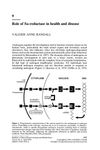
April 1994 in “Baillière's clinical endocrinology and metabolism” 5α-reductase is essential for male sexual development and its inhibitors have potential in treating various conditions related to hormone action.
 100 citations
,
September 2017 in “Molecular and Cellular Endocrinology”
100 citations
,
September 2017 in “Molecular and Cellular Endocrinology” Male hormones and their receptors play a key role in hair loss and skin health, with potential new treatments being explored.
 86 citations
,
July 1993 in “Drugs”
86 citations
,
July 1993 in “Drugs” Finasteride treats enlarged prostate, shrinks it, improves urination, but may cause sexual dysfunction and isn't for women or children.
 81 citations
,
May 2007 in “Fertility and Sterility”
81 citations
,
May 2007 in “Fertility and Sterility” Testosterone therapy seems safe for postmenopausal women for a few years, but more research is needed for long-term effects.