11 citations
,
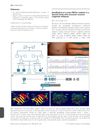
January 2021 in “British Journal of Dermatology” Mutations in the AP1B1 gene cause a new syndrome with skin, hearing, and developmental issues.
 23 citations
,
December 2013 in “British Journal of Dermatology”
23 citations
,
December 2013 in “British Journal of Dermatology” A new gene mutation linked to a skin condition was found in a Spanish family.
26 citations
,
September 2009 in “Clinical genetics” Arab APS1 patients have unique and recurrent AIRE gene mutations.

Inhibiting AP-1 changes skin tumor types and affects tumor cell identity.

Inhibiting AP-1 changes skin tumor types and affects tumor cell identity.
28 citations
,
January 2015 in “Journal of Cell Science” PINCH-1 is crucial for skin cell adhesion and movement, working with EPLIN and ILK.
January 2014 in “生命科学(ISSN1934-7391)” A certain gene variation can affect protein production and is linked to male pattern baldness.
 7 citations
,
March 2022 in “Scientific reports”
7 citations
,
March 2022 in “Scientific reports” Removing anthrax toxin receptor 1 in pigs prevents Senecavirus A infection and causes a rare disease similar to GAPO syndrome.
 3 citations
,
February 2022 in “Frontiers in Genetics”
3 citations
,
February 2022 in “Frontiers in Genetics” The LncRNA AC010789.1 slows down hair loss by promoting hair follicle growth and interacting with miR-21 and the Wnt/β-catenin pathway.
10 citations
,
March 2021 in “Clinical Cosmetic and Investigational Dermatology” Certain gene variants are linked to severe acne, especially in males.
 November 2022 in “The journal of investigative dermatology/Journal of investigative dermatology”
 YAP1 is important for skin regeneration and may affect skin disorder treatments.
 April 2016 in “Journal of Investigative Dermatology”
 The Engrailed-1 gene plays a key role in the development of sweat glands in mice.
107 citations
,
April 2014 in “The Plant cell” The CAP1 gene helps control ammonium levels and is necessary for the proper growth of root hairs in Arabidopsis.
January 2007 in “Journal of Southwest University” The ND1 gene of the Asian black bear Sichuan subspecies is similar to other bear species.
 1 citations
,
April 2018 in “Journal of Investigative Dermatology”
1 citations
,
April 2018 in “Journal of Investigative Dermatology” PRC1 is essential for proper skin development and stem cell formation by controlling gene activity.
29 citations
,
April 2000 in “Journal of histochemistry and cytochemistry/The journal of histochemistry and cytochemistry” ICAM-1 helps regulate hair growth cycles and skin remodeling.
37 citations
,
January 1993 in “Journal of Investigative Dermatology”  9 citations
,
August 2013 in “PLOS ONE”
9 citations
,
August 2013 in “PLOS ONE” Genetic variants at 20p11 increase baldness risk in Chinese Han people.
21 citations
,
March 2015 in “Neurological Sciences” A new genetic mutation linked to CARASIL syndrome and small artery disease was found in a Chinese family.
 25 citations
,
May 1994 in “Journal of Investigative Dermatology”
25 citations
,
May 1994 in “Journal of Investigative Dermatology” Researchers found a new gene, hacl-1, that is active in mouse hair follicles during hair growth and may be important for hair biology.
 April 2024 in “JEADV. Journal of the European Academy of Dermatology and Venereology/Journal of the European Academy of Dermatology and Venereology”
 A new change in the WNT10A gene caused a condition leading to short hair growth in a Chinese family.
5 citations
,
October 2022 in “Biology” CAP1 helps Arabidopsis plants grow better under ammonium stress.
 31 citations
,
May 2021 in “Journal of endocrinological investigation”
31 citations
,
May 2021 in “Journal of endocrinological investigation” APS-1 in Italy shows diverse AIRE mutations and various autoimmune issues.
 October 2024 in “Journal of the Endocrine Society”
 Certain genetic variants impair enzyme activity, contributing to non-classic congenital adrenal hyperplasia.
32 citations
,
November 2020 in “UNC Libraries” A point mutation in the androgen receptor gene causes complete androgen insensitivity.
 1 citations
,
July 2023 in “Communications biology”
1 citations
,
July 2023 in “Communications biology” Removing Mediator 1 from certain mouse cells causes teeth to grow hair instead of enamel.
 April 2018 in “Journal of Investigative Dermatology” 1 citations
,
August 2021 in “Journal of Investigative Dermatology”
April 2018 in “Journal of Investigative Dermatology” 1 citations
,
August 2021 in “Journal of Investigative Dermatology” ASLAN004 was safe and well-tolerated, supporting further development for treating certain diseases.
 June 2026 in “Zenodo (CERN European Organization for Nuclear Research)”
 SH-1 effectively treats hair loss without side effects.
April 2010 in “Cancer Research” Mcl-1 can activate Wnt signaling in skin cells, promoting growth and possibly cancer.