 June 2023 in “Frontiers in Medicine”
 Protein tyrosine kinases are key in male pattern baldness, affecting skin structure, hair growth, and immune responses.
 March 2023 in “Revista Chilena de Urología”
 Post-finasteride syndrome can cause sexual and systemic side effects, and patients should be informed about these risks.
 January 2023 in “Vìsnik problem bìologìï ì medicini”
 Androgenic alopecia causes hair follicle degradation and skin restructuring, but some hair elements remain.

Fetal environments contain various chemicals that may disrupt hormones.

Certain gene variations and different levels of BDNF and CRH hormones are linked to vitiligo.

The document is a detailed guide on skin conditions and treatments for dermatologists.
 June 2019 in “Pediatric Dermatology”
 Alopecia in patients with epidermolysis bullosa varies in severity and is often caused by skin blistering or trauma.
 February 2018 in “Medicine - Programa De Formación Médica Continuada Acreditado”
 Minoxidil and finasteride are the main FDA-approved treatments for hair loss, with other methods showing promise but lacking strong evidence.
 November 2017 in “Elsevier eBooks”
 PCOS is a genetic disorder affecting women's reproductive health, with treatments focused on symptoms like insulin resistance and fertility.
 August 2017 in “Journal of epidemiological research”
 Cancer rates are increasing in developed countries, with estrogen, aging, low vitamin D3, and HPV infection as common causes.
 July 2017 in “Contemporary Endocrinology”
 The document concludes that patient outcomes for Congenital Adrenal Hyperplasia are often not ideal because of poor management and a need for better diagnosis and treatment methods.
 August 2016 in “Journal of Investigative Dermatology”
 Dutasteride improved hair density and thickness in men not helped by finasteride, with minimal side effects.
 June 2016 in “Experimental Dermatology”
 Changing hair follicle identity could potentially reverse balding.

A new mutation in the CYP11B1 gene was found in a woman with mild hyperandrogenemia, a rare cause of non-classic congenital adrenal hyperplasia.
 March 2014 in “Fertility and Sterility”
 The April 2014 issue of "Fertility and Sterility" discussed various reproductive health topics, including hormone therapy benefits, sperm and genetic factors in male infertility, and the link between PCOS and diabetes.
 February 2014 in “Medicine - Programa De Formación Médica Continuada Acreditado”
 The document concludes that non-scarring alopecias can be reversed, but scarring alopecias cause permanent hair loss.
 January 2014 in “Journal of Investigative Dermatology”
 Proteins like aPKC and PDGF-AA, substances like adenosine and ATP, and adipose-derived stem cells all play important roles in hair growth and health, and could potentially be used to treat hair loss and skin conditions.
 September 2013 in “Molecular Biology”
 The document suggests that activating autophagy might help with regeneration by removing old and damaged cells.

The document concludes that accurate diagnosis and management of PCOS are crucial due to its associated health risks.
 November 2009 in “Journal of Pediatric Nursing”
 Nonclassic congenital adrenal hyperplasia is a common genetic disorder that can cause a range of symptoms and requires personalized treatment.
 July 2009 in “Medical & surgical dermatology”
 Low-dose acitretin helps nail psoriasis, stem cells may treat scarring alopecia, Chinese men have lower baldness rates, lateral foldplasty is good for ingrown toenails, hair diameter helps diagnose female baldness, childhood trauma linked to alopecia areata, certain hair-weaving leads to scalp conditions in African American women, and new methods for hair research and understanding hair and sweat gland development were introduced.
 March 2009 in “The Journal of Urology”
 Low dose finasteride causes only small changes in PSA levels in older men with BPH.
 June 2008 in “Regenerative Medicine”
 The book explains the science of tissue repair and regeneration, its medical uses, challenges, and ethical concerns.
 October 2006 in “Aging Health”
 Dutasteride effectively treats benign prostatic obstruction, improves urinary flow, reduces prostate size, and may prevent prostate cancer, but can cause sexual side effects.
 January 2026 in “Forum Dermatologicum”
 Skin symptoms often reveal hormonal imbalances in PCOS.
 May 2025 in “Journal of Neonatal Surgery”
 Plant growth factors can help regrow hair in androgenic alopecia.
 August 2013 in “Fertility and Sterility”
 High levels of fatty acids are linked to increased androgen production and inflammation in women with PCOS, which may affect IVF outcomes.
 July 2004 in “Clinics in Dermatology”
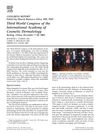
 The Third World Congress of the International Academy of Cosmetic Dermatology discussed various topics like hair disorders, skin conditions, wound healing, shampoo technology, acne treatment, and the use of lasers in dermatology.
 September 1999 in “The Journal of The British Menopause Society”
 The document concludes that skin aging in women can be caused by UV exposure and hormonal changes, and treatments like hormone replacement therapy and various skin therapies can help.
 January 1983 in “Elsevier eBooks”
 Cyproterone acetate is used to treat conditions like prostate cancer, early puberty, excessive sexual drive, and female androgenization by affecting androgen functions and suppressing certain hormones.