 October 2024 in “Experimental Dermatology”
 The belief about hair shedding phases is likely incorrect and needs reevaluation.
 9 citations
,
March 2011 in “Current Pharmaceutical Biotechnology”
9 citations
,
March 2011 in “Current Pharmaceutical Biotechnology” Stem cell therapies show promise for treating various diseases but face challenges in clinical use and require better monitoring techniques.
November 2025 in “Preprints.org” New-onset fibromyalgia after COVID-19 is poorly understood and needs more research.
January 2026 in “PLoS Biology” ARHGEF3 is essential for proper hair follicle development in mice.
 May 2026 in “International Journal of Drug Delivery Technology”
 Using a 45-degree angle for hair transplants improves efficiency and results.
 September 2009 in “Hair transplant forum international”
 Changing the direction of cuts can make it easier to put in implants.
 3 citations
,
May 2006 in “Dermatologic Surgery”
3 citations
,
May 2006 in “Dermatologic Surgery” Most men's multi-hair follicles naturally stand perpendicular to a line from the top of their head, which is important for natural-looking hair transplants.
Transplanting beard hair into a scalp wound after hair transplant surgery improves scar appearance and hair keeps its normal traits.
20 citations
,
February 2012 in “Archives of dermatology” Leg hair transplants can create a natural-looking hairline and show successful growth over several years.
 May 2006 in “Dermatologic Surgery”
 Most nonbald men's multi-hair follicles are naturally positioned perpendicular to a line from the scalp's crown, which is important for natural-looking hair transplants.
11 citations
,
January 2019 in “Dermatologic Surgery” Hair follicle transplants help heal wounds, but scar quality and hair growth vary by location.
 March 2025 in “Journal of Craniofacial Surgery”
 Natural hairline asymmetry should be embraced for better-looking hair transplants.
 1 citations
,
February 2021 in “Journal of Cosmetic Dermatology”
1 citations
,
February 2021 in “Journal of Cosmetic Dermatology” Using a 30°-sapphire blade at a lower angle causes the least injury in hair transplants.
 4 citations
,
January 2015 in “International Journal of Trichology”
4 citations
,
January 2015 in “International Journal of Trichology” Transplanted hair follicles can change and adapt to new areas of the body, with the immune system possibly playing a role in this adjustment.
 1 citations
,
July 2021 in “Aesthetic Plastic Surgery”
1 citations
,
July 2021 in “Aesthetic Plastic Surgery” The new triangular flag-shaped design for incisions in hair transplant surgery provides better hair alignment and cosmetic appearance without extra scarring, especially for patients with specific hair directions.
 January 2026 in “Avicenna Bulletin”
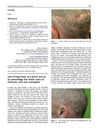
 Aligning hair implants with natural growth patterns improves hair transplant results.
 10 citations
,
May 2012 in “Journal of Plastic Reconstructive and Aesthetic Surgery”
10 citations
,
May 2012 in “Journal of Plastic Reconstructive and Aesthetic Surgery” Beard hair can effectively hide hair transplant scars.
June 2021 in “Cosmoderma” Hair transplantation techniques have improved, making the process safer and more effective with less visible scarring.
 July 2021 in “CRC Press eBooks”
 Hair transplantation moves hair to bald areas and it should grow like it did before, but it's not a perfect cure for hair loss.
 7 citations
,
January 2013 in “Indian Journal of Plastic Surgery”
7 citations
,
January 2013 in “Indian Journal of Plastic Surgery” Body and beard hair can be used for hair transplants in baldness treatment but keep their original color and curl.
 24 citations
,
September 2002 in “Dermatologic Surgery”
24 citations
,
September 2002 in “Dermatologic Surgery” The place where hair is transplanted can affect its growth and survival rates.
 October 2001 in “Dermatologic Surgery”
 Cutting and implanting hair follicles can create finer, more natural-looking hairlines, with about half of the implanted hairs growing back.
 March 2017 in “The American Journal of Cosmetic Surgery”
 Transplanted hair follicles can resist hair loss from an autoimmune condition better than natural hair.
December 2025 in “Journal of Surgery Research and Practice” Accurate positioning in female hairline transplants creates a natural, feminine look.
 January 2010 in “Springer eBooks”
 Pubic hair transplantation can help women with little to no pubic hair, using scalp hair for a natural look and requires careful aftercare.
 2 citations
,
April 2018 in “Journal of Cosmetic Dermatology”
2 citations
,
April 2018 in “Journal of Cosmetic Dermatology” Tumescent fluid increases scalp hair angles, which may improve hair transplant results and reduce surgeon fatigue.
 16 citations
,
April 2009 in “Dermatologic Surgery”
16 citations
,
April 2009 in “Dermatologic Surgery” The place where hair is transplanted can change its growth rate and length but not its thickness.