 July 2023 in “British journal of dermatology/British journal of dermatology, Supplement”
 HPV8 E6 gene causes growth of certain skin stem cells.
2 citations
,
February 2022 in “bioRxiv (Cold Spring Harbor Laboratory)” Impaired LEF1 activation speeds up skin cell development in Hutchinson-Gilford Progeria Syndrome.
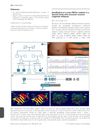
May 2024 in “JAAD Case Reports” A young man was diagnosed with a rare hair loss condition usually seen in older women.
 23 citations
,
December 2013 in “British Journal of Dermatology”
23 citations
,
December 2013 in “British Journal of Dermatology” A new gene mutation linked to a skin condition was found in a Spanish family.
 37 citations
,
August 2014 in “Journal of experimental botany”
37 citations
,
August 2014 in “Journal of experimental botany” A gene in Arabidopsis thaliana, AtPRPL1, affects root hair length but not cell wall composition.
1 citations
,
November 2024 in “Blood” PI3Kδ inhibition may effectively treat cutaneous chronic graft-versus-host disease.
 April 2018 in “The journal of investigative dermatology/Journal of investigative dermatology”
 GATA6 is important for maintaining and differentiating cells in a key area of human skin.
 April 2026 in “Cellular and Molecular Immunology”
 SPT6 prevents excessive skin inflammation by blocking a feedback loop.
 October 2025 in “Dermatology Practical & Conceptual”
 ChatGPT 4.0 and Gemini 1.5 Flash are effective for educating patients about androgenetic alopecia, while Deepseek R1 is less reliable.
 March 2024 in “Journal of Microbiology and Biotechnology”
 Phloroglucinol may help improve hair loss by promoting hair growth and reducing oxidative stress.
 9 citations
,
January 2017 in “Virchows Archiv”
9 citations
,
January 2017 in “Virchows Archiv” LGR5 and LGR6 are expressed differently in various skin tumors, which may offer clues about their origins.
RNA-based treatments show promise for managing Hutchinson-Gilford Progeria Syndrome.
June 2026 in “Journal of Cosmetic Dermatology” CGF-PF may improve hair loss treatment by targeting hair follicle stem cells more effectively.
 28 citations
,
November 2013 in “The journal of investigative dermatology/Journal of investigative dermatology”
28 citations
,
November 2013 in “The journal of investigative dermatology/Journal of investigative dermatology” GMG-43AC may help reduce unwanted hair growth and treat certain hair loss conditions.
May 2005 in “Faculty Opinions – Post-Publication Peer Review of the Biomedical Literature” Truncated LTBP-1 disrupts TGF-beta signaling, affecting hair growth.
 9 citations
,
March 2015 in “Journal of Microbiology and Biotechnology”
9 citations
,
March 2015 in “Journal of Microbiology and Biotechnology” Ultra-high molecular weight poly-γ-glutamic acid may help promote hair growth.
2 citations
,
June 2013 in “Journal of Clinical Pathology” The LMNA mutation affects skin structure even in asymptomatic carriers.
 January 2019 in “Springer eBooks”
 PRP and LLLT can improve hair growth in AGA, but more research needed.
30 citations
,
October 1999 in “Differentiation” Mutant MK6a transgenes in mice cause blistering, hair loss, and potential human alopecia.
12 citations
,
August 2001 in “PubMed” CE-PTG is a better method for analyzing hair growth in androgenetic alopecia.
 June 2024 in “Molecules/Molecules online/Molecules annual”
 Platycladus orientalis flavonoids protect balding hair from UV damage and slow hair color change.
January 2026 in “OSF Preprints (OSF Preprints)” A new treatment plan for hair loss combines targeted therapies and regenerative strategies to stabilize, reverse, and maintain hair growth.
 1 citations
,
April 2018 in “The journal of investigative dermatology/Journal of investigative dermatology”
1 citations
,
April 2018 in “The journal of investigative dermatology/Journal of investigative dermatology” Topical patidegib gel effectively treats basal cell carcinoma in Gorlin syndrome patients without causing the side effects seen with oral treatments.
January 2026 in “Advances in Clinical Medicine” September 2017 in “The journal of investigative dermatology/Journal of investigative dermatology” N-acetyl-GED may help prevent and partially reverse a process that leads to scarring hair loss.
1 citations
,
December 2020 in “Medical lasers” The laser therapy device effectively increased hair growth in people with androgenetic alopecia.
82 citations
,
July 2012 in “Brain pathology” High LGR5 levels in glioblastoma indicate poor prognosis and are essential for cancer stem cell survival.
 March 2025 in “American Journal of Medical Genetics Part A”
 A rare genetic variant linked to skin cysts was found in blood DNA, suggesting its role in cyst formation.
 8 citations
,
February 2019 in “Journal of The European Academy of Dermatology and Venereology”
8 citations
,
February 2019 in “Journal of The European Academy of Dermatology and Venereology”