170 citations
,
January 2010 in “animal” Hair follicle growth and fiber production in animals are influenced by chemical signals, proteins, pigmentation, genetics, and nutrients.
127 citations
,
April 1999 in “Journal of Investigative Dermatology” Rodent models helped understand psoriasis but none perfectly replicated the disease.
 82 citations
,
March 2016 in “Autoimmunity reviews”
82 citations
,
March 2016 in “Autoimmunity reviews” Animal models have helped understand hair loss from alopecia areata and find new treatments.
 69 citations
,
September 1991 in “Journal of Surgical Research”
69 citations
,
September 1991 in “Journal of Surgical Research” Understanding how fetal wounds heal could help improve healing in adults.
69 citations
,
August 1995 in “Annals of Plastic Surgery” The ultrapulse carbon dioxide laser can effectively resurface skin without scarring.
53 citations
,
June 2020 in “The journal of allergy and clinical immunology/Journal of allergy and clinical immunology/The journal of allergy and clinical immunology” Animal models help study psoriasis but have limitations and don't fully mimic the human disease.
45 citations
,
June 2003 in “Journal of Investigative Dermatology Symposium Proceedings” Understanding hair follicles through various models can help develop new treatments for hair disorders.
 44 citations
,
May 2012 in “Endocrinology”
44 citations
,
May 2012 in “Endocrinology” High levels of androgens during early development may cause PCOS-like symptoms.
44 citations
,
January 1957 in “Public Health Reports (1896-1970)” Animal ringworm is common and can spread to humans.
 38 citations
,
July 1989 in “Archives of dermatological research”
38 citations
,
July 1989 in “Archives of dermatological research” Testosterone causes hair loss in AGA mice, which are good for testing baldness treatments, and both minoxidil and cyproterone acetate can prevent this hair loss.
 25 citations
,
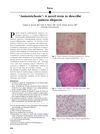
April 2007 in “Journal of The American Academy of Dermatology”
25 citations
,
April 2007 in “Journal of The American Academy of Dermatology” The document suggests "anisotrichosis" as a new term for hair thickness variation in common baldness.
 17 citations
,
October 2015 in “Medicine and Pharmacy Reports”
17 citations
,
October 2015 in “Medicine and Pharmacy Reports” Animal models are crucial for learning about hair loss and finding treatments.
 16 citations
,
April 2018 in “Animal Genetics”
16 citations
,
April 2018 in “Animal Genetics” Researchers found two genes that may explain why some Casertana pigs don't have hair.
11 citations
,
December 2024 in “Wound Repair and Regeneration” The WRAHPS Guidelines standardize reporting in wound healing studies to improve research quality and therapy development.
 11 citations
,
July 2021 in “Sustainability”
11 citations
,
July 2021 in “Sustainability” Concrete made from animal bones and human hair is stronger and more environmentally friendly than traditional concrete.
11 citations
,
March 2001 in “Clinics in dermatology” The new microneedle method delivers hair loss treatment more effectively by enhancing growth pathways.
 8 citations
,
October 1988 in “Clinics in dermatology”
8 citations
,
October 1988 in “Clinics in dermatology” The best animal model for studying male-pattern baldness is the stumptailed macaque, not rats or mice.
6 citations
,
July 2023 in “Diabetology” Autologous micrografts significantly improve wound healing in diabetic conditions by speeding up tissue regeneration and reducing inflammation.
 6 citations
,
November 2018 in “Antimicrobial agents and chemotherapy (Print)”
6 citations
,
November 2018 in “Antimicrobial agents and chemotherapy (Print)” Fluconazole can cause hair loss, but the exact cause is unknown.
 6 citations
,
March 2014 in “Annals of Pharmacotherapy”
6 citations
,
March 2014 in “Annals of Pharmacotherapy” A woman's hair loss was probably caused by the antifungal drug anidulafungin.
 6 citations
,
August 2001 in “PubMed”
6 citations
,
August 2001 in “PubMed” The stump-tailed macaque is a good model for studying human hair loss, but it's expensive and hard to find, while rodent models are promising for understanding hair growth and finding new treatments.
 5 citations
,
July 2023 in “International Journal of Women’s Dermatology”
5 citations
,
July 2023 in “International Journal of Women’s Dermatology” Anifrolumab significantly improved skin lesions and hair regrowth in severe discoid lupus.
5 citations
,
November 2023 in “The Journal of Dermatology” Anifrolumab effectively improved symptoms and reduced steroid use in Japanese patients with systemic lupus erythematosus.
 4 citations
,
January 2010 in “Animal”
4 citations
,
January 2010 in “Animal” Improving knowledge and practices in animal fibre production is crucial to meet market demands and potentially revive natural fibres.
 4 citations
,
August 2017 in “International journal of molecular sciences”
4 citations
,
August 2017 in “International journal of molecular sciences” The conclusion is that Pigmented Epithelioid Melanocytoma can start from hair follicle stem cells or from a mole on the skin.
4 citations
,
January 2016 in “Elsevier eBooks” Animal experiments help understand and test treatments for healing wounds and reducing scars.
4 citations
,
September 2004 in “Experimental Dermatology” Mutations in certain skin proteins cause severe skin issues, while others have limited effects, highlighting the need to understand these proteins for better treatments.
 3 citations
,
May 2018 in “InTech eBooks”
3 citations
,
May 2018 in “InTech eBooks” Animal models, especially mice, are essential for advancing hair loss research and treatment.
 3 citations
,
January 1989 in “Journal of Japan Oil Chemists Society”
3 citations
,
January 1989 in “Journal of Japan Oil Chemists Society” AMT is the best surfactant for hair and scalp care.
 2 citations
,
November 2009 in “Korean journal of chemical engineering”
2 citations
,
November 2009 in “Korean journal of chemical engineering” Adding Brij 78 to minoxidil microparticles in a certain solution helps them stick to the skin better and prevents clumping.