 2 citations
,
January 2023 in “Applied Science and Convergence Technology”
2 citations
,
January 2023 in “Applied Science and Convergence Technology” 3D bioprinting is useful for making tissues, testing drugs, and delivering drugs, but needs better materials, resolution, and scalability.
 June 2026 in “Frontiers in Bioengineering and Biotechnology”
 Hair follicle systems are being engineered to better mimic natural hair follicles for studying hair disorders and testing treatments.
 28 citations
,
March 2019 in “Journal of Dermatological Science”
28 citations
,
March 2019 in “Journal of Dermatological Science” The document concludes that while lab results for hair growth promotion are promising, human trials are needed and better testing methods should be developed.
7 citations
,
April 2024 in “Life Medicine” Standardizing and engineering organoids can improve their use in medicine and drug testing.
 208 citations
,
January 2013 in “Lab on a Chip”
208 citations
,
January 2013 in “Lab on a Chip” The Multi-Organ-Chip improves the growth and quality of skin and hair in the lab, potentially replacing animal testing.
 June 2023 in “Frontiers in Cardiovascular Medicine”
 Using existing drugs for new purposes could be a cost-effective way to treat chest pain and non-clogged heart arteries, with some drugs for lung blood pressure showing promise but needing more testing.
 1 citations
,
December 2018 in “IntechOpen eBooks”
1 citations
,
December 2018 in “IntechOpen eBooks” Human hair shows promise for non-invasive medical testing, but more research is needed to standardize its use.
 4 citations
,
January 2019 in “Elsevier eBooks”
4 citations
,
January 2019 in “Elsevier eBooks” Finding new uses for existing drugs is promising and can lead to safer, more effective medicines.
 28 citations
,
February 2016 in “International Journal of Nanomedicine”
28 citations
,
February 2016 in “International Journal of Nanomedicine” Finasteride capsules with nanoparticles improve drug delivery, solubility, stability, and effectiveness.
 12 citations
,
April 2018 in “Physiology & Behavior”
12 citations
,
April 2018 in “Physiology & Behavior” Finasteride raises suicide-linked aggression and stops clozapine's positive effects in schizophrenia animals.
 January 2024 in “Wiadomości Lekarskie”
 New markers can detect tumors, aid drug delivery, and treat cancer effectively and safely.
5 citations
,
December 2023 in “Materials” Organic and biogenic nanocarriers can improve drug delivery but face challenges like consistency and safety.
 5 citations
,
February 2011 in “Expert Opinion on Drug Discovery”
5 citations
,
February 2011 in “Expert Opinion on Drug Discovery” We need better treatments for hair loss, and while test-tube methods are helpful, they can't fully replace animal tests for evaluating new hair growth treatments.
 May 2026 in “İzmir Katip Çelebi Üniversitesi Sağlık Bilimleri Fakültesi Dergisi”
 3D printed alginate-gelatin hydrogels are promising for drug delivery and testing treatments for diseases like Alzheimer's.
 26 citations
,
February 2009 in “Drug Development Research”
26 citations
,
February 2009 in “Drug Development Research” 17α-estradiol is a safe estrogen that might protect the brain and doesn't cause feminization, needing more research for treating brain diseases.
 July 2014 in “Elsevier eBooks”
 The document concludes that various hypersensitivity diseases in horses can be diagnosed and treated with methods like immunotherapy and medication, and early aggressive treatment is crucial for severe diseases like equine cutaneous pythiosis.
September 2024 in “Reproduction and Fertility” New methods may speed up drug development for male subfertility.
 January 2020 in “Der Pharmacia Lettre”
 Nanoparticle-based herbal remedies could be promising for treating hair loss with fewer side effects and lower cost, but more research is needed.
 16 citations
,
January 2007 in “JEADV. Journal of the European Academy of Dermatology and Venereology/Journal of the European Academy of Dermatology and Venereology”
16 citations
,
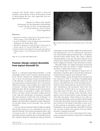
January 2007 in “JEADV. Journal of the European Academy of Dermatology and Venereology/Journal of the European Academy of Dermatology and Venereology” A man had an allergic reaction to minoxidil, which stopped after he discontinued use and started corticosteroids.
 262 citations
,
May 2017 in “Nanomedicine”
262 citations
,
May 2017 in “Nanomedicine” New nanofiber technology improves wound healing by supporting cell growth and delivering treatments directly to the wound.
 6 citations
,
April 2022 in “Biomedicine & pharmacotherapy”
6 citations
,
April 2022 in “Biomedicine & pharmacotherapy” Using three different drugs together may better treat eye diseases like glaucoma and macular degeneration.
1 citations
,
April 2025 in “Journal of Applied Polymer Science” Microneedles with green tea polyphenols improve diabetic wound healing.
 June 2026 in “Discover Nano”
 Lipid nanocarriers could effectively promote hair regrowth with fewer side effects.
 128 citations
,
January 1996 in “Journal of analytical toxicology.”
128 citations
,
January 1996 in “Journal of analytical toxicology.” Hair analysis can detect cocaine use but doesn't accurately show the amount or timing of use.
12 citations
,
March 2012 in “ATLA. Alternatives to laboratory animals” Hair follicles significantly affect the skin absorption of some drugs.
 June 2014 in “Basic & Clinical Pharmacology & Toxicology”
 Some plant extracts may treat livestock diseases, certain animal treatments are safe and effective, but more research on drug safety and resistance is needed.
26 citations
,
October 2020 in “Biomedicines” Bioengineered skin models help reduce animal testing and advance research in cosmetics and skin disease.
125 citations
,
March 2017 in “Micromachines” Microfluidic technology improves cell spheroid creation for better drug testing and tissue engineering.
24 citations
,
October 2022 in “Cell Regeneration” A new mouse model effectively mimics vitiligo for research and drug testing.
 24 citations
,
May 2015 in “Schizophrenia Research”
24 citations
,
May 2015 in “Schizophrenia Research” A drug improved schizophrenia-like symptoms in stressed rats by changing brain steroid levels.