 October 2022 in “JAAD international”
 Most patients with autoimmune blistering diseases experienced some hair loss, which may be underreported and linked to disease severity.
January 2026 in “Saudi Journal of Internal Medicine” Depression and anxiety are common in SLE patients and worsen disease symptoms.
10 citations
,
February 2017 in “International Journal of Rheumatic Diseases” Thorough history taking is crucial for diagnosing hypothyroidism in rheumatoid arthritis patients.
4 citations
,
November 1984 in “JAMA” Certain medications, like trimethoprim, can cause aseptic meningitis, especially in people with autoimmune conditions.
 January 2019 in “Przegląd Dermatologiczny”
 An 87-year-old woman was diagnosed with type 3 autoimmune polyendocrine syndrome and had multiple autoimmune issues.
 February 2026 in “Clinical Cosmetic and Investigational Dermatology”
 Upadacitinib improves life quality for Alopecia Areata patients without worsening skin issues.
 October 2021 in “Dermatology reports”
 The care model improved timely diagnosis and treatment for psoriasis and psoriatic arthritis.
 February 2026 in “Dove Medical Press (Taylor and Francis Group)”
 Upadacitinib can effectively regrow hair in alopecia areata patients without worsening sarcoidosis.
 November 2020 in “Journal of The American Academy of Dermatology”
 Ankle braces reduce motion, while external focus improves hip and knee movements.
1 citations
,
March 2000 in “PubMed” A 16-year-old boy's alopecia areata progressed unusually to resemble male pattern baldness.
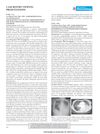 May 2025 in “The Journal of Rheumatology”
 Early recognition and a team approach are crucial for managing diffuse alveolar hemorrhage in antiphospholipid syndrome.
1 citations
,
April 2020 in “Indian Journal of Rheumatology” 42% of SLE patients had thyroid issues, mostly hypothyroidism.
1 citations
,
March 2023 in “Medicine” Satoyoshi syndrome can cause eye problems like uveitis and retinal vein issues.
10 citations
,
January 2023 in “SAGE Open Medical Case Reports” Upadacitinib may effectively treat both alopecia universalis and Crohn's disease.
12 citations
,
May 2016 in “British Journal of Dermatology” A 6-year-old boy's skin condition improved after stopping a specific treatment and starting new medications.
13 citations
,
October 2003 in “Clinical pediatrics” Steroid treatment greatly improved the symptoms of a boy with a rare disorder called Satoyoshi syndrome.
6 citations
,
January 2000 in “The Journal of Trace Elements in Experimental Medicine” Zinc supplements effectively treat acrodermatitis enteropathica.
34 citations
,
December 2011 in “The Journal of Dermatology” A unique type of lupus panniculitis causes reversible hair loss on the scalp in East Asians.
28 citations
,
November 2004 in “Endocrinology” SARMs may offer benefits by boosting muscle effects without unwanted side effects.
 October 2023 in “Journal of the Endocrine Society”
 Joint replacement surgery normalized high alkaline phosphatase levels in a patient with severe osteoarthritis.
 1 citations
,
January 2019 in “Open Journal of Internal Medicine”
1 citations
,
January 2019 in “Open Journal of Internal Medicine” Diagnosing both systemic lupus and hemoglobinopathy is challenging due to overlapping symptoms.
New drugs, baricitinib and ritlecitinib, are effective for severe alopecia areata.
 24 citations
,
January 2012 in “Indian Journal of Dermatology, Venereology and Leprology”
24 citations
,
January 2012 in “Indian Journal of Dermatology, Venereology and Leprology” Diffuse alopecia areata involves more inflammation and higher allergy-related antibodies than patchy types.
5 citations
,
September 2020 in “Proceedings - Baylor University. Medical Center” Tofacitinib successfully treated a woman's severe symptoms from a rare autoimmune condition.
1 citations
,
January 2025 in “Pediatria i Medycyna Rodzinna” Accurate diagnosis and zinc supplements can improve life quality in acrodermatitis enteropathica, even with normal zinc levels.
 July 2024 in “Indonesian Journal of Case Reports”
 Effective treatment improved skin and overall symptoms in a lupus patient.
2 citations
,
October 2014 in “Orbit” Lacrimal gland inflammation and alopecia areata can happen together due to autoimmune issues.
 September 2025 in “PubMed”
 Colectomy led to hair regrowth in a Crohn's patient with alopecia areata.
 8 citations
,
January 2018 in “Middle East Journal of Digestive Diseases”
8 citations
,
January 2018 in “Middle East Journal of Digestive Diseases” A man with complete hair loss and ulcerative colitis regrew hair after treatment with azathioprine.
5 citations
,
January 2021 in “Indian Journal of Critical Care Medicine” Testing for the NUDT 15 variant is crucial before starting azathioprine, especially in Asians.