 May 2026 in “Journal of Neurosciences in Rural Practice”
 Tofacitinib may cause nerve damage in the brain, so monitor for neurological symptoms.
 July 2025 in “Journal of Clinical Research and Reports”
 Women with PCOS have a higher risk of heart disease.
 May 2025 in “Frontiers in Pharmacology”
 New treatments are needed for non-scarring alopecia due to current limitations.
 January 2025 in “Indian Journal of Dermatology”
 Frontal fibrosing alopecia is a challenging hair loss condition with no known cause or definitive treatment.
 December 2024 in “Archives of Dermatological Research”
 COVID-19 vaccines do not increase the risk of alopecia areata.
July 2012 in “International Journal of Trichology” Understanding hair health and disorders is important for effective treatment.
 February 2024 in “Rheumatology & autoimmunity”
 Lupus can cause unusual vision problems, so it's important to consider it in such cases.
June 2009 in “Mayo Clinic Proceedings” A woman was diagnosed with porphyria cutanea tarda and improved with phlebotomy and lifestyle changes.
44 citations
,
April 2023 in “Frontiers in Molecular Biosciences” Long COVID is complex, affects many survivors, and needs more research for effective treatments.
 10 citations
,
September 2022 in “Psychiatry and Clinical Neurosciences”
10 citations
,
September 2022 in “Psychiatry and Clinical Neurosciences” Long COVID affects over half of COVID-19 survivors, causing a range of symptoms like fatigue and neurological issues, with no specific treatment yet.

Higher EULAR/ACR scores in SLE patients predict more organ damage.

Excluding alopecia and mucous membrane components from the CLASI-A score reduces its effectiveness in capturing important disease activity.
 1 citations
,
November 2001 in “British Journal of Dermatology”
1 citations
,
November 2001 in “British Journal of Dermatology” Oral cyclosporin doesn't stop hair loss.
 17 citations
,
March 1985 in “Journal of The American Academy of Dermatology”
17 citations
,
March 1985 in “Journal of The American Academy of Dermatology” Minoxidil can lower blood pressure in some people.
 8 citations
,
November 1990 in “Archives of Dermatology”
8 citations
,
November 1990 in “Archives of Dermatology” A woman with EMS showed unusual skin mucinosis without the typical hard skin syndrome, suggesting EMS can cause skin mucinosis.
 3 citations
,
July 2008 in “British journal of dermatology/British journal of dermatology, Supplement”
3 citations
,
July 2008 in “British journal of dermatology/British journal of dermatology, Supplement” Terbinafine can cause hair loss.
 2 citations
,
December 2008 in “Clinical and Experimental Dermatology”
2 citations
,
December 2008 in “Clinical and Experimental Dermatology” A small forehead lesion led to the discovery of a significant brain arteriovenous malformation in a young girl.
 July 2008 in “British Journal of Dermatology”
 Cyclosporin doesn't stop hair loss.
 7 citations
,
March 2025 in “Archives of Dermatological Research”
7 citations
,
March 2025 in “Archives of Dermatological Research” Trichoscopy helps better understand and manage alopecia areata, improving patient outcomes.
 5 citations
,
April 2014 in “The American Journal of Dermatopathology”
5 citations
,
April 2014 in “The American Journal of Dermatopathology” Foreign-body granuloma may be a marker for late-stage Lichen Planopilaris and should be considered in diagnosis.
 2 citations
,
February 2018 in “InTech eBooks”
2 citations
,
February 2018 in “InTech eBooks” TNF-alpha inhibitors can cause various immune-related skin issues.
 March 2022 in “The Journal of Family Practice”
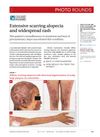
 Following treatment plans is crucial to prevent worsening skin and hair conditions.
 January 2018 in “Advances in Dermatology and Allergology”
 Treatment with dapsone, topical corticosteroids, and antibiotics improved the man's skin conditions.
 July 2003 in “Journal of Cutaneous Medicine and Surgery”
 Certain drugs can cause lupus, stopping these drugs is the main treatment. NB-UVB phototherapy clears psoriasis faster when applied three times a week. Monoclonal antibodies and oral pimecrolimus are effective in treating psoriasis. Smoking and drinking are linked to psoriasis in men. No direct link between low iron and hair loss was found. Vaccines are effective against genital herpes and human papillomavirus type 16.
 July 2003 in “Journal of Cutaneous Medicine and Surgery”
 Blood pressure drugs can cause skin lupus, early treatment is key for baby herpes and diabetic foot ulcers, a certain vaccine works against genital herpes and HPV in women, more frequent light therapy helps psoriasis, smoking and drinking can worsen psoriasis, a cream clears up a type of skin cancer, and low iron levels don't cause chronic hair loss.
 July 2003 in “Journal of Cutaneous Medicine and Surgery”
 Various skin conditions can be treated effectively with different methods, such as discontinuing certain drugs, using specific vaccines, applying creams, and changing lifestyle habits like smoking and drinking.
 July 2003 in “Journal of Cutaneous Medicine and Surgery”
 Stopping certain drugs can improve skin conditions, arsenicosis affects over half of a Bangladeshi village, males are more vulnerable, and certain treatments are effective for warts, acne, and psoriasis. Smoking and drinking are linked to psoriasis in men, a cream helps with a type of skin cancer, and low iron levels don't directly cause chronic hair loss in women.
 July 2003 in “Journal of Cutaneous Medicine and Surgery”
 High blood pressure drugs often cause skin lupus, stopping the drug usually helps. A vaccine helps prevent genital herpes and HPV-16. More frequent light therapy clears psoriasis faster. No link was found between low iron and chronic hair loss.
 July 2003 in “Journal of Cutaneous Medicine and Surgery”
 Skin problems are common in Bangladesh due to arsenic, prompt treatment of diabetic foot ulcers is crucial, maternal transmission causes most neonatal herpes, treatments for pediatric vasculitis are effective, the chickenpox vaccine works, more frequent UVB therapy helps psoriasis, certain jobs increase hand dermatitis risk, monoclonal antibodies treat psoriasis well, lifestyle affects psoriasis, alefacept improves psoriasis, imiquimod cream partially clears basal cell carcinoma, and iron may not help chronic hair loss.
 July 2003 in “Journal of Cutaneous Medicine and Surgery”
 Blood pressure drugs can cause skin lupus, but it improves after stopping the drug. The glycoprotein D vaccine works against genital herpes in some women, and the HPV-16 vaccine reduces HPV-16 infection and related diseases. More frequent light therapy clears psoriasis faster. A cream called imiquimod effectively treats a type of skin cancer. Iron supplements don't necessarily help with chronic hair loss in women.