 February 2023 in “Journal of clinical medicine research”
 Zinc acetate hydrate may help reduce fatigue and hair loss in post-COVID-19 patients.
 January 2023 in “Pakistan Armed Forces Medical Journal”
  January 2023 in “Italian Journal of Medicine”
 Working in non-Covid-19 wards and night shifts is linked to higher infection rates among Italian nurses.
 January 2023 in “Postępy Dermatologii i Alergologii”
 Azelaic acid treats acne, rosacea, and hyperpigmentation with minimal side effects.
 January 2023 in “International Journal of Research Publication and Reviews”
 Some herbal ingredients like linalool and tea tree oil have anti-dandruff properties and are safe for use in shampoos.
Lower LDL-c levels predict higher COVID-19 mortality.
Quality of life improved after COVID-19, but ongoing health support is needed.
 January 2023 in “Book of Abstracts”
 COVID-19 can cause different types of hair loss, with telogen effluvium being the most common.
 December 2022 in “Research Square (Research Square)”
 Key genes linked to immune response are upregulated in hair follicles and skin tissues in chronic discoid lupus erythematosus.
 November 2022 in “Journal of Pharmaceutical Negative Results”
 Vaccination is crucial for managing Covid-19 despite new virus strains.
Burdock has potential for new pharmaceutical products due to its medicinal properties.
 October 2022 in “Research Square (Research Square)”
 Key genes linked to immune response are highly active in lupus-affected hair follicles.
 September 2022 in “Dermatology and therapy”
 Contact immunotherapy might help treat various skin conditions, but more research is needed to confirm its safety and effectiveness.
 August 2022 in “International journal of research in pharmacy and chemistry”
 Teak is a durable, termite-resistant wood with medicinal benefits.
 July 2022 in “Revista Ibero-Americana de Humanidades, Ciências e Educação”
 Many recovered COVID-19 patients, especially women, experience lingering symptoms like fatigue and headaches.
 July 2022 in “International journal of KIU”
 Genetics influence opioid addiction risk, diet affects COVID-19 severity, Aerva lanata may harm kidneys, some plants fight fungi and cancer, and nursing students need better contraceptive knowledge.
 June 2022 in “Organic communications”
 Natural compounds, especially Withaferin-A, may help treat post-COVID-19 complications, but some may have side effects.
 March 2022 in “Journal of Survey in Fisheries Sciences”
 Asteraceae plants have important medicinal uses but face challenges in sustainable use.
 March 2022 in “Marmara University Open Access System”
 Digital games are part of new media but need a deeper look at their complex nature and cultural roots.
 February 2022 in “International journal of KIU”
 Certain genes and nutrients like vitamin D, zinc, and omega fatty acids affect COVID-19 severity and infection risk.
 January 2022 in “International Journal of Science and Research (IJSR)”
 Women with PCOS may be more susceptible to COVID-19 due to hormonal and psychological factors.
 January 2022 in “Dermatology Review”
 Microneedling with bleomycin effectively treats plantar warts with fewer sessions.
Ruxolitinib cream shows promise for vitiligo, and early melanoma diagnosis is crucial.
 January 2022 in “Dermatology Review”
 Higher IL-31 levels are linked to worse itching in chronic kidney disease patients.
 January 2022 in “Asian journal of Current Research in Clinical Cancer”
 Some dibenzo compounds might help treat cancer with fewer side effects.
 October 2021 in “VITEK Bidang Kedokteran Hewan”
 The goat had enteritis and was treated with fluids, vitamins, antibiotics, and deworming medication.
Cepharanthine and tetrandrine show promise as COVID-19 drugs.
 June 2021 in “Journal of emerging technologies and innovative research”
 Onion and Aloe vera can help protect hair from damage caused by hair dyes.
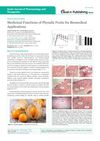 May 2021 in “Austin journal of pharmacology and therapeutics”
 Physalis fruits have medicinal properties that can help treat various diseases and have anti-inflammatory, antioxidant, antibacterial, and antitumor effects.
 May 2021 in “Bőrgyógyászati és venerológiai szemle”
 Some skin symptoms, like chilblain-like lesions, can help identify COVID-19 and show how the immune system is responding.