 November 2019 in “Harper's Textbook of Pediatric Dermatology”
 The document is a detailed medical reference on skin and genetic disorders.
 September 2017 in “Pediatric Dermatology”
 The document concludes that an experimental drug may help wound healing in Epidermolysis Bullosa, links Hydroa vacciniforme to EBV, discusses diagnosing hair loss disorders, finds many children with eczema have allergies, reviews the safety of a skin medication in children, notes side effects of a Duchenne's treatment, and identifies a marker for pediatric mastocytosis.
 April 2012 in “Informa Healthcare eBooks”
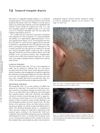
 Temporal triangular alopecia is a lifelong condition with hairless patches on the side of the head that may be present from birth.
 June 2008 in “Springer eBooks”
 The document concludes that permanent hair loss conditions are complex, require early specific treatments, and "secondary permanent alopecias" might be a more accurate term than "secondary cicatricial alopecia."
 78 citations
,
April 1994 in “Archives of dermatology”
78 citations
,
April 1994 in “Archives of dermatology” The study found that Keratosis Pilaris Atrophicans is a genetic skin condition that starts in childhood, involves inflammation and scarring, and current treatments are only somewhat effective.
 56 citations
,
March 2010 in “Journal of Dermatology”
56 citations
,
March 2010 in “Journal of Dermatology” Most cases of Temporal Triangular Alopecia are found in early childhood and may be related to genetic conditions.
 40 citations
,
July 2017 in “Frontiers in Medicine”
40 citations
,
July 2017 in “Frontiers in Medicine” Early and personalized treatment for hair loss in young people is crucial to prevent permanent damage and should include psychological support.
 20 citations
,
July 2008 in “Dermatologic Therapy”
20 citations
,
July 2008 in “Dermatologic Therapy” The document says that treating the root cause of hair follicle damage is crucial to prevent permanent hair loss, and treatment options vary.
 18 citations
,
December 2006 in “Clinical dysmorphology”
18 citations
,
December 2006 in “Clinical dysmorphology” A 2-year-old boy with a rare brain malformation may have Gomez–López-Hernández syndrome.
 16 citations
,
June 2009 in “Dermatologic Surgery”
16 citations
,
June 2009 in “Dermatologic Surgery” A 17-year-old boy with Temporal Triangular Alopecia successfully grew new hair after a hair restoration surgery using follicular unit transplantation.
 11 citations
,
September 2015 in “Medical Principles and Practice”
11 citations
,
September 2015 in “Medical Principles and Practice” In a Tuscan pediatric clinic, 7.19% of children had hair or scalp disorders, with nonscarring alopecia being the most common.
 9 citations
,
April 1986 in “Postgraduate Medicine”
9 citations
,
April 1986 in “Postgraduate Medicine” Hair loss has many causes and treatments, and losing some hair daily is normal; proper diagnosis is key, and minoxidil can help treat it.
 6 citations
,
August 1991 in “Pediatric Clinics of North America”
6 citations
,
August 1991 in “Pediatric Clinics of North America” The document concludes that various hair and scalp disorders in children have specific treatments and proper diagnosis is essential.
 5 citations
,
July 2013 in “Our Dermatology Online”
5 citations
,
July 2013 in “Our Dermatology Online” Lichen planopilaris is the most common type of scarring hair loss observed, with a variety of symptoms and tissue changes.
 5 citations
,
November 2011 in “Expert Review of Dermatology”
5 citations
,
November 2011 in “Expert Review of Dermatology” The document concludes that early diagnosis and a comprehensive treatment plan are crucial for managing hair loss in children, with a focus on both medical and psychological support.
 1 citations
,
May 2016 in “Current Opinion in Pediatrics”
1 citations
,
May 2016 in “Current Opinion in Pediatrics” Children's hair loss can be caused by various factors and should be treated with appropriate, age-specific methods and psychological support.
 April 2025 in “Dermatology The American Medical Journal”
 Low-dose isotretinoin is effective for treating pediatric scarring alopecia.
 January 2022 in “Дерматологія та венерологія”
 Frontal fibrosing alopecia causes hair loss along the frontal hairline, mainly in postmenopausal women, and needs better treatments.
 January 2018 in “Springer eBooks”
 Congenital triangular alopecia is a harmless, non-spreading hair loss condition often seen in young children.
 April 2012 in “Informa Healthcare eBooks”
 The document concludes that diagnosing hair loss requires evaluating multiple histological features, as no single feature is definitive on its own.

The patient with total hair loss did not regrow hair despite treatment, indicating a poor outlook for this type of hair loss.
 14 citations
,
May 1987 in “Archives of Dermatology”
14 citations
,
May 1987 in “Archives of Dermatology” Tissue expansion is an effective treatment for certain types of hair loss, providing immediate coverage with hair-bearing skin.
 10 citations
,
June 2000 in “Primary Care”
10 citations
,
June 2000 in “Primary Care” The document explains different hair loss types and treatments, emphasizing diagnosis through examination and tests, and specific treatments for each condition.
 7 citations
,
November 2000 in “Clinics in Dermatology”
7 citations
,
November 2000 in “Clinics in Dermatology” Most hair loss in children is caused by a few common conditions and is easy to diagnose, but rare types require careful evaluation.
 2 citations
,
January 1998 in “Dermatology”
2 citations
,
January 1998 in “Dermatology” Stopping forehead irritation and using hydrocortisone helped a man's skin, Martinique has lower melanoma rates, a man had an allergy to a specific antifungal, another had unexplained cysts, certain drugs can cause skin reactions without always being interrelated, a link between Fanconi anemia and a skin condition was suggested, high levels of a certain protein may play a role in a type of psoriasis, and there's a need to study the connection between scalp pain and hair loss.
 January 2010 in “Elsevier eBooks”
 The document concludes that different types of hair loss have specific treatments, and early diagnosis is crucial for preventing permanent hair loss.
 November 2009 in “Actas dermo-sifiliográficas/Actas dermo-sifiliográficas”
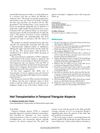
 Hair transplantation effectively treated a bald patch in an 18-year-old woman with Temporal Triangular Alopecia.
 January 1989 in “Clinical and Experimental Dermatology”
 The symposium concluded that hair growth involves complex processes, including the hair follicle life cycle, the role of the dermal papilla, hair strength, pigmentation, and the impact of diseases and treatments like minoxidil on hair and skin.

The document concludes that the girl's hairlessness is likely inherited from her parents.
 February 2014 in “Medicine - Programa De Formación Médica Continuada Acreditado”
 The document concludes that non-scarring alopecias can be reversed, but scarring alopecias cause permanent hair loss.