January 2025 in “Arquivo Brasileiro de Medicina Veterinária e Zootecnia” Agoutis in captivity have more resting (telogen) hairs than growing (anagen) hairs, regardless of season or gender.
 10 citations
,
June 2021 in “Primates”
10 citations
,
June 2021 in “Primates” Wild geladas in crop areas show less grooming and aggression.
 3 citations
,
January 2022 in “Medical Mycology Journal”
3 citations
,
January 2022 in “Medical Mycology Journal” Malassezia fungi in healthy noses can form a "spaghetti-and-meatballs" structure.

Key genes for mink fur have been identified, aiding conservation efforts.
118 citations
,
January 1992 in “Experientia”  8 citations
,
October 1988 in “Clinics in dermatology”
8 citations
,
October 1988 in “Clinics in dermatology” The best animal model for studying male-pattern baldness is the stumptailed macaque, not rats or mice.
 7 citations
,
November 2014 in “Histochemistry and Cell Biology”
7 citations
,
November 2014 in “Histochemistry and Cell Biology” The we/we wal/wal mice have defects in hair growth and skin layer formation, causing hair loss, useful for understanding alopecia.
March 2024 in “Veterinary sciences” Geriatric Julia Creek dunnarts often suffer from reproductive and skin diseases, impacting conservation efforts.
 1 citations
,
December 2022 in “bioRxiv (Cold Spring Harbor Laboratory)”
1 citations
,
December 2022 in “bioRxiv (Cold Spring Harbor Laboratory)” Pangolins have lost some skin-related genes, but kept others, showing complex skin evolution.
1 citations
,
October 2023 in “PROTOPLASMA” 65 citations
,
September 2014 in “BMC genomics” Different hair types in mammals are linked to variations in specific protein genes, with changes influenced by their living environments.
 10 citations
,
November 2015 in “American Journal of Primatology”
10 citations
,
November 2015 in “American Journal of Primatology” Monkeys with more anxious or inhibited temperaments tend to have less hair loss.
January 2026 in “China CDC Weekly” Large language models can accurately identify monkeypox from medical records.
The scant hair in snthr-1Bao mice is likely caused by a deletion affecting the Plcd1 gene.
December 2024 in “PLoS ONE” Alopecia in gray bats is most common and severe during lactation, likely due to stress and nutrition.
Social hair plucking in rhesus macaques is an abnormal behavior with both social and aggressive traits and health impacts.

Social hair plucking in rhesus macaques is an abnormal behavior with both social and aggressive traits and health impacts.
 20 citations
,
May 2013 in “International Journal of Molecular Medicine”
20 citations
,
May 2013 in “International Journal of Molecular Medicine” Researchers found a new gene variant linked to a rare bone disease, which doesn't always cause symptoms in carriers.
 April 2016 in “The journal of investigative dermatology/Journal of investigative dermatology”
 MPZL3 is crucial for seborrheic dermatitis development.
42 citations
,
August 2008 in “Stem Cells and Development” Hair follicle cells can help regenerate teeth.
5 citations
,
August 2013 in “Integrative Zoology” Feathers in diet increase gut bacteria diversity in Arctic foxes.
November 2025 in “animal” Certain genes in European Merino sheep help them adapt to different climates.
 May 2024 in “Indian journal of animal sciences/Indian Journal of Animal Sciences”
 The Janwal Pashmi dog is a medium-sized, mostly black breed with specific body measurements, and adult males are generally larger than females.
 January 2026 in “International Journal of Research and Innovation in Applied Science”
 Recognizing specific markers is crucial for correctly diagnosing and treating rare multifocal MPTT in males.
March 2024 in “Journal of Animal Reproduciton and Biotechnology” A rare fetal malformation caused difficult birth in a goat, requiring surgery.
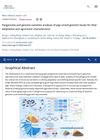
Pangenome analysis reveals key genes for pig adaptation and traits, aiding genetic improvement.
 83 citations
,
August 2014 in “PLoS ONE”
83 citations
,
August 2014 in “PLoS ONE” All adults have Demodex mites, which vary by region.
35 citations
,
October 2002 in “Biochemical and Biophysical Research Communications” The research cloned keratin 7 genes from humans, mice, and marsupials, found similarities between human and mouse genes, and discovered new areas of K7 expression in mice.
FoxA is crucial for pharynx regeneration in planarian flatworms.
 245 citations
,
January 1998 in “Genes & Development”
245 citations
,
January 1998 in “Genes & Development” Hoxc13 gene is essential for hair, nail, and papilla development.