2 citations
,
May 2020 in “Journal of the American Academy of Dermatology” Hair shaft changes may be linked to CCCA, but their role is unclear.
 64 citations
,
November 2008 in “Journal of The American Academy of Dermatology”
64 citations
,
November 2008 in “Journal of The American Academy of Dermatology” A new type of rapid hair loss called ADTA usually gets better on its own within 6 months.
 13 citations
,
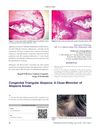
January 2011 in “International Journal of Trichology”
13 citations
,
January 2011 in “International Journal of Trichology” CTA is often mistaken for AA but doesn't respond to steroids and may require hair transplantation.
70 citations
,
August 2006 in “Cancer Research” AP-1 controls tumor cell type by affecting key signaling pathways.
 27 citations
,
June 2013 in “Genes & development”
27 citations
,
June 2013 in “Genes & development” Cav1.2 affects hair growth and could be a target for hair loss treatments.
 November 2022 in “The journal of investigative dermatology/Journal of investigative dermatology”
 TYK2 inhibition may help treat alopecia areata by promoting hair growth and reducing immune response.
 32 citations
,
March 2015 in “The Journal of Clinical Endocrinology & Metabolism”
32 citations
,
March 2015 in “The Journal of Clinical Endocrinology & Metabolism” Alopecia areata is linked to thyroid autoimmunity but not type 1 diabetes.
158 citations
,
December 2002 in “Development” Msx2-deficient mice experience irregular hair growth and loss due to disrupted hair cycle phases.
14 citations
,
October 2002 in “Journal of cutaneous pathology” MAP-2 is crucial for the structure of hair follicles and nails.
July 2026 in “Pediatric Allergy and Immunology” 7 citations
,
October 2018 in “Journal of Mind and Medical Sciences” Type 3C diabetes is a distinct condition needing more research and treatment strategies.
 1 citations
,
November 2024 in “Diabetes Metabolic Syndrome and Obesity”
1 citations
,
November 2024 in “Diabetes Metabolic Syndrome and Obesity” A specific gene variant is linked to severe insulin resistance and hormone imbalance in a teenage girl.
 7 citations
,
January 2015 in “Case reports in endocrinology”
7 citations
,
January 2015 in “Case reports in endocrinology” The document concludes that HAIR-AN syndrome should be considered when a patient shows severe hyperandrogenism and insulin resistance after excluding tumors.
15 citations
,
November 2009 in “Journal of diabetes and its complications” Patients with Type 1 diabetes should be screened for pernicious anemia.
 3 citations
,
December 2021 in “Frontiers in endocrinology”
3 citations
,
December 2021 in “Frontiers in endocrinology” A new mutation in the DCAF17 gene was found in a Chinese family, causing Woodhouse-Sakati syndrome and diabetes.
November 2020 in “Дерматовенерология, косметология” The M-type is the most common form of male hair loss, and the BASP-classification is easy for different medical professionals to use.
January 2026 in “Case Reports in Dermatological Medicine” Intralesional steroids effectively treated a young female's scalp nodules without recurrence.
 January 2017 in “Journal of clinical & experimental dermatology research”
 The case shows skin changes can indicate deeper health issues like insulin resistance, which are challenging to manage.
32 citations
,
May 1986 in “Archives of Dermatology” The condition is likely inherited in an autosomal-dominant pattern.
 October 2024 in “Journal of the Endocrine Society”
 Certain genetic variants reduce enzyme activity, contributing to non-classic congenital adrenal hyperplasia.
 October 2007 in “Clinical Biochemistry”
 New genotype linked to non-classical congenital adrenal hyperplasia found in Italian siblings.
 October 2024 in “Journal of the Endocrine Society”
 Certain genetic variants impair enzyme activity, contributing to non-classic congenital adrenal hyperplasia.
 18 citations
,
March 2011 in “Journal of The American Academy of Dermatology”
18 citations
,
March 2011 in “Journal of The American Academy of Dermatology” Familial factors affect hair loss types in Koreans, with M type in men, L type in women, and paternal factors influencing male hair loss more.
80 citations
,
June 2002 in “Molecular Biology of the Cell” Type II keratins are uniquely phosphorylated during stress and mitosis, affecting their structure and function.
69 citations
,
May 2002 in “Journal of Investigative Dermatology” Congenital atrichia with papular lesions is often misdiagnosed, and new diagnostic criteria can improve accuracy.
 2 citations
,
May 2021 in “Case reports in dermatological medicine”
2 citations
,
May 2021 in “Case reports in dermatological medicine” A 28-year-old man with type 1 diabetes had skin and hair issues due to zinc deficiency.
 November 2023 in “British Journal of Dermatology”
 Mutations in the WNT10A gene cause Short Anagen Hair syndrome and increase the risk of male pattern hair loss.
April 2018 in “Journal of Investigative Dermatology” Mutations in Far2 mice cause hair loss due to sebaceous gland issues.
 14 citations
,
January 2013 in “Hormone and Metabolic Research”
14 citations
,
January 2013 in “Hormone and Metabolic Research” The severity of symptoms in nonclassical congenital adrenal hyperplasia is not determined by CYP21A2 gene variations.
20 citations
,
July 2005 in “Experimental dermatology” The fuzzy gene is crucial for controlling hair growth cycles.