July 2026 in “Journal of Medicinal Chemistry” A new drug strategy improves hair loss treatment with better results and safety.
15 citations
,
July 2001 in “Clinics in Dermatology” Current hair removal methods improve appearance but need more research for better options.
25 citations
,
July 1994 in “Journal of dermatological science” Testosterone affects hair follicles differently across body sites, with beard hair follicles showing more activity of a specific enzyme and presence of androgen receptors compared to scalp hair.
5 citations
,
June 2006 in “PubMed” Combining laser hair removal with a cream effectively reduced facial hair.
52 citations
,
June 1998 in “British journal of dermatology/British journal of dermatology, Supplement” Ruby laser treatment is effective and well-tolerated for reducing hair growth.
2 citations
,
January 2000 Lasers are effective for hair removal, especially for conditions like excessive hair growth.
January 2022 in “Clinical Cases in Dermatology” A 12-year-old boy has a rare, harmless hair loss on his chin with no need for treatment.

Baricitinib helps regrow hair in teens with severe alopecia areata.
February 2026 in “JEADV Clinical Practice” Lichen planopilaris can cause hair loss on limbs, not just the scalp.
4 citations
,
July 2006 in “British journal of dermatology/British journal of dermatology, Supplement” Testosterone increases hair follicle cell growth when beard or axillary skin cells are present together.
 14 citations
,
August 2006 in “Clinical and Experimental Dermatology”
14 citations
,
August 2006 in “Clinical and Experimental Dermatology” A girl with no hair neglect developed plica neuropathica in the hospital, lost all her hair, but it grew back.
41 citations
,
April 2009 in “Journal of comparative neurology” P2X3-IR fibers are widespread in rat skin and likely help detect pain.
1 citations
,
January 2014 in “Indian journal of dermatology, venereology, and leprology” Papular mucinosis can cause eyebrow hair loss, but treatment can lead to regrowth.

The conclusion is that a treatment called cp-asiAR can reduce hair loss and promote hair growth, making it a potential new therapy for androgenetic alopecia.
 December 2025 in “Reports of Morphology”
 Men with alopecia areata have different body fat distribution compared to healthy men.
14 citations
,
January 1980 in “Dermatology” Cyproterone acetate temporarily reduces hair growth in women with idiopathic hirsutism but doesn't change hormone levels.
2 citations
,
January 2005 in “PubMed” Women with excessive body hair often have higher male hormones and related health issues.
19 citations
,
July 2004 in “Australasian Journal of Dermatology” Her hair grew back normally after she stopped rubbing it.
8 citations
,
January 2013 in “International journal of trichology” Two people had unusual ring-shaped hair loss due to an autoimmune disorder.
2 citations
,
March 2025 in “Journal of Translational Autoimmunity” Targeting the AhR pathway may help treat alopecia areata.
17 citations
,
June 1990 in “PubMed” Hair varies in size and features depending on body region.
May 2020 in “International journal of molecular biology” Mutations in the AR gene cause hair thinning and loss.
 16 citations
,
January 2003 in “Nuclear Receptor Signaling”
16 citations
,
January 2003 in “Nuclear Receptor Signaling” Androgens and SARMs play a role in body mass, frailty, skin health, and hair growth, and are used in treating prostate cancer, acne, and hair loss, with potential for new uses and improved versions in the future.
 3 citations
,
April 2002 in “The Lancet”
3 citations
,
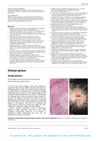
April 2002 in “The Lancet” Painful hair loss in an elderly woman was caused by giant cell arteritis, not just aging.
 2 citations
,
June 2003 in “International Journal of Acarology”
2 citations
,
June 2003 in “International Journal of Acarology” Researchers found a new mite species causing severe hair loss and skin problems in yellow-bellied marmots.
15 citations
,
August 2010 in “Annals of saudi medicine/Annals of Saudi medicine” Hair tourniquet syndrome is a rare condition where hair wraps around an infant's body part, needing quick removal to prevent damage.
 June 2023 in “Experimental dermatology”
 Pubic hair has a thicker, more protective outer layer than scalp hair, possibly due to evolution.
 3 citations
,
July 2021 in “Cutis”
3 citations
,
July 2021 in “Cutis” New military hair rules for women promote inclusivity and prevent hair damage.
1 citations
,
September 2020 in “Journal of dermatology” Researchers found a new mutation in the LIPH gene of a woman with a rare hair condition.
 September 2016 in “Journal of the Egyptian Women's Dermatologic Society (Print)”
 Higher RBP4 levels found in people with two types of hair loss.